
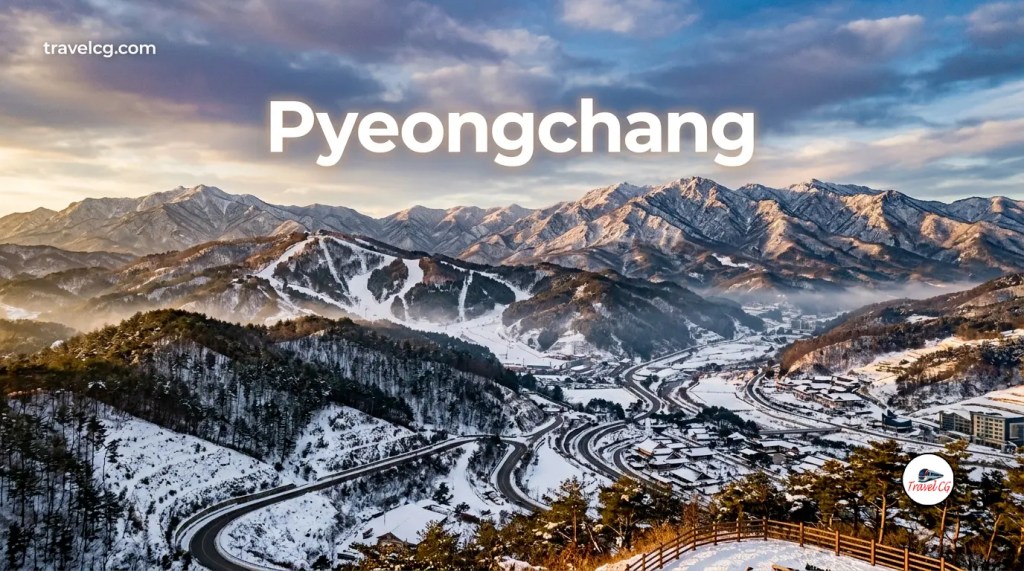
Pyeongchang is a beautiful mountain destination in Gangwon Province, South Korea, famous for its spectacular landscapes, ski resorts, peaceful valleys, fresh air and outdoor adventures. Surrounded by the Taebaek Mountains, Pyeongchang is particularly popular during winter, when its snowy slopes attract skiing and snowboarding enthusiasts from across South Korea and abroad. The region also gained international attention as the host city of the 2018 Winter Olympics.
However, Pyeongchang is much more than a winter sports destination. During spring, summer and autumn, the area becomes a wonderful place for hiking, sightseeing, photography, nature walks, cultural experiences and relaxing countryside escapes. Its combination of mountains, forests, traditional villages, temples, farms and modern resorts makes it an attractive destination throughout the year.
Where Is Pyeongchang?
Pyeongchang is located in Gangwon Province in northeastern South Korea, in a mountainous area between Seoul and the east coast. Much of the county sits at a relatively high elevation, which contributes to its cool climate and heavy winter snowfall.
Pyeongchang is spread across a large mountainous area rather than being a compact city center. Many of its major attractions and resorts are separated by considerable distances, so transportation planning is important.
Its location makes it suitable for travelers looking for an escape from the busy atmosphere of Seoul.
Why Is Pyeongchang Famous?
Pyeongchang became internationally famous after hosting the 2018 Winter Olympics and Paralympics. The event brought global attention to the area’s excellent winter sports facilities and mountain scenery.
Today, Pyeongchang is especially known for:
- Skiing and snowboarding
- Winter Olympic venues
- Snow-covered mountains
- Daegwallyeong highlands
- Odaesan National Park
- Woljeongsa Temple
- Sheep and dairy farms
- Hiking and trekking
- Mountain resorts
- Beautiful autumn foliage
- Peaceful rural landscapes
- Fresh local food
The area is also known for its clean mountain environment and agricultural products.
Best Places to Visit in Pyeongchang
Alpensia Ski Resort
Alpensia Ski Resort is one of Pyeongchang’s best-known winter destinations and was an important venue during the 2018 Winter Olympics.
The resort offers ski slopes, accommodation, restaurants and recreational facilities. Beginners can take lessons, while experienced skiers can enjoy longer and more challenging runs.
Even if you do not ski, visiting during winter provides an opportunity to experience a beautiful snow-covered mountain resort.
Yongpyong Ski Resort
Yongpyong is another major ski destination in Pyeongchang and one of the most established ski resorts in South Korea.
It offers a variety of slopes suitable for different skill levels. The surrounding mountains are also beautiful outside the ski season, making the area popular for hiking and sightseeing.
For travelers visiting Pyeongchang specifically for skiing, Yongpyong and Alpensia are among the most important places to consider.
Odaesan National Park
Odaesan National Park is one of the most beautiful natural areas around Pyeongchang.
The park is known for dense forests, mountain trails, streams and peaceful scenery. It is especially attractive during autumn, when the surrounding trees turn brilliant shades of red, orange and yellow.
Hiking routes vary in difficulty, so visitors can choose according to their fitness and available time.
Nature lovers should consider spending at least half a day exploring the area.
Woljeongsa Temple
Woljeongsa Temple is a historic Buddhist temple located within Odaesan National Park.
The temple is surrounded by beautiful forest scenery and is particularly famous for the peaceful fir-tree road leading toward the temple. Walking beneath the tall trees creates a calm and atmospheric experience.
The temple complex provides an opportunity to experience Korean Buddhist culture while enjoying the surrounding mountain environment.
Daegwallyeong Sheep Ranch
Daegwallyeong is one of the most recognizable countryside areas near Pyeongchang.
The Daegwallyeong Sheep Ranch is famous for its open green fields, rolling hills and sheep grazing across the landscape. It can feel very different depending on the season.
Summer brings lush green scenery, while winter can transform the landscape into a snowy wonderland.
It is an excellent place for photography, relaxed walks and family outings.
Daegwallyeong Sky Ranch
Daegwallyeong Sky Ranch offers expansive mountain and pasture scenery. The large open landscape makes it especially attractive to photographers and travelers who enjoy peaceful rural environments.
The scenery changes dramatically throughout the year, from green summer fields to colorful autumn landscapes and snowy winter surroundings.
Balwangsan Mountain
Balwangsan is another popular mountain destination associated with the Yongpyong area.
Visitors can enjoy mountain scenery and panoramic views, with cable-car access making it possible to experience the high-altitude landscape without completing a difficult mountain climb.
Winter provides snowy scenery, while warmer seasons offer excellent views of the surrounding mountains.
Pyeongchang Trout Festival Area
Pyeongchang is known for trout farming, and winter visitors may encounter local trout festivals and related activities.
Ice fishing and catching trout can be a memorable seasonal experience. Visitors can also enjoy freshly prepared local trout dishes.
Festival schedules can change from year to year, so checking the current schedule before traveling is recommended.
Things to Do in Pyeongchang
Pyeongchang offers activities for both adventure seekers and travelers looking for relaxation.
Skiing and Snowboarding
Winter is the busiest tourist season because of the area’s ski resorts.
Beginners can take lessons and rent equipment, while experienced skiers can explore more advanced slopes.
If you are traveling during peak winter weekends or holidays, booking accommodation and equipment in advance is a good idea.
Hiking
Pyeongchang is surrounded by mountains, making hiking one of its best warm-weather activities.
Odaesan National Park offers some of the most rewarding hiking opportunities. Short forest walks are suitable for casual visitors, while longer mountain trails are available for experienced hikers.
Always check weather conditions before starting a mountain hike.
Enjoy Autumn Foliage
Autumn is one of the most beautiful times to visit Pyeongchang.
The mountains and forests turn vibrant shades of red, orange and gold. Odaesan National Park and the surrounding mountain roads can be particularly scenic.
Autumn is ideal for travelers who want beautiful landscapes without the heavy snow and cold of winter.
Experience Rural Korea
The countryside around Daegwallyeong provides a glimpse of a quieter side of South Korea.
Green pastures, farms, mountain roads and open landscapes create a relaxing atmosphere that contrasts strongly with Seoul and other major cities.
Visit Buddhist Cultural Sites
Woljeongsa and other Buddhist sites provide opportunities to learn about Korean Buddhist traditions and architecture.
The forest surroundings make these locations especially peaceful.
Photography
Pyeongchang is a fantastic destination for landscape photography.
Some of the best subjects include:
- Snow-covered ski slopes
- Mountain peaks
- Forest trails
- Traditional temple architecture
- Sheep farms
- Green pastures
- Autumn foliage
- Rural roads
- Sunrise and sunset landscapes
Best Time to Visit Pyeongchang
The best time depends on what you want to experience.
Winter: December to February
Winter is the best season for skiing, snowboarding and snow activities.
Temperatures can be very cold, and snow is common in the mountain areas. Travelers should bring proper winter clothing, gloves, waterproof footwear and thermal layers.
Spring: March to May
Spring brings gradually warmer temperatures and fresh greenery.
It is a good period for hiking, sightseeing and enjoying the countryside without the crowds associated with the peak winter season.
Summer: June to August
Pyeongchang remains relatively attractive during summer because of its mountain environment.
The higher elevation can make it feel cooler than many urban areas. Hiking, farms and outdoor activities are popular during this season.
Rainfall can be significant during the Korean summer, so travelers should check the forecast.
Autumn: September to November
Autumn is one of the best seasons for sightseeing and photography.
The mountain forests become colorful, temperatures are generally comfortable and hiking conditions can be excellent.
Pyeongchang Weather
Pyeongchang has a distinctly mountainous climate.
Winters are cold and snowy, particularly at higher elevations. Summers are generally warmer but can be humid and rainy.
Autumn tends to provide comfortable temperatures and spectacular foliage, while spring brings fresh greenery and gradually warming weather.
Because conditions can vary significantly between lowland and high-altitude areas, always check the local forecast before visiting outdoor attractions.
What to Eat in Pyeongchang
Pyeongchang has several local specialties and foods associated with Gangwon Province.
Pyeongchang Trout
Fresh trout is one of the area’s most recognizable foods. It can be served in different styles, including grilled and raw preparations.
During winter festival season, trout-related dishes and activities become particularly popular.
Korean Barbecue
Mountain destinations throughout Korea have restaurants specializing in grilled meat, and Pyeongchang is no exception.
A warm Korean barbecue meal can be especially enjoyable after spending a cold day outdoors.
Potato Dishes
Gangwon Province is well known for potatoes, and local cuisine includes various potato-based foods.
You may find potato pancakes and other traditional dishes in restaurants and markets.
Buckwheat Dishes
Buckwheat is another important ingredient in Gangwon cuisine. Buckwheat noodles and pancakes are common regional foods and are worth trying during a visit.
Where to Stay in Pyeongchang
Accommodation depends heavily on your travel purpose.
For winter sports, staying near Alpensia or Yongpyong is convenient because you can minimize transportation time to the slopes.
For nature and cultural sightseeing, accommodation around Odaesan or nearby mountain areas may be more suitable.
Daegwallyeong-area accommodations are useful for travelers interested in farms, mountain scenery and rural attractions.
There are also hotels, resorts, pensions and guesthouses available at different price levels.
During the winter peak season, weekends and major holidays can become busy, so advance reservations are recommended.
How to Get to Pyeongchang
Pyeongchang is accessible from Seoul by public transportation and road.
One of the most convenient options is the KTX high-speed train, which significantly reduces travel time from the Seoul metropolitan area.
The main railway access points serve different parts of the wider Pyeongchang area, so travelers should check which station is most convenient for their hotel or attraction.
Buses and private vehicles are also useful, particularly because Pyeongchang’s attractions are spread across a large mountainous region.
Getting Around Pyeongchang
Transportation planning is important because attractions can be far apart.
A private car can be very convenient, particularly for families and travelers visiting multiple farms, temples and mountain attractions.
Public transportation is possible, but rural routes may be less frequent than in Seoul.
Taxis can help with individual journeys, although depending entirely on taxis for a full-day sightseeing itinerary may become expensive.
If you are staying at a major resort, check whether the property provides shuttle transportation to nearby attractions or transportation hubs.
How Many Days Are Enough for Pyeongchang?
A 2-day trip is enough for a basic introduction.
A possible itinerary could include:
Day 1: Arrive in Pyeongchang, explore a ski resort or Daegwallyeong area, and enjoy a local dinner.
Day 2: Visit Odaesan National Park, explore Woljeongsa Temple and spend time enjoying the surrounding mountain scenery.
For skiing, hiking or a slower countryside experience, 3 to 4 days would be better.
Suggested 3-Day Pyeongchang Itinerary
Day 1: Daegwallyeong and Mountain Scenery
Arrive in Pyeongchang and explore the Daegwallyeong area. Visit a ranch or pasture and enjoy the surrounding mountain landscape.
During winter, you can replace some sightseeing with skiing or snow activities.
Day 2: Odaesan and Woljeongsa
Spend the day exploring Odaesan National Park.
Visit Woljeongsa Temple, walk through the forest and enjoy the peaceful natural surroundings.
If you enjoy hiking, choose a suitable trail according to your fitness and available time.
Day 3: Ski Resort and Local Experiences
Spend your final day at Yongpyong or Alpensia, depending on the season.
In winter, enjoy skiing or snowboarding. During other seasons, explore the resort area and surrounding mountains before departing.
Pyeongchang for Families
Pyeongchang can be an excellent family destination.
Children may particularly enjoy sheep farms, open countryside, snow activities and easy nature walks.
Winter provides opportunities for children to experience snow, while warmer seasons offer farms and outdoor attractions.
Families should avoid trying to cover too many mountain attractions in one day because travel between locations can take time.
Pyeongchang for Couples
Couples can enjoy Pyeongchang as a peaceful mountain getaway.
Walking through forest trails, visiting temples, enjoying mountain views and staying at a mountain resort can create a relaxing itinerary.
Autumn is especially attractive for couples because of the colorful scenery, while winter offers a cozy snowy atmosphere.
Pyeongchang for Nature Lovers
Nature lovers have plenty to explore.
The combination of national park landscapes, forests, mountains, farms, streams and highland pastures gives Pyeongchang a diverse natural environment.
Odaesan should be high on the list for travelers primarily interested in forests and hiking.
Pyeongchang Travel Tips
Keep these practical points in mind:
- Check the weather before visiting mountain areas.
- Carry warm clothing during winter.
- Wear comfortable shoes for walking and hiking.
- Book ski resorts early during peak winter periods.
- Confirm seasonal attraction opening dates.
- Plan transportation between attractions in advance.
- Keep extra time for rural roads and transfers.
- Carry some cash because smaller businesses may have limited payment options.
- Download or prepare Korean addresses for destinations if using taxis.
- Do not rely on Seoul-style frequent public transportation in rural areas.
- Respect Buddhist temples and local cultural sites.
- Stay on marked hiking trails.
- During winter, check road and mountain conditions before driving.
Is Pyeongchang Worth Visiting?
Absolutely. Pyeongchang is one of South Korea’s best destinations for travelers who want mountains, nature and outdoor experiences rather than a primarily urban holiday.
Winter visitors can enjoy world-class ski facilities and snowy landscapes, while summer and autumn travelers can explore forests, farms, temples and mountain trails.
Its Olympic history adds another interesting dimension, but the area’s real appeal lies in its natural scenery and peaceful atmosphere.
For a first visit, combining Daegwallyeong, Odaesan National Park, Woljeongsa Temple and one of the major ski resorts provides an excellent introduction to Pyeongchang.
Whether you visit for skiing in winter, hiking in summer, colorful foliage in autumn or peaceful mountain scenery throughout the year, Pyeongchang offers a very different experience from South Korea’s large cities and is an excellent choice for a nature-focused Korean getaway.







Leave a Reply