
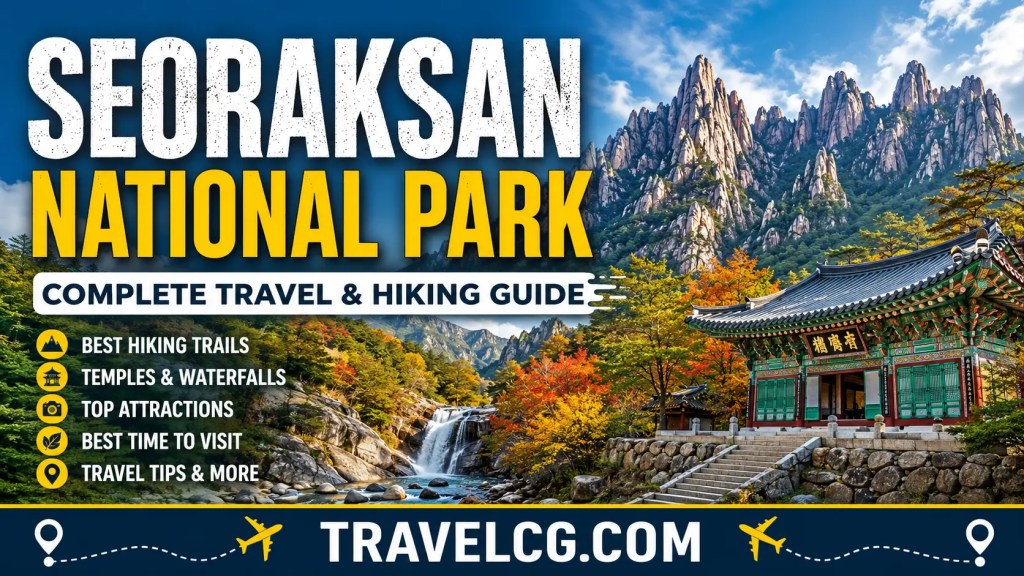
Seoraksan National Park is one of South Korea’s most spectacular natural destinations, famous for dramatic granite peaks, deep valleys, waterfalls, dense forests, ancient temples, and some of the country’s best mountain trails. Located in northeastern South Korea, the park stretches across parts of Sokcho, Yangyang, Inje, and Goseong in Gangwon-do.
The park is particularly famous for Daecheongbong Peak, the highest point of Seoraksan at about 1,708 meters, as well as the striking Ulsanbawi Rock, Biryong Falls, Biseondae, Gwongeumseong Fortress, Sinheungsa Temple, and beautiful valleys.
Seoraksan became South Korea’s fifth national park in 1970 and was designated as a UNESCO Biosphere Reserve in 1982. Its extensive natural environment supports a rich variety of plants and animals, making it important not only as a tourist destination but also as a major conservation area.
Where Is Seoraksan National Park?
Seoraksan National Park is located in Gangwon-do in northeastern South Korea. The popular Outer Seorak area is easily accessible from Sokcho, a coastal city on the East Sea.
The park covers a large mountainous region and is generally discussed in terms of Outer Seorak, Inner Seorak, and South Seorak. The Sokcho entrance is particularly popular with first-time visitors because several major attractions and hiking trails begin around Seoraksan Sogongwon Park.
For most travelers, Sokcho is the most convenient base for exploring the park.
Why Is Seoraksan National Park Famous?
Seoraksan combines several experiences in one destination:
- Dramatic granite mountains
- Beautiful valleys and streams
- Waterfalls
- Forest hiking
- Panoramic viewpoints
- Ancient Buddhist temples
- Cable-car rides
- Challenging mountain trekking
- Autumn foliage
- Winter landscapes
- Rich biodiversity
The mountain scenery changes dramatically throughout the year. Spring brings fresh greenery and flowers, summer creates lush forests and cool valleys, autumn is famous for colorful foliage, and winter transforms the higher elevations into a snowy mountain landscape.
Daecheongbong Peak
Daecheongbong is the highest peak of Seoraksan, rising to approximately 1,708 meters above sea level. It is one of the most prestigious hiking destinations in South Korea.
The summit can be approached through several routes, including routes from Seorak-dong, Osaek, Baekdam, and Hangyeryeong. A summit hike requires considerably more preparation than the shorter sightseeing trails.
The classic route from Seoraksan Sogongwon Park toward Daecheongbong is around 16 km and can take approximately 10 hours, making it suitable for experienced hikers rather than casual visitors.
Daecheongbong is particularly impressive during sunrise and in autumn, when the surrounding mountains become covered with colorful foliage.
Ulsanbawi Rock
Ulsanbawi Rock is one of Seoraksan’s most recognizable landmarks. It consists of a dramatic series of enormous granite peaks and provides one of the most memorable viewpoints in the park.
The trail begins near Sogongwon Park and passes Sinheungsa Temple and Heundeulbawi Rock before climbing toward Ulsanbawi.
The Ulsanbawi route is considerably more demanding than the easy valley walks because the final section involves steep stairs and rocky terrain. The complete route is roughly 7–8 km depending on the route measurement used and generally takes several hours.
The effort is rewarded with spectacular views across Seoraksan.
Heundeulbawi Rock
Heundeulbawi, meaning roughly “Wobbling Rock,” is another famous attraction on the Ulsanbawi route.
The large rounded boulder is positioned on a rocky platform and is famous for its distinctive appearance and traditional story that it can wobble when pushed.
It has become a popular stopping point for hikers traveling toward Ulsanbawi.
Sinheungsa Temple
Sinheungsa is an important Buddhist temple located near the main entrance to the Outer Seorak area.
Its peaceful surroundings provide a striking contrast to the enormous granite mountains surrounding it. Because the temple is relatively close to Sogongwon Park, visitors do not need to undertake a difficult hike to see it.
For travelers who want to experience Seoraksan without completing a major mountain trek, a visit to Sinheungsa combined with a valley walk is an excellent option.
Biryong Falls
Biryong Falls is one of the best choices for visitors who want a relatively manageable hike with beautiful scenery.
The trail begins at Sogongwon Park and passes through forest, streams, bridges, and smaller waterfalls before reaching Biryong Falls and the Towangseong Falls Observatory.
The Korea Tourism Organization describes the Biryong Falls course as suitable for beginners, with the route to Biryong Falls taking approximately 1.5 hours.
It is an excellent choice for families and travelers who want to experience Seoraksan without attempting a strenuous summit.
Biseondae
Biseondae is another popular destination accessible from Sogongwon Park.
The trail follows a beautiful valley surrounded by impressive rock formations and forest. Compared with Daecheongbong or Ulsanbawi, the route is much more accessible and is a good introduction to Seoraksan’s landscape.
The Biseondae area is especially attractive when the weather is pleasant because visitors can enjoy the combination of mountain scenery, flowing water, and forest.
Gwongeumseong Fortress and Cable Car
One of the easiest ways to experience Seoraksan’s mountain scenery is by taking the Seoraksan Cable Car.
The cable car operates from the Sogongwon area toward Gwongeumseong, a historic mountain fortress site. The ride itself is short, but the elevated viewpoint provides impressive panoramic views of the surrounding mountains.
The Sokcho tourism authority states that the cable car journey covers approximately 1.128 km and takes around 10 minutes, reaching an elevation of about 699 meters.
Because mountain weather can change quickly, cable-car operations can be affected by wind and other weather conditions. Visitors should therefore check operating conditions on the day of their visit.
Best Hiking Trails in Seoraksan
Seoraksan offers trails for different levels of fitness and experience.
1. Sogongwon to Sinheungsa
This is one of the easiest ways to experience Seoraksan.
It is ideal for:
- Families
- Older travelers
- First-time visitors
- Travelers with limited hiking experience
You can combine the temple visit with a short walk through the surrounding forest.
2. Biryong Falls Trail
This is a great intermediate sightseeing hike.
You can expect:
- Forest scenery
- Streams
- Bridges
- Waterfalls
- Mountain views
The route toward Biryong Falls takes approximately 1.5 hours according to Korea Tourism Organization information.
3. Biseondae Trail
The Biseondae route is a beautiful valley hike and is particularly suitable for visitors who want a longer walk without committing to a summit climb.
4. Ulsanbawi Trail
This is one of the most popular challenging day hikes.
The route generally follows:
Sogongwon Park → Sinheungsa → Heundeulbawi → Ulsanbawi → Sogongwon Park
The lower portion is relatively gentle, while the approach to Ulsanbawi becomes steep. Korea Tourism Organization lists the trail at about 7.6 km and approximately four hours.
5. Daecheongbong Trail
This is a serious mountain hike.
The route from Sogongwon Park toward Daecheongbong is approximately 16 km and may take around 10 hours.
Experienced hikers should plan carefully, especially if attempting the summit as a day hike.
Best Time to Visit Seoraksan National Park
Spring
Spring brings fresh greenery, flowers, and pleasant hiking conditions.
It is a good season for visitors who prefer moderate temperatures and renewed vegetation.
Summer
Summer produces dense green forests and flowing streams and waterfalls.
Lower-altitude areas can become warm, while mountain weather may change rapidly. Carry sufficient water and check weather conditions before starting a hike.
Autumn
Autumn is arguably the most famous season for visiting Seoraksan.
The mountain slopes turn into spectacular shades of red, orange, yellow, and green. This period attracts large numbers of visitors, particularly during peak foliage.
If autumn scenery is your priority, plan your trip carefully and expect crowded trails and transportation.
Winter
Winter creates a completely different Seoraksan.
Snow-covered peaks, frozen landscapes, and clear mountain views can be spectacular. However, winter hiking is significantly more demanding.
Snow, ice, freezing temperatures, and shorter daylight hours require proper equipment and experience.
How to Reach Seoraksan from Sokcho
Sokcho is the most convenient city for accessing the popular Outer Seorak entrance.
From central Sokcho, local buses can take visitors toward Seoraksan Sogongwon Park. Korea Tourism Organization indicates that buses 7 or 7-1 from Sokcho can reach the park entrance in roughly 30–40 minutes.
For most tourists staying in Sokcho, visiting Seoraksan as a day trip is straightforward.
How Many Days Do You Need?
One Day
One day is enough for a basic Seoraksan experience.
A practical one-day visit could include:
- Sogongwon Park
- Sinheungsa Temple
- Biseondae or Biryong Falls
- Ulsanbawi if you are physically prepared
- Cable car and Gwongeumseong
Trying to combine every major attraction in one day is not recommended.
Two Days
Two days are better for travelers who want to hike.
You can dedicate one day to the Outer Seorak attractions and another to a longer mountain route.
Three or More Days
Three or more days allow you to explore Seoraksan at a slower pace and combine the national park with other attractions around Sokcho and the East Sea.
Where to Stay
Sokcho is the most convenient base for most visitors.
Accommodation options range from:
- Budget guesthouses
- Hostels
- Mid-range hotels
- Family accommodations
- Resorts
- Higher-end hotels
Staying near central Sokcho provides easier access to restaurants, transportation, and the coast.
Staying closer to the Seoraksan entrance can be useful if hiking early in the morning is your priority.
What to Eat
A Seoraksan trip pairs naturally with the food culture of Sokcho.
Popular foods and specialties to look for include:
- Fresh seafood
- Grilled fish
- Squid dishes
- Korean noodles
- Dumplings
- Korean barbecue
- Traditional soups
- Local market snacks
After a long hike, a warm Korean meal in Sokcho can be an especially satisfying part of the trip.
What to Pack
For a short sightseeing visit, comfortable walking shoes, water, sun protection, and weather-appropriate clothing may be sufficient.
For hiking, prepare more carefully.
Recommended items include:
- Good hiking shoes
- Lightweight backpack
- Water
- Snacks
- Rain jacket
- Extra clothing
- Hat
- Sunglasses
- Sunscreen
- Basic first-aid supplies
- Fully charged mobile phone
- Portable power bank
- Hiking poles if useful for you
For winter hiking, proper cold-weather clothing and traction equipment become much more important.
Seoraksan Hiking Safety
Seoraksan is beautiful but should not be underestimated.
Mountain weather can change quickly, and some trails contain steep, rocky, or exposed sections.
Always check trail conditions and closures before starting a hike. Certain upper mountain trails may be closed seasonally, including during forest-fire prevention periods. Korea Tourism Organization specifically notes restrictions affecting upper sections of some major routes during parts of spring and late autumn.
Follow these basic rules:
- Start early for long hikes.
- Stay on marked trails.
- Carry enough water.
- Check the weather before leaving.
- Avoid difficult routes beyond your fitness level.
- Do not attempt exposed trails during dangerous weather.
- Allow enough time to descend before darkness.
- Follow all temporary trail closures.
- Keep food and waste under control to protect wildlife.
- Carry appropriate clothing for changing mountain conditions.
Is Seoraksan Suitable for Beginners?
Yes.
You do not need to climb Daecheongbong to enjoy Seoraksan.
Beginners can explore:
- Sinheungsa Temple
- Sogongwon Park
- Biryong Falls
- Biseondae
- Cable car and Gwongeumseong
The easier valley trails allow visitors to enjoy the landscape without undertaking a full mountain expedition.
The Ulsanbawi trail is a different matter. Although it is a popular tourist route, the upper portion is steep and requires reasonable fitness.
Is Seoraksan Suitable for Families?
Yes, particularly if you choose shorter routes.
Families can enjoy the park through a combination of sightseeing, temple visits, short walks, and the cable car.
Families with young children or elderly travelers should avoid assuming that every Seoraksan trail is easy. The park contains routes ranging from gentle walks to demanding mountain climbs.
Seoraksan for Photographers
Seoraksan is an excellent destination for landscape photography.
Some of the best photographic subjects include:
- Ulsanbawi Rock
- Daecheongbong Peak
- Autumn foliage
- Waterfalls
- Mountain valleys
- Sinheungsa Temple
- Forest trails
- Snow-covered peaks
- Sunrise and sunset landscapes
Early morning generally offers softer light and fewer visitors, while autumn provides especially dramatic colors.
Seoraksan and Wildlife
The national park is valuable for biodiversity as well as tourism.
Its extensive forests, mountains, valleys, and protected habitats support numerous species of plants and animals.
Visitors should observe wildlife from a distance and never attempt to feed or approach wild animals. Protecting the natural environment is an important part of responsible travel.
How Difficult Is Seoraksan?
The answer depends entirely on the trail.
A short walk around Sogongwon and Sinheungsa can be easy.
Biryong Falls and Biseondae provide more active walking experiences.
Ulsanbawi requires considerably more effort because of its steep upper section.
Daecheongbong is a serious mountain trek and should be treated as such.
Therefore, Seoraksan is suitable for almost everyone, but the right trail must be selected according to your fitness, experience, weather, and available time.
Suggested One-Day Itinerary
For first-time visitors, a balanced itinerary could look like this:
Morning: Arrive at Seoraksan Sogongwon Park.
Early morning: Explore the entrance area and walk toward Sinheungsa Temple.
Late morning: Choose either Biseondae or Biryong Falls.
Afternoon: Return toward Sogongwon and consider the cable car if operating conditions are suitable.
Late afternoon: Leave the national park and return to Sokcho.
This approach provides a good introduction without trying to complete an exhausting mountain hike.
Suggested Two-Day Itinerary
Day 1
Explore:
- Sogongwon Park
- Sinheungsa Temple
- Biseondae
- Biryong Falls
- Gwongeumseong
Spend the evening in Sokcho.
Day 2
Choose a more demanding hike based on your fitness.
Ulsanbawi is a strong choice for an active traveler, while experienced hikers can consider a longer route toward Daecheongbong.
Seoraksan vs Other Korean Mountain Destinations
Seoraksan stands out because it combines spectacular granite formations with deep valleys, forests, waterfalls, temples, and access to the East Sea.
For dramatic rocky scenery, Ulsanbawi and the surrounding peaks are particularly impressive.
For serious hiking, Daecheongbong provides a major summit challenge.
For casual visitors, the combination of cable-car access, temples, waterfalls, and short trails makes Seoraksan more accessible than its reputation as a challenging mountain might suggest.
Important Things to Know Before Visiting
Park access and trail conditions can change because of weather, seasonal restrictions, conservation measures, or safety concerns.
Do not rely solely on information from an old travel article when planning a hike.
Check current park announcements and trail conditions before departure, particularly if you intend to hike to Ulsanbawi or Daecheongbong.
The park’s official information should always take priority over older schedules or unofficial hiking information.
Frequently Asked Questions
Is Seoraksan National Park worth visiting?
Absolutely. It is one of South Korea’s most impressive natural destinations and offers experiences ranging from easy scenic walks to demanding summit hikes.
What is the highest peak in Seoraksan?
Daecheongbong is the highest peak, at approximately 1,708 meters above sea level.
Can beginners visit Seoraksan?
Yes. Beginners can enjoy Sogongwon Park, Sinheungsa, Biseondae, Biryong Falls, and other relatively accessible areas.
How long should I spend in Seoraksan?
One day is enough for highlights, while two days are preferable for visitors who want to combine sightseeing with serious hiking.
What is the most famous rock in Seoraksan?
Ulsanbawi Rock is probably the park’s most iconic rock formation and one of its most popular hiking destinations.
Is autumn the best time to visit?
Autumn is particularly popular because of the spectacular foliage, but every season offers a different experience.
Can I visit Seoraksan without hiking?
Yes. You can enjoy the entrance area, Sinheungsa Temple, scenic walks, and the cable car without undertaking a difficult mountain hike.
Is Seoraksan good for children?
Yes, provided you select an appropriate route. Easy walks and sightseeing areas are much more suitable for children than demanding summit trails.
Final Thoughts
Seoraksan National Park is much more than a hiking destination. It is a place where towering granite peaks, peaceful temples, waterfalls, forests, valleys, and changing seasonal landscapes come together.
For adventurous travelers, the climb toward Daecheongbong provides a serious mountain challenge. For hikers seeking a memorable day trek, Ulsanbawi is an excellent choice. For beginners and families, Biryong Falls, Biseondae, Sinheungsa, and the cable-car area offer beautiful experiences without requiring an extreme level of fitness.
The best way to experience Seoraksan is to choose your route according to your ability rather than trying to see everything in a single day. Take your time, respect the mountain environment, check current trail conditions, and allow the scenery to be the main attraction.
Whether you visit during the colorful autumn foliage, fresh spring greenery, lush summer, or snowy winter, Seoraksan offers one of the most memorable mountain experiences in South Korea.












Leave a Reply