
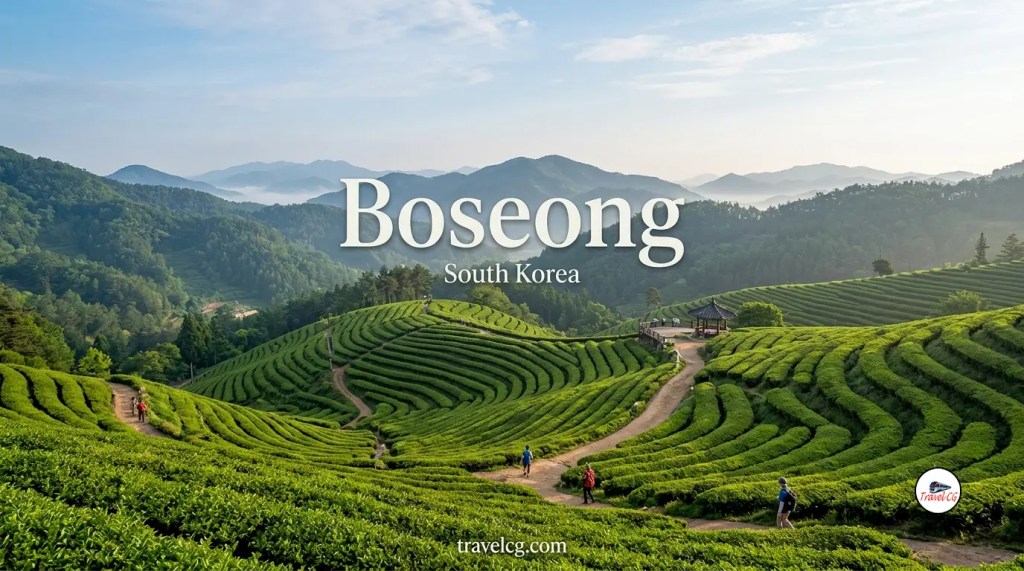
Boseong is a beautiful rural destination in South Jeolla Province, South Korea, best known for its spectacular green tea plantations. The image most associated with Boseong is a landscape of perfectly arranged tea bushes flowing across green hills, often surrounded by mountains, forests and, on clear days, distant coastal views.
Unlike the busy atmosphere of Seoul, Busan or Jeju, Boseong offers a slower and more peaceful side of Korea. It is an excellent destination for nature lovers, photographers, tea enthusiasts, couples and travelers who want to experience Korea beyond its major cities.
The most famous attraction is Daehan Dawon Tea Plantation, but Boseong has much more to offer, including Yulpo Beach, green-tea cuisine, traditional markets, coastal scenery and seasonal festivals.
Where Is Boseong?
Boseong is a county in South Jeolla Province in the southwestern part of South Korea. The region is surrounded by mountains and is close to the southern coast, creating a relatively mild environment suitable for growing tea.
Boseong is particularly famous for green tea production and is considered one of Korea’s most important tea-growing areas. Its tea-covered hills have become one of the country’s most recognizable rural landscapes.
The destination is considerably farther from Seoul than popular day-trip destinations around the capital, so Boseong is best included as part of a South Jeolla itinerary rather than treated as a quick excursion.
Why Is Boseong Famous?
Boseong is famous primarily for its green tea fields.
The area’s combination of hills, rainfall, relatively mild temperatures and proximity to the sea has helped create favorable conditions for tea cultivation. The carefully maintained tea bushes form beautiful curved patterns across the hillsides.
Boseong is also famous for:
- Daehan Dawon Tea Plantation
- Cedar-lined plantation paths
- Korean green tea
- Green tea desserts and beverages
- Yulpo Beach
- Green tea and seawater spa experiences
- Boseong Green Tea Festival
- Traditional Korean food
- Scenic countryside
- Photography and Korean-drama filming locations
Daehan Dawon Tea Plantation
Daehan Dawon is the main reason most travelers visit Boseong. It is the destination’s signature attraction and one of the most visually impressive tea plantations in Korea.
The plantation features enormous stretches of tea bushes arranged in rows along rolling hills. The entrance is particularly memorable because a tall cedar-lined path leads visitors toward the tea fields.
According to VisitKorea, the plantation operates throughout the year, generally from 9:00 AM to 6:00 PM from March through October and 9:00 AM to 5:00 PM from November through February. Adult admission is currently listed at 4,000 won, with reduced admission for children and senior visitors. (VISITKOREA – Imagine Your Korea)
A normal visit can take around one to two hours, although photographers and people who enjoy walking may want considerably longer.
The Famous Cedar Forest Path
One of the first things you encounter at Daehan Dawon is the beautiful cedar forest.
Tall trees line the pathway, creating a long, straight corridor that contrasts dramatically with the open green tea fields beyond it.
This is an excellent place for photography because the tall trees create depth and symmetry. Early morning is particularly attractive when the light is softer and the area tends to be quieter.
Walking Through the Green Tea Fields
After passing through the forest, you reach the main tea plantation.
The tea bushes are arranged in curved rows that follow the natural shape of the hills. As you climb higher, the scenery changes continuously.
From lower paths, the tea bushes appear as enormous green waves. Higher viewpoints allow you to see more of the plantation, surrounding mountains and countryside.
The observation area is located at roughly 350 meters above sea level, and on clear days it can provide views toward the sea. (VISITKOREA – Imagine Your Korea)
You do not need to be an experienced hiker to explore the plantation, but comfortable shoes are strongly recommended because some paths involve uphill walking.
Best Things to Do in Boseong
1. Explore Daehan Dawon
Spend time walking through the tea fields instead of simply taking one photograph and leaving. The landscape changes as you move uphill, and different viewpoints provide different perspectives.
2. Take Photographs
Boseong is one of the best countryside photography destinations in South Korea.
The cedar entrance, curved tea rows, elevated viewpoints and surrounding mountains all provide excellent compositions.
For the best photographs, consider visiting in the morning or late afternoon rather than during the strongest midday sunlight.
3. Drink Fresh Korean Green Tea
Boseong is an ideal place to experience Korean green tea. Tea shops and plantation facilities offer locally produced tea and various tea-based drinks.
You can also purchase packaged tea as a souvenir.
4. Try Green Tea Ice Cream
Green tea ice cream is one of the most popular treats associated with the plantation area.
It provides an easy way to experience Boseong’s tea culture even if you are not a serious tea drinker.
Other tea-inspired foods and beverages may also be available depending on the season and individual businesses.
5. Visit Yulpo Beach
After exploring the tea fields, head toward Yulpo Beach, a coastal destination near Boseong.
Yulpo offers a completely different atmosphere from the plantations. Instead of green hills, you get sand, sea and pine trees.
The beach is known for its scenic coastline and a long stretch of sand backed by mature pine trees. (Korea Trip Tips)
Combining the tea fields with Yulpo Beach makes an excellent one-day Boseong itinerary.
6. Enjoy a Green Tea Spa Experience
The Yulpo area is also known for its seawater bathing facilities, creating an unusual combination of tea-country scenery and coastal relaxation.
After walking around the plantation, a relaxing bathing experience can be a pleasant way to finish the day.
7. Visit During the Green Tea Festival
Boseong hosts a major green tea festival in spring, generally around May.
Festival activities can include tea-related cultural experiences, demonstrations, food and opportunities to learn more about traditional tea production.
Because festival schedules can change from year to year, travelers should verify the dates before planning specifically around the event.
8. Explore Boseong Town
Although the tea plantation is the major attraction, spending some time around Boseong town can give you a better sense of everyday regional Korea.
You can explore local restaurants, markets and shops and sample regional dishes.
9. Try Local Food
Green tea is naturally an important part of Boseong’s food culture.
Look for dishes and snacks incorporating green tea, including green tea beverages, desserts and meals served with tea.
Nearby Beolgyo is particularly famous for cockles, so travelers who enjoy seafood can combine Boseong sightseeing with a meal featuring local cockle dishes.
Best Time to Visit Boseong
Boseong is attractive throughout the year, but the scenery changes significantly with the seasons.
Spring
Spring is one of the most popular times to visit.
The tea fields become intensely green, temperatures are generally comfortable for walking and the green tea festival is usually held around this period.
May is particularly attractive for travelers interested in tea culture and seasonal events.
Summer
Summer produces lush green tea fields and vibrant scenery.
June, July and August can be beautiful, but temperatures can become hot. Walking uphill under strong sunshine can be tiring, so morning or late afternoon visits are preferable.
Autumn
Autumn brings a different character to Boseong. The landscape becomes less intensely green than during the peak tea-growing season, but cooler temperatures can make walking more comfortable.
Winter
Winter is quieter and colder. The plantation remains an interesting destination, but the famous vivid-green appearance is less pronounced.
Seasonal illumination events may also take place in the colder months in some years, so check the current schedule before visiting.
How to Reach Boseong
Boseong is accessible by public transportation, although getting around the surrounding attractions is easier with careful planning.
From Seoul
A common route is to travel from Seoul toward Gwangju by high-speed train and then continue toward Boseong by intercity transportation.
The complete journey generally takes several hours.
Another option is an intercity bus, although journey times can be longer.
From Gwangju
Gwangju is one of the most convenient major cities from which to reach Boseong.
You can continue from Gwangju toward Boseong by intercity bus or rent a car.
From Suncheon
Boseong can also be combined with Suncheon, making a South Jeolla road trip particularly convenient.
Suncheon and Boseong complement each other well: Suncheon provides wetlands, gardens and urban attractions, while Boseong offers tea plantations and coastal scenery.
Should You Rent a Car?
A rental car can make a Boseong trip significantly easier.
The main attractions are spread across a rural area, and public transportation operates less frequently than in Seoul or Busan.
A car allows you to combine:
Daehan Dawon → Boseong town → Yulpo Beach → coastal areas → Beolgyo
in a single day without depending heavily on regional bus schedules.
However, independent travelers can still visit Boseong without a car if they plan transportation carefully and are comfortable using buses and taxis.
How Much Time Do You Need in Boseong?
For Daehan Dawon alone, around 1–2 hours is usually enough for a relaxed visit.
For the plantation plus Yulpo Beach and a meal, a full day is much better.
If you want to explore the surrounding countryside, enjoy local food and combine Boseong with nearby destinations, consider staying overnight.
One-Day Boseong Itinerary
Morning:
Arrive in Boseong and visit Daehan Dawon.
Late morning:
Walk through the cedar forest and tea fields and visit the viewpoints.
Lunch:
Enjoy a Korean meal and try a local tea-based specialty.
Afternoon:
Travel to Yulpo Beach.
Late afternoon:
Walk along the coast and relax around the beach area.
Evening:
Return to Boseong or continue toward Suncheon.
Two-Day Boseong Itinerary
Day 1
Spend most of the day exploring Daehan Dawon and other tea-related attractions.
Enjoy green tea drinks, desserts and local food before exploring Boseong town.
Day 2
Visit Yulpo Beach in the morning, enjoy the coastal scenery and consider a seawater bathing experience.
Afterward, continue toward Beolgyo or Suncheon.
This slower itinerary is ideal for travelers who prefer scenery and relaxation rather than rushing between attractions.
What to Eat in Boseong
Food is an important part of experiencing Boseong.
Try:
- Korean green tea
- Green tea ice cream
- Green tea desserts
- Green tea noodles or tea-inspired dishes
- Traditional Korean set meals
- Local seafood
- Beolgyo cockles
- Korean rice dishes
- Tea-flavored snacks
If you visit during a festival or local market day, you may find additional regional specialties.
Shopping and Souvenirs
Green tea is naturally the best souvenir from Boseong.
Popular purchases include:
- Loose-leaf green tea
- Korean tea bags
- Green tea gift boxes
- Tea sets
- Green tea snacks
- Green tea sweets
- Green tea cosmetics
- Tea-related handicrafts
Buying locally produced tea is a meaningful souvenir because it directly reflects the identity of the region.
Photography Tips for Boseong
Boseong is exceptionally photogenic, but timing makes a major difference.
Visit early in the morning for fewer people and softer light.
The cedar-lined entrance is excellent for symmetrical photographs.
Inside the plantation, photograph the tea rows from different elevations rather than photographing only the most famous viewpoint.
After rainfall, mist and moisture can create a particularly atmospheric appearance, although wet paths may become slippery.
A wide-angle lens is useful for capturing the scale of the plantation, while a standard or telephoto lens can emphasize the repeating patterns of the tea rows.
What to Wear
Comfortable walking shoes are essential.
During spring and autumn, light layers are useful because temperatures can change during the day.
In summer, wear breathable clothing and carry water. A hat and sunscreen are strongly recommended because some sections of the tea plantation have limited shade.
During rainy weather, waterproof footwear or suitable rain protection can make the visit more comfortable.
Is Boseong Worth Visiting?
Absolutely, especially if you enjoy nature, photography, Korean tea, quiet destinations and countryside landscapes.
Boseong is not the place to visit if you are looking for huge shopping districts, nightlife or a long list of major urban attractions. Its appeal is completely different.
The destination is about slowing down, walking through green hills, drinking tea, enjoying the countryside and experiencing a quieter side of South Korea.
The combination of Daehan Dawon’s tea-covered mountains and Yulpo’s coastal landscape makes Boseong particularly special.
Important Travel Tips
Plan your transportation before leaving major cities because regional transportation is less frequent than Seoul’s extensive public transit.
Start your plantation visit early if you want fewer crowds and more comfortable temperatures.
Wear proper walking shoes because the plantation contains uphill sections.
Carry drinking water during warm months.
Keep some Korean won available for small businesses and local stalls.
Do not rush through Daehan Dawon. The beauty of Boseong is in the landscape and changing viewpoints rather than a single attraction.
If possible, combine Boseong with Suncheon or other destinations in South Jeolla Province.
Always check current admission prices, opening hours, transportation schedules and festival dates before traveling because local information can change.
Boseong Travel FAQs
What is Boseong famous for?
Boseong is most famous for its spectacular green tea plantations, especially Daehan Dawon Tea Plantation.
Is Boseong worth visiting?
Yes. It is particularly worthwhile for travelers interested in Korean tea culture, beautiful landscapes, photography and peaceful countryside experiences.
How long should I spend in Boseong?
A full day is suitable for Daehan Dawon and Yulpo Beach. An overnight stay is better if you want to explore the surrounding region at a relaxed pace.
What is the best time to visit Boseong?
Late spring and early summer are excellent for vivid green tea-field scenery. Spring is also attractive because of the tea harvest and festival season.
Can I visit Boseong without a car?
Yes, but public transportation requires more planning than in Korea’s major cities. Buses and taxis can be used, while a rental car provides greater flexibility.
What should I buy in Boseong?
Locally produced green tea is the obvious choice. Tea snacks, tea sets and other green-tea products also make good souvenirs.
Can Boseong be combined with Suncheon?
Yes. Boseong and Suncheon make an excellent combination for a South Jeolla trip, especially for travelers who want to experience both tea plantations and wetlands, gardens and coastal scenery.
Final Thoughts
Boseong is one of South Korea’s most beautiful destinations for travelers seeking something beyond the country’s famous cities.
Its identity is built around green tea, but its attraction goes far beyond tea itself. The cedar forests, rolling plantations, mountain viewpoints, local food, peaceful countryside and nearby coastline create a destination that can easily fill an entire day or become part of a longer South Jeolla adventure.
For a first visit, make Daehan Dawon Tea Plantation your priority, explore the tea fields slowly, taste local green tea and then continue toward Yulpo Beach. If you have more time, stay overnight and explore Boseong and neighboring areas at a relaxed pace.
If you want to experience one of Korea’s most distinctive rural landscapes, Boseong deserves a place on your South Korea itinerary.














 Travel CG
Leave a comment