
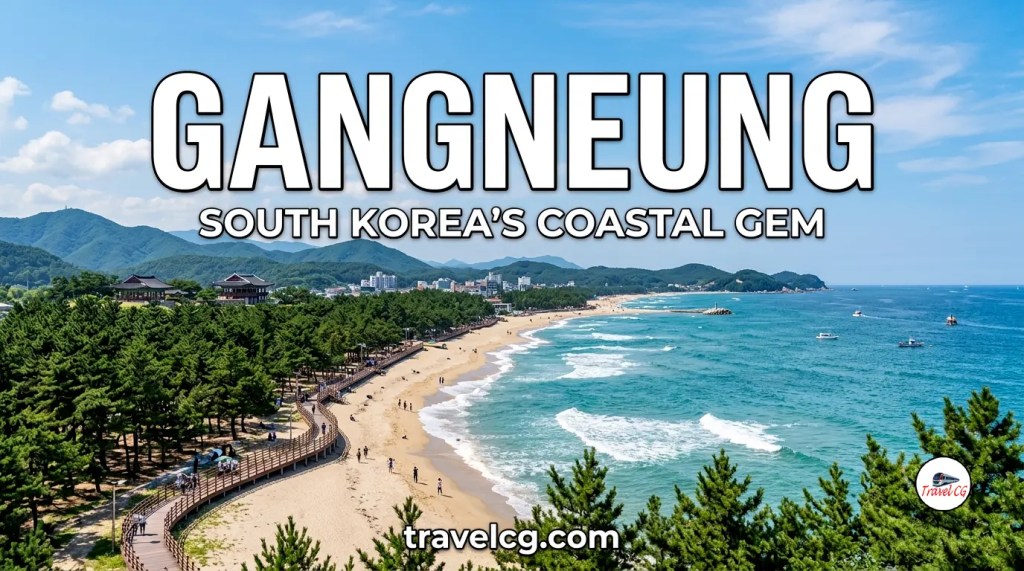
Gangneung is one of South Korea’s most attractive coastal destinations, combining beautiful beaches, traditional Korean heritage, mountain scenery, famous coffee culture, fresh seafood and a relaxed seaside atmosphere. Located on the east coast of Gangwon Special Self-Governing Province, Gangneung is particularly appealing because travelers can experience the sea, lakes, historic houses, cultural attractions and cafés within a relatively compact area.
The city is also strongly associated with sunrise views, especially at Jeongdongjin, while Gyeongpo Beach, Anmok Coffee Street and Jumunjin are among its best-known attractions. Gangneung was also one of the major host cities during the 2018 PyeongChang Winter Olympics.
Why Visit Gangneung?
Gangneung offers a different experience from Seoul and Busan. It is less about big-city sightseeing and more about enjoying Korea’s eastern coastline, traditional culture, cafés, food and nature.
Some of the biggest reasons to visit include:
- Beautiful East Sea beaches
- Sunrise at Jeongdongjin
- Gyeongpo Lake and Gyeongpodae Pavilion
- Gangneung Coffee Street at Anmok Beach
- Traditional Korean architecture
- Ojukheon House
- Seongyojang House
- Chodang Sundubu, or soft tofu
- Fresh seafood at Jumunjin
- BTS-related photo spots
- Scenic coastal roads
- Art and media museums
- Relaxed cafés overlooking the sea
- Easy access from Seoul by high-speed rail
Gangneung is particularly good for travelers who want to combine sightseeing with a slower holiday.
Best Places to Visit in Gangneung
Gyeongpo Beach
Gyeongpo Beach is one of Gangneung’s signature attractions and one of the most popular beaches on Korea’s eastern coast.
The beach is situated between Gyeongpo Lake and the sea and is surrounded by pine trees. The combination of sand, ocean, forest and nearby attractions makes it an excellent place to spend several hours rather than simply making a short photo stop.
Gyeongpo Beach has a sandy shoreline of about 1.8 km and relatively shallow water. Visitors can also combine a beach visit with cycling around Gyeongpo Lake.
The area is especially lively during summer, but the beach is attractive throughout the year.
Gyeongpo Lake
Gyeongpo Lake is located close to Gyeongpo Beach and is one of the best places in Gangneung for a relaxed walk or bicycle ride.
The lake is particularly beautiful during spring when cherry blossoms surround parts of the area. The lakeside promenade extends for approximately 4 km and also provides opportunities to see migratory birds and sculptures.
A good way to experience the area is to visit Gyeongpo Beach first and then walk or cycle around the lake.
Gyeongpodae Pavilion
Gyeongpodae is a historic Korean pavilion overlooking Gyeongpo Lake.
It is one of Gangneung’s most important cultural landmarks and provides a good introduction to the region’s traditional architecture and history.
The pavilion is particularly attractive during spring when cherry blossoms appear around the Gyeongpo area.
Ojukheon House
Ojukheon is one of Gangneung’s most important historical attractions.
The traditional house is associated with Shin Saimdang and her son Yulgok Yi I, two highly respected figures in Korean history. It is frequently included among the essential first-time Gangneung attractions.
Visitors interested in Korean history, traditional architecture and Confucian culture should make this one of their priorities.
Seongyojang House
Seongyojang is another important traditional residence in Gangneung.
The historic house provides a glimpse into the lifestyle and architecture of an aristocratic Korean family in the Joseon period.
It works particularly well as a companion visit to Ojukheon because the two attractions allow visitors to explore different aspects of Gangneung’s traditional heritage.
Anmok Beach and Gangneung Coffee Street
Anmok Beach is where Gangneung’s famous coffee culture meets the sea.
The area developed from a simple seaside coffee-vending-machine culture into a major café district known as Gangneung Coffee Street. Today, travelers can find numerous cafés where they can drink coffee while enjoying views of the East Sea.
For many visitors, drinking coffee at Anmok is not simply a meal break—it is one of the main Gangneung experiences.
Try visiting around late afternoon so you can enjoy the coastline, café atmosphere and sunset.
Jeongdongjin
Jeongdongjin is famous throughout Korea for its spectacular sunrise.
The beach, railway station and coastline create an unusual combination that makes this one of Gangneung’s most memorable destinations.
Jeongdongjin Station is famously located extremely close to the sea, and the area is particularly popular with people who want to watch the first sunrise of the new year.
The area also has Sandglass Park and coastal scenery suitable for photography.
If sunrise is important to you, check the sunrise time before leaving your accommodation and arrive early.
Jumunjin Beach
Jumunjin is another major coastal destination north of central Gangneung.
The area is known for its beach, port, seafood and several popular Korean entertainment-related photo locations.
One of the most famous attractions is the BTS Bus Stop near Hyangho Beach/Jumunjin, which became popular after appearing in imagery associated with BTS. Gangneung officially identifies it as a popular photo spot.
Fans of Korean dramas and K-pop may therefore want to include Jumunjin even if they are not primarily interested in beaches.
Jumunjin Fish Market
Jumunjin is also an excellent place to experience Gangneung’s seafood culture.
The port and fish market provide opportunities to see the region’s fishing traditions and try fresh seafood.
If you enjoy seafood, allow extra time here rather than simply visiting the beach.
Chodang Sundubu Village
Chodang is famous for sundubu, or soft tofu.
The area is dedicated to tofu-based food and is one of the places travelers should visit when they want to experience Gangneung beyond beaches and coffee. Korea Tourism Organization also recommends Chodang Sundubu Village as a travel tip for first-time visitors.
Try traditional soft-tofu dishes, tofu-based meals and local variations served by restaurants in the area.
Heo Gyun and Heo Nanseolheon Memorial Park
This cultural site is associated with the literary figures Heo Gyun and Heo Nanseolheon.
The attraction is useful for travelers interested in Korean literature, history and traditional culture.
It can also be combined conveniently with Chodang and the Gyeongpo area.
ARTE Museum Valley Gangneung
ARTE Museum Gangneung provides a completely different experience from Gangneung’s historical attractions.
It is an immersive media-art attraction using large-scale digital installations, light, sound and visual effects.
Korea Tourism Organization includes ARTE Museum Gangneung among the major attractions recommended for first-time visitors.
It is especially suitable for families, young travelers and photography enthusiasts.
Haslla Art World
Haslla Art World is an art complex located overlooking the East Sea.
The complex combines galleries, outdoor sculptures, a Pinocchio-related museum, cafés and other facilities. Its coastal setting makes the attraction particularly interesting for travelers who enjoy art and scenic photography.
Gangneung Daedohobu Government Office
For travelers interested in Gangneung’s history, the former government-office area offers another opportunity to explore the city’s traditional heritage.
The site is part of Gangneung’s broader collection of historical attractions and can be combined with other cultural destinations in the city.
Best Beaches in Gangneung
Gangneung has a long coastline with numerous beaches.
Some of the best-known include:
- Gyeongpo Beach
- Anmok Beach
- Jumunjin Beach
- Jeongdongjin Beach
- Yeongok Beach
- Sacheon Beach
- Okgye Beach
Gangneung officially promotes numerous beaches across the city, making it one of Korea’s important summer coastal destinations.
Which Beach Should You Choose?
Choose Gyeongpo Beach for a classic Gangneung beach experience.
Choose Anmok Beach for coffee, cafés and ocean views.
Choose Jeongdongjin Beach for sunrise and coastal scenery.
Choose Jumunjin Beach for seafood, coastal attractions and the famous BTS-related photo spot.
Choose smaller northern beaches if you prefer a quieter atmosphere.
Gangneung Coffee Culture
Coffee is one of the defining features of modern Gangneung.
The city developed a strong coffee culture from the late 1990s and early 2000s as baristas and coffee specialists established cafés and roasteries along the coast. Anmok became the best-known center of this culture.
For coffee lovers, Gangneung is more than a city with cafés. Coffee is part of the city’s identity.
A simple Gangneung coffee experience can involve:
- Walk along Anmok Beach.
- Choose a sea-view café.
- Order Korean-style coffee or specialty pour-over coffee.
- Sit beside the window.
- Enjoy the East Sea view.
- Walk along the beach afterward.
Gangneung is also associated with first-generation Korean barista Park I-choo, whose coffee career helped shape the city’s coffee identity.
What to Eat in Gangneung
Food is an important part of a Gangneung trip.
Chodang Sundubu
Soft tofu is perhaps the food most closely associated with Gangneung.
The Chodang area is famous for its tofu restaurants, making it an obvious stop for food-focused travelers.
Fresh Seafood
With its coastal location and major fishing port, Gangneung is an excellent destination for seafood.
Try local seafood restaurants around Jumunjin and other coastal areas.
Korean Street Food
Gangneung’s traditional markets are good places to explore Korean snacks and inexpensive local food.
Jungang Market is one of the city’s important traditional markets.
Coffee and Desserts
Do not underestimate Gangneung’s café scene.
Many travelers consider café hopping an actual activity here rather than simply something to do between attractions.
Best Things to Do in Gangneung
A Gangneung trip does not have to be focused entirely on sightseeing.
Some of the best experiences include:
- Watch sunrise at Jeongdongjin.
- Walk barefoot on Gyeongpo Beach.
- Cycle around Gyeongpo Lake.
- Drink specialty coffee at Anmok.
- Explore Ojukheon.
- Visit Seongyojang.
- Eat Chodang sundubu.
- Visit Jumunjin Fish Market.
- Photograph the BTS Bus Stop.
- Explore ARTE Museum.
- Visit Haslla Art World.
- Walk along the pine forests near the coast.
- Explore traditional markets.
- Enjoy a seafood dinner.
- Take a scenic coastal drive.
- Spend an afternoon café hopping.
Gangneung for K-Drama and K-Pop Fans
Gangneung has become especially attractive to Korean entertainment fans.
The Jumunjin area contains the famous BTS Bus Stop photo location, while several coastal locations have appeared in Korean entertainment productions.
The official Gangneung tourism service even highlights touring routes connecting locations associated with BTS and the drama Guardian: The Lonely and Great God.
If you are a K-drama or K-pop fan, research filming locations before your trip because several can be incorporated into a coastal itinerary.
Gangneung for Families
Gangneung is suitable for families because its attractions cover beaches, museums, parks, food and cultural sites.
A family itinerary can include:
Day 1: Gyeongpo Beach + Gyeongpo Lake + Gyeongpodae
Day 2: Ojukheon + ARTE Museum + Chodang Sundubu Village
Day 3: Anmok Beach + Coffee Street + Jumunjin
Families traveling with children may want to prioritize interactive museums, beaches and open outdoor spaces rather than trying to visit every historical attraction.
Gangneung for Couples
Gangneung is particularly attractive for couples.
Good romantic experiences include:
- Sunrise at Jeongdongjin
- Sea-view cafés at Anmok
- Sunset walks
- Cycling around Gyeongpo Lake
- Beach photography
- Coastal drives
- Seafood dinner
- Art museums
- Quiet walks along less crowded beaches
A combination of beach + café + sunset is one of the easiest ways to enjoy Gangneung without creating an exhausting schedule.
Gangneung for Solo Travelers
Solo travelers can easily enjoy Gangneung.
Coffee streets, beaches, markets and museums can all be explored independently.
A relaxed solo day could look like:
Morning: Gyeongpo Lake
Late morning: Gyeongpodae
Lunch: Chodang sundubu
Afternoon: Gyeongpo Beach
Evening: Anmok Coffee Street
The city works particularly well for travelers who enjoy photography and slow travel.
Best Time to Visit Gangneung
Gangneung can be visited throughout the year, but the experience changes considerably by season.
Spring
Spring is excellent for flowers and mild weather.
The Gyeongpo area is especially attractive when cherry blossoms are in bloom. Gyeongpo Lake is one of the locations highlighted for spring cherry blossoms.
Summer
Summer is the best season for travelers primarily interested in beaches and swimming.
Gyeongpo, Anmok and Jumunjin become lively coastal destinations.
However, summer can also be busy, especially around popular beaches.
Autumn
Autumn is excellent for comfortable sightseeing, coastal walks and photography.
The weather is generally more pleasant for exploring cultural attractions and outdoor destinations than during the hottest part of summer.
Winter
Winter gives Gangneung a quieter coastal atmosphere.
Jeongdongjin becomes particularly attractive around New Year because of its famous sunrise tradition.
Winter also offers an opportunity to combine Gangneung with the broader Gangwon region.
How Many Days Do You Need in Gangneung?
One Day
A one-day trip is possible if you focus on the highlights.
Suggested route:
Ojukheon → Chodang Sundubu → Gyeongpo Lake → Gyeongpo Beach → Anmok Coffee Street
Two Days
Two days provide a much better introduction.
Day 1: Ojukheon → Seongyojang → Chodang → Gyeongpo Lake → Gyeongpo Beach
Day 2: Jeongdongjin → coastal sightseeing → Jumunjin → BTS Bus Stop → Anmok Coffee Street
Three Days
Three days allow you to slow down.
Add:
- ARTE Museum
- Haslla Art World
- Gangneung traditional markets
- More cafés
- Additional beaches
- A longer coastal drive
For most international travelers, 2–3 days is a comfortable amount of time for Gangneung.
How to Reach Gangneung
From Seoul by Train
One of the easiest ways to reach Gangneung from Seoul is by high-speed rail.
Korea Tourism Organization describes Gangneung as conveniently accessible from Seoul by KTX, with the journey taking roughly two hours.
This makes Gangneung particularly attractive for travelers staying in Seoul who want to add an eastern-coast excursion.
By Bus
Intercity buses also connect Gangneung with other Korean cities.
Bus travel can be useful when your itinerary does not align conveniently with train services.
By Car
Driving gives you more flexibility, particularly if you want to explore coastal destinations outside the city center.
A car is useful for combining places such as Jumunjin, Gyeongpo, Anmok and Jeongdongjin.
Getting Around Gangneung
Gangneung has public buses, taxis and other local transportation options.
For a first visit, it is helpful to divide the city geographically instead of repeatedly traveling back and forth.
A practical approach is:
Gyeongpo area: Gyeongpo Beach, Gyeongpo Lake, Gyeongpodae
Central/cultural area: Ojukheon, Seongyojang, traditional markets
Anmok area: Anmok Beach and Coffee Street
Northern coast: Jumunjin and Hyangho
Southern coast: Jeongdongjin and Haslla Art World
Gangneung has also promoted tourism transportation services, including routes connecting Ojukheon, Seongyojang, Gyeongpo, Chodang and Anmok.
Suggested 2-Day Gangneung Itinerary
Day 1: History, Lake and Beach
Start at Ojukheon House.
Spend enough time exploring the traditional architecture and historical exhibits.
Next, visit Seongyojang House.
Have lunch around Chodang Sundubu Village.
In the afternoon, head toward Gyeongpo Lake.
Walk or cycle along the lake before visiting Gyeongpodae Pavilion.
Finish the day at Gyeongpo Beach.
If you still have energy, travel to Anmok Beach for coffee and an evening ocean view.
Day 2: Sunrise, Coast and Coffee
Start early with Jeongdongjin sunrise.
After exploring the beach and surrounding area, continue north toward Jumunjin.
Visit the port and fish market.
Then visit the famous BTS Bus Stop photo location.
Spend the afternoon around Jumunjin Beach.
Return toward Gangneung and finish the trip at Anmok Coffee Street.
Suggested 3-Day Gangneung Itinerary
Day 1
Ojukheon → Seongyojang → Chodang Sundubu → Gyeongpo Lake → Gyeongpodae → Gyeongpo Beach
Day 2
Jeongdongjin → coastal sightseeing → Haslla Art World → return toward Gangneung → Anmok Coffee Street
Day 3
Jumunjin → Jumunjin Fish Market → BTS Bus Stop → Jumunjin Beach → ARTE Museum → Gangneung Central Market
This schedule leaves enough flexibility to stop at cafés, restaurants and viewpoints.
Where to Stay in Gangneung
Choose your accommodation area according to the type of trip you want.
Gyeongpo
Best for:
- Beach lovers
- Families
- First-time visitors
- Resorts
- Summer holidays
Anmok
Best for:
- Coffee lovers
- Couples
- Sea views
- Café hopping
Gangneung Downtown
Best for:
- Markets
- Restaurants
- Transportation
- Budget travelers
- Travelers who want a more urban base
Jumunjin
Best for:
- Seafood
- Coastal scenery
- K-pop and filming locations
- A quieter coastal atmosphere
Jeongdongjin
Best for:
- Sunrise
- Couples
- Coastal scenery
- Travelers seeking a special overnight experience
Gangneung Travel Tips
Start Early
Popular attractions can become busy later in the day.
Starting early is especially important if sunrise or photography is a priority.
Check Weather
Gangneung is a coastal destination, so weather can strongly influence the experience.
Beach activities, sunrise photography and coastal viewpoints are all affected by weather conditions.
Carry a Translation App
English is available at major tourist attractions, but smaller restaurants and local businesses may have limited English communication.
A Korean translation app can be very useful.
Wear Comfortable Shoes
Gangneung involves considerable walking.
Beaches, lake paths, traditional houses and coastal attractions are best explored on foot.
Keep Cash and Cards Available
Cards are widely useful in South Korea, but having some cash can still be convenient for markets and smaller establishments.
Reserve Popular Accommodation Early
Beachfront accommodation can become expensive and competitive during peak summer periods.
Is Gangneung Expensive?
Gangneung can be experienced on different budgets.
Budget Travel
Use guesthouses or budget hotels, local restaurants, public transportation and inexpensive cafés.
Mid-Range Travel
Choose a comfortable hotel near Gyeongpo, Anmok or central Gangneung and combine public transportation with occasional taxis.
Luxury Travel
Choose a high-end seaside hotel or resort, enjoy premium cafés and restaurants, and use taxis or a private vehicle for sightseeing.
Your biggest seasonal cost difference is likely to come from accommodation, especially during the busy summer beach season.
What to Buy in Gangneung
Some useful souvenirs and local products include:
- Korean coffee
- Locally roasted coffee beans
- Traditional snacks
- Regional food products
- Handmade crafts
- Gangneung-themed souvenirs
- Seafood products where permitted and properly packaged
Coffee is one of the most natural souvenirs to take home because of the city’s strong coffee identity.
Photography Spots in Gangneung
Photography enthusiasts have plenty of options.
Best for Sunrise
Jeongdongjin
Best for Beach Photography
Gyeongpo Beach
Best for Café Photography
Anmok Coffee Street
Best for K-Pop Photography
BTS Bus Stop at Jumunjin/Hyangho
Best for Traditional Architecture
Ojukheon and Seongyojang
Best for Artistic Photography
Haslla Art World and ARTE Museum
Gangneung vs Busan
Gangneung and Busan are both excellent Korean coastal destinations, but they provide different experiences.
Choose Gangneung if you want:
- A quieter coastal holiday
- Beaches without a huge metropolitan atmosphere
- Coffee culture
- Traditional Korean heritage
- Sunrise experiences
- Smaller coastal towns
- Slow travel
Choose Busan if you want:
- A much larger city
- Extensive nightlife
- More urban attractions
- Major shopping districts
- A larger variety of entertainment
Gangneung is particularly appealing when your priority is the combination of sea + coffee + culture + relaxation.
Gangneung vs Seoul
Seoul is ideal for major-city experiences, shopping, palaces, museums and nightlife.
Gangneung offers a completely different atmosphere.
A Seoul trip can be energetic and fast-paced, while Gangneung encourages travelers to slow down, enjoy the coastline and spend time in cafés.
For travelers visiting Korea for a week or longer, adding Gangneung can create a useful contrast to Seoul.
Is Gangneung Worth Visiting?
Yes, especially if you want to experience a different side of South Korea.
Gangneung successfully combines:
East Sea beaches + traditional Korean culture + coffee + seafood + sunrise + nature + modern art.
Its greatest strength is not one single landmark. It is the way these experiences fit together.
You can visit a centuries-old traditional house in the morning, eat soft tofu for lunch, walk beside a lake in the afternoon, watch the sea at Gyeongpo and finish the day drinking specialty coffee at Anmok.
That combination makes Gangneung one of the most rewarding destinations on Korea’s east coast.
Final Gangneung Travel Checklist
Before your trip, make sure you have:
- Comfortable walking shoes
- Weather-appropriate clothing
- Korean translation capability
- Hotel reservation
- Transportation plan
- Sunrise time if visiting Jeongdongjin
- Camera or smartphone
- Some cash
- Beach essentials during summer
- Extra time for cafés and local food
Gangneung is best experienced without rushing. Instead of trying to collect as many attractions as possible, choose a few major places and leave time for spontaneous café stops, coastal walks, local food and photography.
For a first visit, the ideal combination is Ojukheon + Chodang Sundubu + Gyeongpo Lake + Gyeongpo Beach + Anmok Coffee Street, with Jeongdongjin and Jumunjin added if you have another day. This approach captures the main character of Gangneung—its history, food, beaches, coffee culture and spectacular eastern coastline.





Leave a Reply