
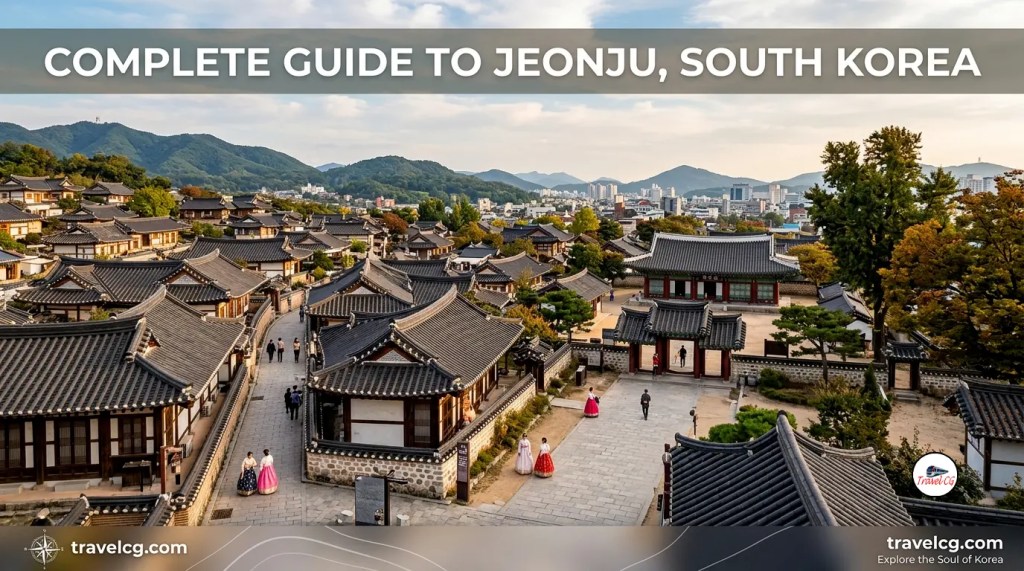
Jeonju is one of South Korea’s most rewarding destinations for travelers who want to experience traditional Korean culture, historic architecture, authentic local food, and a slower pace of travel. Located in Jeollabuk-do in southwestern South Korea, the city is best known for Jeonju Hanok Village, traditional Korean houses, royal history, and its reputation as a major food destination.
Unlike Seoul or Busan, Jeonju feels more relaxed and intimate. Its traditional neighborhoods, narrow lanes, cultural attractions, cafés, craft shops, and famous restaurants make it particularly suitable for a one- or two-night trip.
Jeonju is also recognized by UNESCO as a Creative City of Gastronomy, making food one of the major reasons to visit.
Why Visit Jeonju?
Jeonju offers a different side of Korea. Instead of focusing mainly on skyscrapers, shopping malls, and modern attractions, the city allows visitors to experience traditional Korean life.
The main reasons to visit include:
- Jeonju Hanok Village and its traditional architecture
- Korean history and Joseon-era heritage
- Famous Jeonju bibimbap
- Traditional Korean cafés and tea houses
- Hanbok rental and cultural experiences
- Traditional crafts and souvenirs
- Beautiful photography locations
- Local markets and street food
- Relaxed streets that are easy to explore on foot
- Traditional hanok accommodation
The city is particularly attractive for first-time visitors who want to combine Korean culture and food in a compact destination.
Jeonju Hanok Village
The heart of most Jeonju trips is Jeonju Hanok Village. It is one of Korea’s largest traditional hanok districts, with hundreds of traditional houses and preserved architectural features. The official Jeonju tourism site describes the area as a place where preserved Joseon-era architecture and contemporary life exist together.
Jeonju Hanok Village
The village is not simply an open-air museum. Traditional houses are mixed with cafés, restaurants, guesthouses, craft stores, galleries, cultural spaces, and residences.
The best way to experience it is slowly. Walk through the smaller lanes rather than spending all your time on the busiest streets.
What to Do in Hanok Village
Popular activities include:
- Walking through traditional alleys
- Renting a hanbok
- Visiting traditional tea houses
- Trying Korean snacks
- Photographing hanok rooftops
- Visiting historic buildings
- Shopping for handmade crafts
- Staying overnight in a hanok guesthouse
- Exploring the village after sunset
The atmosphere changes considerably during the evening when traditional lanterns illuminate parts of the village.
Gyeonggijeon Shrine
Gyeonggijeon Shrine
Gyeonggijeon Shrine is one of Jeonju’s most important historical attractions. It is associated with the Joseon Dynasty and houses a portrait of King Taejo, the founder of the dynasty.
The shrine combines historical buildings, landscaped grounds, traditional architecture, and quiet walking areas. It is particularly worthwhile for travelers interested in Korean history.
Its location within Hanok Village makes it easy to include in a walking tour.
Jeondong Catholic Cathedral
Jeondong Catholic Cathedral is one of the most visually distinctive buildings in the Hanok Village area.
Its Western architectural style creates an interesting contrast with the surrounding Korean hanok buildings. The combination of the cathedral, traditional houses, tiled roofs, and historic streets makes this one of Jeonju’s most recognizable photography areas.
It is especially convenient to visit because it is close to Gyeonggijeon Shrine and the main Hanok Village streets.
Omokdae and Imokdae
Omokdae is a popular elevated viewpoint overlooking the traditional rooftops of Jeonju Hanok Village.
The walk up provides a change from the flat streets of the village and rewards visitors with a wider view of the densely packed hanok roofs.
The area also has historical associations with Yi Seong-gye, who later became King Taejo and founded the Joseon Dynasty.
For photographers, early morning and late afternoon can be particularly pleasant because of softer light and fewer crowds.
Jaman Mural Village
Jaman Mural Village
Jaman Mural Village is located near Hanok Village and offers a completely different visual experience.
Colorful murals, painted walls, small cafés, artistic decorations, and hillside streets create a lively atmosphere. It is a good place to combine with Omokdae and the eastern side of Hanok Village.
Because of its colorful artwork and elevated position, it is also popular with travelers looking for interesting photographs.
Jeonju Hyanggyo
Jeonju Hyanggyo is a historic Confucian educational institution associated with traditional Korean scholarship.
The grounds provide a quieter atmosphere than the busiest parts of Hanok Village. Traditional wooden buildings and mature trees make it a pleasant place for visitors who want to slow down and experience another side of Jeonju’s cultural heritage.
The scenery can be especially attractive during seasonal changes, including summer greenery and autumn foliage.
Jeolla Gamyeong
Jeolla Gamyeong represents the historical administrative center of Jeolla Province during the Joseon period.
The site provides an opportunity to learn about the region’s political, economic, and cultural history. Historical interpretations and traditional activities can make the visit more engaging than simply looking at old buildings.
It is a useful addition to a Jeonju history-focused itinerary.
Deokjin Park
Deokjin Park
Deokjin Park is one of Jeonju’s well-known green spaces and offers a relaxing contrast to the historic streets around Hanok Village.
The park is particularly pleasant for walking, photography, and enjoying seasonal scenery. It can be a good choice when you want to spend some time away from the busiest tourist areas.
Jeonju Zoo
Jeonju Zoo
Jeonju Zoo can be considered by families traveling with children. It is located in the Deokjin area and can be combined with nearby recreational attractions.
Families who have already spent significant time visiting historical sites may appreciate having a more casual outdoor attraction in their itinerary.
What to Eat in Jeonju
Food is arguably Jeonju’s biggest attraction.
The city is internationally recognized for gastronomy and is especially famous for dishes such as bibimbap, kongnamul-gukbap, and traditional Korean meals.
Jeonju Bibimbap
Jeonju bibimbap is the dish most strongly associated with the city.
A typical bibimbap combines rice with vegetables and other ingredients, topped and mixed with seasoning. Jeonju’s version is particularly famous for the quality and variety of its ingredients and traditional preparation.
Trying bibimbap in Jeonju is almost essential for first-time visitors.
Kongnamul-gukbap
Kongnamul-gukbap is a comforting Korean bean-sprout soup served with rice.
It is especially associated with Jeonju and makes an excellent breakfast or simple meal.
If you enjoy warm, relatively light Korean food, this is one local specialty worth trying.
Hanjeongsik
Hanjeongsik is a traditional Korean table setting featuring numerous side dishes served alongside rice and other main dishes.
Jeonju’s reputation for traditional cuisine makes it a good place to experience this style of dining.
Makgeolli
Jeonju is also known for its makgeolli culture. Traditional makgeolli restaurants may serve the rice wine together with a large assortment of accompanying dishes.
Visitors who do not drink alcohol can simply focus on Jeonju’s broader food culture, since the city has plenty of non-alcoholic dining options.
Street Food in Hanok Village
One of the most enjoyable things about Jeonju is eating while walking.
The main tourist streets around Hanok Village have numerous snack shops offering modern interpretations of Korean street food.
Popular options include:
- Dumplings
- Korean croquettes
- Grilled skewers
- Korean pancakes
- Sweet snacks
- Fried foods
- Local desserts
- Traditional drinks
The official Jeonju tourism guide highlights several popular local snack stops and describes the area as a major destination for food-focused exploration.
Traditional Cafés and Tea Houses
Jeonju is also an excellent destination for café lovers.
Many cafés operate in renovated hanok buildings, creating an experience that combines traditional architecture with modern Korean café culture.
Look for:
- Traditional Korean tea
- Coffee in hanok settings
- Korean desserts
- Seasonal drinks
- Courtyard cafés
- Craft-inspired interiors
Rather than rushing from attraction to attraction, spending time in a traditional café is one of the best ways to experience Jeonju’s slower atmosphere.
Hanbok Experience
Wearing a hanbok is one of the most popular cultural experiences in Jeonju Hanok Village.
Rental shops allow visitors to choose from a wide range of traditional Korean clothing styles. Once dressed, you can walk through the historic neighborhood and take photographs against traditional architecture.
For the best experience, allow several hours rather than simply renting a costume for a quick photograph.
Traditional Crafts and Shopping
Jeonju has a strong traditional craft culture.
Visitors can find:
- Hanji paper products
- Traditional souvenirs
- Handmade accessories
- Ceramics
- Local food products
- Korean tea
- Traditional decorations
- Artisan crafts
Jeonju is particularly associated with hanji, traditional Korean handmade paper, making paper-related products interesting souvenirs.
Where to Stay in Jeonju
For first-time visitors, staying near Hanok Village is usually the most convenient choice.
Hanok Stay
A hanok stay is ideal if you want a traditional Korean experience.
You can expect features such as:
- Traditional architecture
- Floor-based sleeping arrangements
- Courtyard spaces
- Korean-style interiors
- Quiet surroundings
A hanok stay may be less convenient for travelers who strongly prefer large modern hotel rooms, but it provides a memorable cultural experience.
Modern Hotels
If comfort and conventional hotel facilities are your priority, Jeonju also has modern hotels.
Lahan Hotel Jeonju is located close to the Hanok Village area and is one option for travelers looking for a conventional hotel stay.
Best Western Plus Jeonju Hotel is another modern accommodation option in the city.
For a more traditional atmosphere, smaller hanok guesthouses can be considered.
How Many Days Do You Need in Jeonju?
One Day
A one-day visit is possible if your schedule is limited.
Focus on:
- Hanok Village
- Gyeonggijeon Shrine
- Jeondong Catholic Cathedral
- Omokdae
- Jaman Mural Village
- Bibimbap or another local specialty
- Evening walk through Hanok Village
Two Days
Two days are much better for a relaxed experience.
You can spend the first day exploring the major historical attractions and the second day discovering food, cafés, parks, markets, and less crowded neighborhoods.
Three Days
Three days allow you to slow down considerably.
You can include additional cultural experiences, traditional workshops, parks, museums, cafés, shopping, and nearby attractions without constantly watching the clock.
Best Time to Visit Jeonju
Jeonju can be visited throughout the year, but spring and autumn are particularly attractive.
Spring
Spring brings pleasant temperatures and fresh greenery. It is a good season for walking through Hanok Village and exploring outdoor attractions.
Summer
Summer can be hot and humid, but the greenery is beautiful. Start outdoor sightseeing early and take breaks in cafés during the warmer afternoon hours.
Autumn
Autumn is one of the most attractive seasons for Jeonju. The combination of traditional architecture and autumn foliage creates excellent photography opportunities.
Winter
Winter is colder, but the quieter atmosphere can be appealing. If snow falls, traditional hanok rooftops can create a particularly beautiful scene.
How to Get to Jeonju
Jeonju is well connected with other major Korean cities.
From Seoul
The most convenient option for many travelers is the high-speed train to Jeonju Station.
The journey is generally suitable for a day trip or weekend trip from Seoul.
After arriving at Jeonju Station, you can continue toward Hanok Village by local bus or taxi. The Korea Tourism Organization notes that several city bus routes connect Jeonju Station with the Hanok Village area and that taxis are another straightforward option.
By Bus
Intercity buses also connect Jeonju with other Korean cities.
This can be a practical alternative depending on your starting point and timetable.
From Busan
Travelers coming from Busan can use Korea’s rail and intercity bus networks. Depending on the schedule, the journey may require more planning than a Seoul–Jeonju trip.
Always check the current timetable before departure.
Getting Around Jeonju
The central tourist area is very walkable.
For Hanok Village, walking is usually the best way to explore because many of the most interesting experiences are found in small streets and alleys.
For destinations farther away, consider:
- Local buses
- Taxis
- Rental cars
- Walking
A taxi can be especially useful when traveling with luggage or when visiting several locations outside the central tourist area.
Suggested One-Day Jeonju Itinerary
8:30 AM – Breakfast
Start with kongnamul-gukbap or another Korean breakfast.
9:30 AM – Jeonju Hanok Village
Begin exploring the traditional streets before the busiest part of the day.
10:30 AM – Gyeonggijeon Shrine
Spend time exploring the historic grounds.
11:30 AM – Jeondong Catholic Cathedral
Walk across to the cathedral and take photographs.
12:30 PM – Lunch
Try traditional Jeonju bibimbap.
2:00 PM – Omokdae
Walk toward Omokdae for views over the hanok rooftops.
3:00 PM – Jaman Mural Village
Explore the colorful streets and murals.
4:30 PM – Café Break
Relax in a traditional-style café.
5:30 PM – Shopping and Street Food
Explore local craft stores and try several snacks.
7:00 PM – Evening Hanok Village Walk
Return to the main village streets after sunset and enjoy the illuminated atmosphere.
8:00 PM – Dinner
Finish the day with another local specialty or a traditional Korean meal.
Suggested Two-Day Jeonju Itinerary
Day 1: History and Hanok Village
- Jeonju Hanok Village
- Gyeonggijeon Shrine
- Jeondong Catholic Cathedral
- Traditional lunch
- Omokdae
- Jaman Mural Village
- Hanok café
- Evening street-food tour
Day 2: Food, Culture and Relaxation
- Traditional Korean breakfast
- Jeonju Hyanggyo
- Traditional craft experience
- Local shopping
- Jeolla Gamyeong
- Lunch
- Deokjin Park
- Additional cafés or museums
- Dinner featuring local cuisine
This slower itinerary allows you to experience Jeonju rather than simply checking attractions off a list.
Photography Tips for Jeonju
Jeonju is one of the easiest Korean cities for travel photography.
Good subjects include:
- Hanok rooftops
- Traditional wooden doors
- Narrow stone streets
- Jeondong Catholic Cathedral
- Gyeonggijeon Shrine
- Omokdae viewpoint
- Jaman murals
- Hanbok outfits
- Traditional cafés
- Evening lanterns
Early morning is useful for quieter streets, while late afternoon offers softer light.
If you want photographs without large crowds, explore side streets away from the main tourist route.
Is Jeonju Good for Families?
Yes. Jeonju can work very well for families because many attractions are concentrated within a manageable area.
Children may particularly enjoy:
- Hanbok experiences
- Street food
- Traditional craft activities
- Colorful murals
- Parks
- Easy walking routes
- Jeonju Zoo
Families should remember that some traditional hanok accommodations have floor sleeping arrangements and may not provide the same facilities as conventional hotels.
Is Jeonju Good for Couples?
Jeonju is an excellent destination for couples.
A relaxed itinerary can include:
- Hanbok photography
- Traditional cafés
- Evening walks
- Local food
- Hanok accommodation
- Scenic viewpoints
- Quiet cultural attractions
The combination of traditional architecture, cafés, food, and nighttime atmosphere makes the city particularly suitable for a romantic weekend.
Is Jeonju Worth Visiting?
Absolutely.
Jeonju is especially worthwhile if you want to experience a more traditional and relaxed side of South Korea.
Seoul is ideal for modern city life, Busan for coastal scenery, and Jeju for nature, while Jeonju offers a strong combination of Korean heritage, traditional architecture, and food.
Its greatest advantage is that many experiences are concentrated in and around the Hanok Village, making the city relatively easy to explore during a short trip.
Practical Travel Tips
Keep these tips in mind when planning your visit:
- Wear comfortable walking shoes.
- Allow plenty of time for Hanok Village.
- Visit major attractions earlier in the day if you prefer quieter streets.
- Try more than one local specialty rather than eating only bibimbap.
- Consider staying overnight rather than making Jeonju only a rushed day trip.
- Carry a translation app if you do not speak Korean.
- Check attraction opening hours before visiting.
- Check current train and bus schedules before traveling.
- Respect residential areas within Hanok Village.
- Avoid making excessive noise around homes and traditional guesthouses.
- Carry some Korean won for small purchases and traditional shops.
- Book popular accommodation in advance during busy travel periods.
What Makes Jeonju Special?
The real charm of Jeonju is not just one attraction.
It is the combination of traditional houses, historic sites, Korean food, cafés, craft culture, peaceful streets, and the opportunity to experience a slower rhythm of travel.
You can begin the morning walking beneath traditional tiled roofs, eat bibimbap for lunch, explore a historic shrine in the afternoon, drink tea in a hanok café, and finish the day walking through lantern-lit streets.
That combination makes Jeonju one of the best destinations in South Korea for travelers looking for culture, food, history, and an authentic Korean atmosphere.













Leave a Reply