
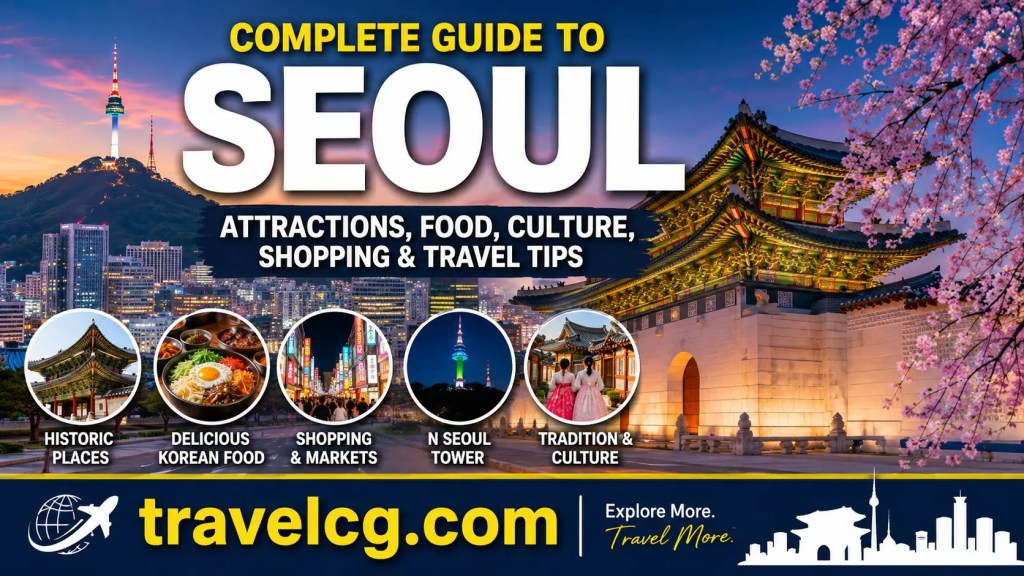
Seoul, the vibrant capital of South Korea, is a fascinating destination where ancient traditions and futuristic technology exist side by side. From magnificent royal palaces and traditional villages to modern skyscrapers, K-pop culture, stylish cafés, shopping districts and world-class public transportation, Seoul offers an extraordinary travel experience.
Located along the Han River, Seoul is one of Asia’s most dynamic cities. It is a destination where you can spend the morning exploring a centuries-old palace, enjoy traditional Korean food for lunch, shop in a fashionable neighborhood in the afternoon and admire a spectacular city skyline at night.
Whether you are interested in history, culture, food, shopping, photography, entertainment or modern urban life, Seoul has something for almost every traveler.
Why Visit Seoul?
Seoul is much more than a modern capital city. It combines Korean history, culture and contemporary lifestyle in a remarkably compact travel destination.
The city is home to historic palaces such as Gyeongbokgung, traditional neighborhoods such as Bukchon Hanok Village, colorful markets, Buddhist temples and museums. At the same time, areas such as Gangnam, Hongdae and Myeongdong showcase modern Korean fashion, entertainment, cafés and nightlife.
Seoul is also famous around the world for Korean popular culture. Fans of K-pop, Korean dramas, Korean beauty and Korean fashion can find countless experiences connected with contemporary Korean culture.
Another major advantage is the city’s transportation system. Seoul has an extensive subway and bus network, making it relatively easy to explore different neighborhoods without depending on taxis.
Best Time to Visit Seoul
Seoul experiences four distinct seasons, and each season provides a different travel experience.
Spring
Spring is one of the most beautiful times to visit Seoul. The weather is generally pleasant, and cherry blossoms and other flowers create colorful scenery throughout the city.
March to May is particularly attractive for travelers who enjoy walking, photography and outdoor sightseeing.
Summer
June to August can be hot and humid, with periods of heavy rainfall. However, summer also brings lively city activities, green parks and vibrant nightlife.
If you travel during this season, carry light clothing and an umbrella and stay hydrated.
Autumn
September to November is another excellent period for visiting Seoul. Temperatures become comfortable, and autumn foliage creates spectacular scenery in parks, mountains and palace grounds.
For many travelers, autumn is the best season for sightseeing in Seoul.
Winter
December to February can be cold, and snowfall is possible. However, winter has its own charm, especially for travelers interested in winter landscapes, Korean food, cafés and seasonal activities.
Pack warm clothing, especially if you plan to spend considerable time outdoors.
Top Places to Visit in Seoul
Seoul has a huge number of attractions, but several places should be included in a first-time itinerary.
Gyeongbokgung Palace
Gyeongbokgung Palace is one of Seoul’s most important historical attractions. Built during the Joseon Dynasty, the palace complex provides an excellent introduction to Korea’s royal history and traditional architecture.
The large courtyards, traditional buildings, gates and surrounding mountains make it one of the most photogenic locations in the city.
Visitors can also see the changing of the guard ceremony and explore the surrounding area in traditional Korean clothing.
Bukchon Hanok Village
Bukchon Hanok Village is famous for its traditional Korean houses known as hanok.
The neighborhood consists of narrow streets, traditional architecture, small galleries, cafés and cultural shops. It is located close to several major historical attractions, making it convenient to combine with a palace visit.
Because Bukchon is also a residential neighborhood, visitors should respect local residents, maintain quiet behavior and follow photography restrictions where applicable.
Insadong
Insadong is one of the best places to experience traditional Korean culture in central Seoul.
The neighborhood is known for traditional crafts, art galleries, tea houses, souvenirs and Korean restaurants. It is an excellent area for travelers who want to purchase culturally themed gifts.
Walking through Insadong is particularly enjoyable because the area offers a contrast to Seoul’s modern shopping districts.
Myeongdong
Myeongdong is one of Seoul’s most famous shopping and food districts.
The neighborhood is popular for Korean cosmetics, fashion, skincare products, restaurants, cafés and street food. It becomes particularly lively in the evening.
Travelers interested in Korean beauty products should allow enough time to explore the many stores in the area.
N Seoul Tower
N Seoul Tower, located on Namsan Mountain, is one of Seoul’s most recognizable landmarks.
The observation areas provide impressive views across the enormous metropolitan area. Visiting around sunset allows travelers to see Seoul during daylight and then watch the city illuminate after dark.
The surrounding Namsan area also provides opportunities for walking and enjoying nature.
Han River
The Han River is an important part of Seoul’s identity.
Several parks along the river are popular with locals and visitors for walking, cycling, picnics and relaxing. In good weather, spending an evening beside the river can be one of the simplest and most enjoyable Seoul experiences.
A Han River picnic is particularly popular among young residents.
Dongdaemun
Dongdaemun is known for shopping, fashion and modern architecture.
The area contains large shopping complexes, fashion markets and the distinctive Dongdaemun Design Plaza. It is especially interesting for travelers who enjoy contemporary architecture and Korean fashion.
Hongdae
Hongdae is one of Seoul’s most energetic neighborhoods.
Located around Hongik University, the area is famous for young culture, independent fashion, cafés, music, street performances, restaurants and nightlife.
It is an excellent neighborhood for travelers who want to experience Seoul’s contemporary youth culture.
Gangnam
Gangnam became internationally famous through Korean pop culture, but the actual district offers much more than its famous name.
It is a modern commercial area filled with offices, luxury shopping centers, restaurants, cafés, entertainment venues and fashionable streets.
Travelers interested in Korean beauty, fashion and contemporary urban life may particularly enjoy Gangnam.
Changdeokgung Palace
Changdeokgung is another important Joseon-era palace and is particularly famous for its beautiful garden.
The palace demonstrates traditional Korean architecture while blending naturally with the surrounding landscape. Its peaceful atmosphere makes it a wonderful contrast to Seoul’s busy commercial districts.
Jogyesa Temple
Jogyesa Temple is an important Buddhist temple in central Seoul.
The temple provides visitors with an opportunity to experience an aspect of Korean Buddhist culture while remaining close to the city’s modern commercial areas.
Its colorful decorations and peaceful atmosphere make it a worthwhile stop during a cultural sightseeing day.
Korean Food You Should Try in Seoul
Food is one of the biggest reasons to visit Seoul.
Korean cuisine offers a wide variety of flavors, textures and cooking styles. Travelers can enjoy everything from inexpensive street food to sophisticated restaurants.
Kimchi
Kimchi is one of Korea’s most famous foods. It is generally made from fermented vegetables and seasoned with ingredients such as chili, garlic and ginger.
Different regions and restaurants prepare kimchi in different ways.
Bibimbap
Bibimbap is a popular Korean rice dish served with vegetables, meat or other ingredients, usually accompanied by a spicy sauce.
It is colorful, filling and easy to find throughout Seoul.
Korean Barbecue
Korean barbecue is a must-try experience for many visitors.
Meat is cooked at the table and typically eaten with side dishes, lettuce wraps, sauces and other accompaniments.
The experience is as much about the social dining style as the food itself.
Tteokbokki
Tteokbokki consists of chewy rice cakes cooked in a spicy and slightly sweet sauce.
It is particularly popular as street food and is an excellent choice for travelers who want to try a casual Korean snack.
Korean Fried Chicken
Korean fried chicken has become internationally popular. Seoul offers numerous restaurants serving crispy chicken with a wide variety of sauces and seasonings.
It is particularly enjoyable with friends during an evening out.
Hotteok
Hotteok is a popular Korean sweet pancake often filled with sugar, nuts and cinnamon.
It is especially enjoyable during colder weather.
Gimbap
Gimbap consists of rice and various fillings wrapped in dried seaweed. It is convenient, affordable and widely available.
It makes a useful option for travelers looking for a quick meal while sightseeing.
Shopping in Seoul
Seoul is one of Asia’s major shopping destinations.
Myeongdong is particularly popular for cosmetics, skincare and fashion. Gangnam offers more upscale shopping, while Hongdae is known for youthful and independent styles.
Insadong is better suited to traditional crafts, souvenirs and cultural products.
Dongdaemun is another major shopping destination, particularly for fashion and wholesale markets.
If you plan to shop extensively, leave extra space in your luggage and keep receipts for expensive purchases.
Seoul’s Famous Café Culture
Seoul has an extraordinary café culture.
You can find minimalist cafés, themed cafés, traditional tea houses, dessert cafés, rooftop cafés and stylish specialty coffee shops throughout the city.
Neighborhoods such as Hongdae, Ikseon-dong, Seongsu and Gangnam are particularly popular among café lovers.
Seongsu is especially interesting for its combination of cafés, converted industrial spaces, fashion stores and creative businesses.
Korean Culture and Traditional Experiences
A trip to Seoul becomes much more meaningful when you experience Korean culture beyond sightseeing.
Visitors can explore traditional palaces, try wearing hanbok, visit cultural museums, attend traditional performances and experience Korean tea culture.
Hanbok rental is particularly popular around the historic palace districts. Wearing traditional clothing while visiting palace grounds can also make for memorable photographs.
Travelers should remember that cultural sites are not simply photo locations. Respectful behavior helps preserve the experience for everyone.
Nightlife in Seoul
Seoul remains lively long after sunset.
Hongdae is famous for youthful nightlife, live music, bars and entertainment. Itaewon offers a more international atmosphere, while Gangnam has numerous sophisticated entertainment venues.
For a quieter evening, travelers can visit a riverside park, explore night markets, enjoy a café or visit an observation point for nighttime city views.
Public Transportation in Seoul
Seoul’s public transportation system is one of the city’s greatest advantages.
The subway connects most major tourist areas and is generally the easiest way to travel around the city. Buses provide additional coverage where subway stations are less convenient.
Travelers should consider using a rechargeable transportation card for convenient travel.
Google Maps may not provide the same level of usefulness in South Korea as it does in many other countries. Local navigation apps can therefore be useful for detailed directions and transportation information.
Where to Stay in Seoul
Choosing the right neighborhood can make a significant difference to your trip.
Myeongdong is convenient for first-time visitors who want shopping, food and access to major attractions.
Hongdae is ideal for travelers interested in nightlife, cafés, youth culture and entertainment.
Insadong is a good option for visitors who prefer a traditional cultural atmosphere and easy access to historic attractions.
Gangnam is suitable for travelers interested in modern Seoul, shopping, business districts and upscale restaurants.
Itaewon is known for its international atmosphere and diverse restaurants.
Seongsu is an interesting choice for travelers who enjoy trendy cafés, design, fashion and creative neighborhoods.
How Many Days Are Enough for Seoul?
A minimum of three days can provide a good introduction to Seoul, but four to five days is more comfortable.
With three days, you can focus on the major historical attractions, shopping districts and a few modern neighborhoods.
With four or five days, you can explore the city at a slower pace and include additional attractions, cafés, markets and cultural experiences.
A longer stay also makes it possible to take day trips outside central Seoul.
Suggested Seoul Itinerary
Day 1: Historic Seoul
Start with Gyeongbokgung Palace and explore the surrounding historical district.
Continue to Bukchon Hanok Village and then visit Insadong.
In the evening, explore Myeongdong and enjoy Korean street food.
Day 2: Modern Seoul
Begin in Gangnam and explore the area’s shopping streets and modern architecture.
Continue toward Seongsu to experience Seoul’s trendy café and creative culture.
End the day around the Han River or at another viewpoint.
Day 3: Culture and Nightlife
Visit Changdeokgung Palace and explore another traditional neighborhood.
Spend the afternoon in Hongdae.
In the evening, experience Hongdae’s restaurants, cafés, entertainment and nightlife.
Day 4: Flexible Exploration
Use your fourth day to explore attractions you missed earlier.
You could visit N Seoul Tower, Dongdaemun, museums, additional markets or spend more time exploring cafés and neighborhoods.
Seoul for First-Time Visitors
First-time visitors should avoid trying to see the entire city in a single day.
Seoul is enormous, and attractions are spread across different districts. Instead, group attractions geographically.
For example, Gyeongbokgung, Bukchon and Insadong can be explored together. Similarly, Hongdae and nearby neighborhoods can form another sightseeing day.
This approach reduces travel time and allows you to spend more time actually experiencing each neighborhood.
Useful Travel Tips for Seoul
Carry comfortable walking shoes because many sightseeing areas involve considerable walking.
Learn a few basic Korean expressions. Simple words such as “annyeonghaseyo” for hello and “gamsahamnida” for thank you can be useful and appreciated.
Keep your phone charged because navigation, translation and transportation information can be important throughout the day.
Public transportation is usually more practical than taxis for moving around central Seoul.
Carry a portable battery if you plan to take photographs, use navigation and stay connected throughout the day.
Respect local etiquette, especially inside temples, palaces and residential neighborhoods.
When visiting traditional neighborhoods, remember that people actually live there. Avoid excessive noise and respect signs requesting visitors not to enter private areas.
What to Pack for Seoul
What you pack depends heavily on the season.
For spring and autumn, bring comfortable layers, walking shoes and a light jacket.
For summer, lightweight clothing, sunscreen and an umbrella are useful.
For winter, pack a warm coat, gloves, thermal layers and suitable footwear.
Regardless of the season, comfortable shoes are essential because exploring Seoul often involves long walks and frequent subway transfers.
Is Seoul Expensive?
Seoul can be experienced on different budgets.
Budget travelers can find inexpensive meals, public transportation and affordable accommodation. Mid-range travelers have a large selection of comfortable hotels and restaurants.
Luxury travelers can enjoy premium hotels, fine dining, high-end shopping and exclusive experiences.
One of the best things about Seoul is that travelers do not necessarily need a huge budget to experience the city’s culture. Street food, public parks, traditional neighborhoods and many cultural attractions can be enjoyed relatively affordably.
Day Trips from Seoul
If you have additional time, Seoul can also serve as a base for exploring nearby destinations.
Popular day-trip possibilities include the Korean Demilitarized Zone, Nami Island, Suwon and other historic or natural attractions around the capital region.
A day trip can provide a useful contrast to the dense urban environment of Seoul.
Seoul for Families
Seoul can be an excellent destination for families.
Children may enjoy interactive museums, parks, aquariums, observation decks, themed attractions and street food.
Families should plan their days carefully because Seoul’s large size and extensive walking can be tiring for younger children.
Using the subway and taking regular breaks can make sightseeing more comfortable.
Seoul for Couples
Seoul offers plenty of romantic experiences.
Couples can walk along the Han River, explore beautiful palace grounds, enjoy cafés, visit N Seoul Tower, discover quiet neighborhoods and enjoy Korean cuisine together.
Evening views of the city skyline can be particularly memorable.
Seoul for Solo Travelers
Seoul is also well suited to solo travelers.
The efficient transportation system makes independent exploration relatively convenient. There are countless cafés, museums, markets and neighborhoods where visitors can spend time alone comfortably.
Solo travelers should nevertheless follow normal precautions, particularly late at night and in crowded areas.
Photography in Seoul
Seoul offers extraordinary photography opportunities.
Historic architecture provides beautiful traditional backgrounds, while modern districts offer skyscrapers, neon signs and futuristic architecture.
Some of the best photographic subjects include palace gates, hanok streets, city viewpoints, the Han River, traditional markets and Seoul’s nighttime skyline.
Early morning can be particularly rewarding at popular tourist attractions because there are generally fewer visitors.
Respecting Korean Etiquette
Understanding a few basic cultural practices can make your visit smoother.
Be respectful when entering temples and other religious sites.
Follow instructions at palaces and museums.
Avoid loud behavior in residential neighborhoods.
When eating with locals, observe the dining customs around you.
In crowded public transportation, avoid blocking doors and allow passengers to exit before entering.
Small gestures of courtesy can make a positive difference.
Final Thoughts
Seoul is a destination that rewards curiosity.
Its greatest attraction is not a single landmark but the extraordinary contrast between old and new. Ancient palaces stand near modern skyscrapers. Traditional markets exist alongside luxury shopping districts. Quiet temples can be found only a short distance from busy entertainment streets.
For history lovers, Seoul offers royal palaces, museums and traditional neighborhoods. For food lovers, it provides an enormous variety of Korean dishes and street food. For shoppers, there are cosmetics, fashion, crafts and modern retail districts. For K-pop and Korean culture enthusiasts, the city provides an opportunity to experience the environment behind one of the world’s most influential cultural movements.
A well-planned Seoul trip should therefore combine famous attractions with time simply spent exploring neighborhoods. Take the subway to a new district, walk through its streets, stop at a local café, try something unfamiliar and observe everyday life.
That combination of history, culture, food, technology, entertainment and everyday urban life is what makes Seoul one of Asia’s most fascinating travel destinations.
For a first visit, plan at least three to five days, organize attractions by neighborhood, use public transportation, wear comfortable shoes and leave some free time for spontaneous discoveries.
Seoul is not a city that can be fully understood through a checklist of attractions. The real experience comes from moving between its different worlds—from royal palaces and traditional hanok streets to lively markets, fashionable cafés, modern architecture and the glowing Seoul skyline after dark.





Leave a Reply