
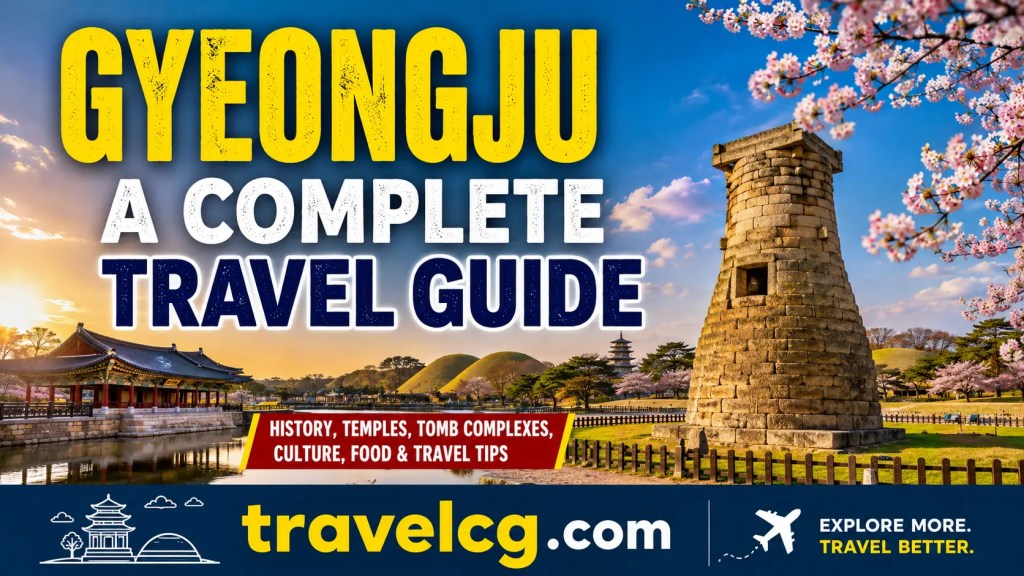
Gyeongju, often called the “museum without walls” of South Korea, is one of the country’s most fascinating destinations for travelers interested in history, culture, architecture, nature, and traditional Korean heritage. Once the capital of the ancient Silla Kingdom for nearly a thousand years, the city is filled with royal tombs, Buddhist temples, ancient observatories, stone sculptures, historic villages, scenic mountains, and traditional architecture.
Unlike Seoul or Busan, Gyeongju has a slower and more atmospheric character. You can spend the morning exploring ancient royal sites, enjoy a traditional Korean meal for lunch, visit a centuries-old temple in the afternoon, and finish the day surrounded by illuminated historic buildings.
Whether you are visiting South Korea for the first time, planning a cultural trip, or simply looking for a quieter alternative to the country’s major cities, Gyeongju deserves a place on your itinerary.
Why Visit Gyeongju?
Gyeongju offers an experience that is very different from South Korea’s modern metropolitan cities. Its greatest attraction is the remarkable concentration of historical sites within and around the city.
The former Silla capital preserves monuments from a period when the Silla Kingdom developed into one of the most influential powers on the Korean Peninsula.
The city is especially appealing because history is not confined to a single museum. Ancient tombs can be found in the middle of modern neighborhoods, historic buildings stand beside cafés, and traditional landscapes blend naturally with contemporary life.
Gyeongju is ideal for:
- History lovers
- Culture enthusiasts
- Architecture lovers
- Photographers
- Families
- Couples
- Solo travelers
- Travelers interested in Buddhism
- Travelers looking for traditional Korean experiences
- Visitors who prefer relaxed destinations
A Brief History of Gyeongju
Gyeongju was the capital of the Silla Kingdom, which existed for centuries before eventually unifying much of the Korean Peninsula in the seventh century.
The Silla period is remembered for major developments in art, architecture, Buddhism, science, and culture. Gyeongju became the political and cultural center of the kingdom and grew into a prosperous capital.
Many of the city’s most famous monuments date from the Silla period or preserve traditions associated with it.
The archaeological remains and historic monuments around Gyeongju provide an extraordinary picture of ancient Korean civilization. This historical importance is one of the main reasons the city is recognized internationally for its cultural heritage.
Best Time to Visit Gyeongju
Gyeongju can be visited throughout the year, but each season offers a different experience.
Spring
Spring is one of the most beautiful seasons in Gyeongju. Cherry blossoms, fresh greenery, and comfortable temperatures make sightseeing particularly enjoyable.
Historic sites surrounded by flowering trees create some of the city’s most memorable landscapes.
Spring is especially popular with photographers and travelers who want to experience Korea’s famous cherry blossom season.
Summer
Summer brings warm and humid weather. The landscape becomes lush and green, making temples, parks, and mountain areas attractive.
However, outdoor sightseeing can become tiring during the hottest part of the day. Early mornings and late afternoons are usually more comfortable.
Autumn
Autumn is another excellent time to visit. Cooler temperatures and colorful foliage make historic areas particularly scenic.
The combination of golden autumn leaves, traditional architecture, stone monuments, and ancient tombs gives Gyeongju a distinctive atmosphere.
Winter
Winter is colder but quieter. Tourist crowds generally decrease, allowing visitors to explore major historical sites at a more relaxed pace.
Snow can occasionally transform the city’s historic landscapes into beautiful winter scenes.
How Many Days Do You Need in Gyeongju?
A two-day trip is enough to experience many of the major attractions, but three days allows you to explore at a much more comfortable pace.
One Day
With only one day, focus on the historic center.
Visit major sites such as:
- Daereungwon
- Cheomseongdae
- Woljeonggyo Bridge
- Gyeongju National Museum
- Donggung Palace and Wolji Pond
Two Days
Two days allow you to combine the historic center with Bulguksa Temple and Seokguram Grotto.
Three Days
Three days provide enough time to explore the major historical sites without rushing and also leave time for traditional neighborhoods, cafés, local food, and less-visited attractions.
Getting to Gyeongju
Gyeongju is well connected with other major destinations in South Korea.
From Seoul
Travelers can reach Gyeongju by high-speed train, conventional train, express bus, or other public transportation options.
The fastest option is generally high-speed rail, although the station serving Gyeongju is outside the historic center, so you will need additional transportation after arriving.
From Busan
Gyeongju is particularly easy to combine with a trip to Busan.
The journey between the two cities is relatively short, making Gyeongju a popular day-trip destination from Busan. However, staying overnight is recommended if you want to experience the city after the daytime crowds leave.
From Other Korean Cities
Intercity buses and trains connect Gyeongju with several major Korean cities.
For travelers moving around South Korea, Gyeongju can easily be included between destinations such as Busan, Daegu, and Seoul.
Getting Around Gyeongju
Gyeongju’s historic attractions are spread across several areas, so transportation planning is useful.
Walking
Walking is excellent within compact historic zones.
The areas around Daereungwon, Cheomseongdae, Gyochon Traditional Village, Woljeonggyo Bridge, and Donggung Palace can be explored on foot.
Bus
Local buses connect many major attractions.
Buses are useful for reaching destinations farther from the central historic district, including Bulguksa Temple.
Taxi
Taxis can save considerable time when visiting multiple attractions in one day.
They are particularly useful when traveling with family or when visiting several sites outside the central area.
Bicycle
Cycling can be a wonderful way to explore Gyeongju’s flatter historic areas.
The combination of open landscapes, ancient tombs, traditional buildings, and quiet roads makes cycling particularly enjoyable in good weather.
Top Places to Visit in Gyeongju
Bulguksa Temple
Bulguksa Temple is one of Gyeongju’s most important cultural attractions.
The temple is renowned for its elegant architecture, stone pagodas, stairways, and Buddhist heritage. Its setting among wooded hills adds to the experience.
Allow enough time to explore the temple grounds rather than simply arriving for a quick photograph.
The peaceful atmosphere is one of the temple’s greatest attractions.
Seokguram Grotto
Located in the mountains above Bulguksa, Seokguram Grotto is another major cultural treasure.
The site is famous for its monumental Buddha sculpture and sophisticated Buddhist artistic tradition.
The journey to Seokguram is also part of the experience, as the site is surrounded by a mountainous landscape.
Because the grotto and Bulguksa are closely associated, travelers commonly visit them on the same day.
Daereungwon Tomb Complex
One of the most recognizable sights in central Gyeongju is Daereungwon.
The area contains large ancient burial mounds associated with Silla royalty and aristocracy.
The enormous grassy tombs rising from the landscape create a striking contrast with the surrounding modern city.
The site is particularly attractive in spring and autumn.
Cheomseongdae Observatory
Cheomseongdae is one of Gyeongju’s most famous historic structures.
The ancient stone astronomical observatory reflects the Silla Kingdom’s interest in astronomy and science.
Although the structure itself is relatively small, its historical importance and distinctive shape make it an essential stop when exploring central Gyeongju.
The surrounding open fields are also pleasant for walking.
Donggung Palace and Wolji Pond
Donggung Palace and Wolji Pond are among Gyeongju’s most atmospheric attractions.
The historic palace complex is especially beautiful after sunset when the buildings and pond are illuminated.
The reflections of the traditional structures on the water create one of Gyeongju’s most memorable evening scenes.
This is an excellent place to visit at dusk and stay into the evening.
Woljeonggyo Bridge
Woljeonggyo is a beautiful traditional-style wooden bridge crossing the river.
The bridge is especially impressive when illuminated at night.
Visitors can walk around the surrounding area and combine the visit with nearby historic attractions.
It is particularly popular among photographers.
Gyeongju National Museum
For travelers who want to understand the history behind what they see around the city, the Gyeongju National Museum is extremely valuable.
The museum houses important archaeological and artistic objects connected with the Silla period.
Visiting the museum before exploring the archaeological sites can make the rest of your trip more meaningful because you gain greater context about Silla culture, religion, art, and daily life.
Gyochon Traditional Village
Gyochon Traditional Village provides a glimpse into traditional Korean architecture and cultural heritage.
The neighborhood contains traditional-style houses and historic sites and is a pleasant place to explore at a slower pace.
It also provides opportunities to experience local food and traditional cultural activities.
Bunhwangsa Temple
Bunhwangsa is another historic Buddhist site connected to the Silla period.
The temple is known particularly for its distinctive stone pagoda.
Compared with some of Gyeongju’s larger attractions, the site can offer a quieter experience.
Cheonmachong Tomb
Cheonmachong is a famous ancient tomb within the Daereungwon area.
Unlike many tombs that can only be viewed from outside, Cheonmachong provides an opportunity to learn more directly about ancient burial practices and archaeological discoveries.
National Gyeongju Historic Areas
Gyeongju’s heritage is not limited to one attraction.
Several historic areas around the city collectively preserve temples, tombs, palaces, astronomical structures, bridges, sculptures, and other remains associated with the Silla period.
This is what makes Gyeongju feel different from a conventional sightseeing destination.
Gyeongju’s Traditional Architecture
Traditional architecture is an important part of the city’s identity.
You will encounter:
- Traditional Korean tiled roofs
- Wooden structures
- Stone pagodas
- Buddhist temples
- Historic bridges
- Traditional houses
- Ancient burial mounds
- Palace remains
The architectural details are particularly beautiful when viewed alongside the surrounding natural landscape.
Gyeongju at Night
Gyeongju is not only a daytime destination.
Several historic attractions become especially attractive after sunset.
Donggung Palace and Wolji Pond is one of the best-known evening locations, while Woljeonggyo Bridge also looks impressive under nighttime lighting.
Nighttime sightseeing gives Gyeongju a completely different atmosphere from the daytime experience.
Instead of crowds and bright sunlight, the illuminated historical structures create a calm and romantic environment.
What to Eat in Gyeongju
A trip to Gyeongju should include local Korean food and regional specialties.
Hwangnam-ppang
Hwangnam-ppang is one of the city’s best-known traditional snacks.
It is a small pastry filled with sweet red bean paste and is commonly purchased as a souvenir.
Ssambap
Ssambap is a popular Korean meal involving rice and various ingredients wrapped in leafy vegetables.
It can be a satisfying option after a day of sightseeing.
Traditional Korean Cuisine
Gyeongju has many restaurants serving Korean dishes such as:
- Bibimbap
- Bulgogi
- Japchae
- Korean soups
- Jeon
- Mandu
- Grilled meat
- Temple-style dishes
Trying local restaurants is part of the cultural experience.
Where to Stay in Gyeongju
Choosing the right area depends on your travel style.
Historic Center
Staying near the central historic attractions is convenient for travelers who want to walk between several major sites.
This area is especially useful for short trips.
Near Hwangnidan-gil
Hwangnidan-gil is known for cafés, restaurants, shops, and renovated traditional-style buildings.
It is a good choice for travelers who want a combination of history and modern local culture.
Near Bulguksa
Staying closer to Bulguksa can be useful if you want an early start at the temple and surrounding attractions.
The area has a quieter atmosphere than central Gyeongju.
Hwangnidan-gil
Hwangnidan-gil has become one of the city’s most popular contemporary areas.
Traditional-looking buildings have been adapted into cafés, restaurants, boutiques, dessert shops, and other businesses.
The area demonstrates how Gyeongju combines its historical identity with modern Korean lifestyle.
It is particularly enjoyable in the late afternoon and evening.
Shopping in Gyeongju
Shopping in Gyeongju is more focused on cultural souvenirs and local products than large shopping malls.
Popular purchases include:
- Hwangnam-ppang
- Traditional snacks
- Tea
- Local crafts
- Cultural souvenirs
- Korean stationery
- Handmade products
- Traditional-style accessories
Hwangnidan-gil is a convenient area for browsing small shops and boutiques.
Gyeongju for Families
Gyeongju can be an excellent destination for families because many historical sites are outdoors and visually engaging.
Children may particularly enjoy:
- Ancient tombs
- Museums
- Traditional villages
- Temples
- Bridges
- Open parks
- Cultural experiences
However, families should plan transportation carefully because attractions are spread across the city.
Gyeongju for Couples
Gyeongju is particularly attractive for couples.
Romantic experiences include:
- Walking around ancient tombs
- Exploring traditional villages
- Visiting temples
- Watching the sunset
- Evening walks around Wolji Pond
- Visiting illuminated Woljeonggyo Bridge
- Enjoying cafés in Hwangnidan-gil
- Cycling through historic areas
The city’s combination of history, scenery, and peaceful surroundings makes it ideal for a slower romantic trip.
Gyeongju for Solo Travelers
Solo travelers can explore Gyeongju comfortably.
Walking, cycling, buses, and taxis make independent travel relatively straightforward.
Museums and historical sites also provide plenty of opportunities to explore at your own pace.
A solo traveler who enjoys photography, history, architecture, or cafés can easily spend several days here.
Photography in Gyeongju
Gyeongju is one of South Korea’s best destinations for photography.
Excellent subjects include:
- Ancient tombs
- Cherry blossoms
- Autumn foliage
- Traditional houses
- Stone pagodas
- Buddhist statues
- Historic bridges
- Palace architecture
- Reflections at Wolji Pond
- Mountain landscapes
Early morning is ideal for quieter photographs, while evening is particularly good for illuminated attractions.
Suggested Two-Day Gyeongju Itinerary
Day 1: Historic Gyeongju
Start with Daereungwon Tomb Complex.
Continue to Cheomseongdae and explore the surrounding historic area.
Walk toward Gyochon Traditional Village and Woljeonggyo Bridge.
Spend the late afternoon exploring nearby streets and cafés.
In the evening, visit Donggung Palace and Wolji Pond.
Day 2: Buddhist Heritage
Start early at Bulguksa Temple.
Continue to Seokguram Grotto.
Return toward the city and visit the Gyeongju National Museum.
Finish the day exploring Hwangnidan-gil and enjoy a traditional Korean meal.
Suggested Three-Day Gyeongju Itinerary
Day 1
Explore Daereungwon, Cheomseongdae, Gyochon Village, Woljeonggyo Bridge, and Donggung Palace and Wolji Pond.
Day 2
Visit Bulguksa Temple and Seokguram Grotto.
Spend the evening enjoying the quieter side of Gyeongju.
Day 3
Visit the Gyeongju National Museum, Bunhwangsa Temple, and other historic sites according to your interests.
Leave time for cafés, local food, shopping, and photography.
How to Save Money in Gyeongju
Gyeongju can be visited on different budgets.
Budget travelers can save money by:
- Using public transportation
- Staying in guesthouses
- Eating at local restaurants
- Walking between nearby attractions
- Visiting free outdoor historic areas
- Avoiding unnecessary taxi journeys
- Planning attractions geographically
Travelers with a larger budget can choose boutique accommodations, private transportation, guided tours, and traditional cultural experiences.
What to Pack for Gyeongju
Your packing list should depend on the season.
Generally useful items include:
- Comfortable walking shoes
- Lightweight clothing
- Weather-appropriate outerwear
- Sun protection
- Portable water bottle
- Power bank
- Camera
- Small day bag
- Comfortable clothing for temple visits
Because many attractions involve walking outdoors, comfortable footwear is particularly important.
Travel Tips for Gyeongju
Start Early
Popular attractions can become busier later in the day. Starting early allows you to enjoy major sites more peacefully.
Group Nearby Attractions
Because Gyeongju’s attractions are spread across different areas, organize your sightseeing geographically.
Keep Time for the Evening
Do not leave Gyeongju before sunset. Some of its most beautiful experiences happen after dark.
Wear Comfortable Shoes
You will likely walk considerably during a Gyeongju trip.
Respect Temple Etiquette
When visiting Buddhist temples, behave respectfully, keep noise low, and follow any posted instructions.
Check Seasonal Conditions
Weather can affect outdoor sightseeing, especially during hot summers and cold winters.
Do Not Rush
Gyeongju is best experienced slowly. Trying to see every historic site in a single day can make the trip exhausting.
Is Gyeongju Worth Visiting?
Absolutely.
Gyeongju offers something that few other Korean destinations can match: an opportunity to experience ancient Korean history within a living modern city.
The combination of Silla-era monuments, Buddhist temples, ancient tombs, traditional architecture, museums, scenic landscapes, modern cafés, and nighttime attractions makes the city exceptionally diverse.
For travelers interested in South Korea beyond Seoul and Busan, Gyeongju is one of the country’s most rewarding destinations.
Final Thoughts
Gyeongju is a destination where history becomes part of the landscape.
Ancient royal tombs sit beneath open skies, Buddhist temples occupy wooded mountain slopes, historic bridges cross quiet waterways, and traditional buildings coexist with modern cafés and restaurants.
A well-planned trip should include the major historical attractions, but it should also leave room for wandering, eating local food, visiting cafés, watching the evening lights, and simply enjoying the atmosphere.
Whether you spend one day or several days here, Gyeongju offers a deeper look into Korea’s cultural heritage and provides a peaceful contrast to the country’s fast-paced modern cities.
For first-time visitors to South Korea, Gyeongju is not merely another sightseeing stop. It is one of the best places to understand where modern Korean culture came from and why the country’s ancient heritage remains so important today.









Leave a Reply