
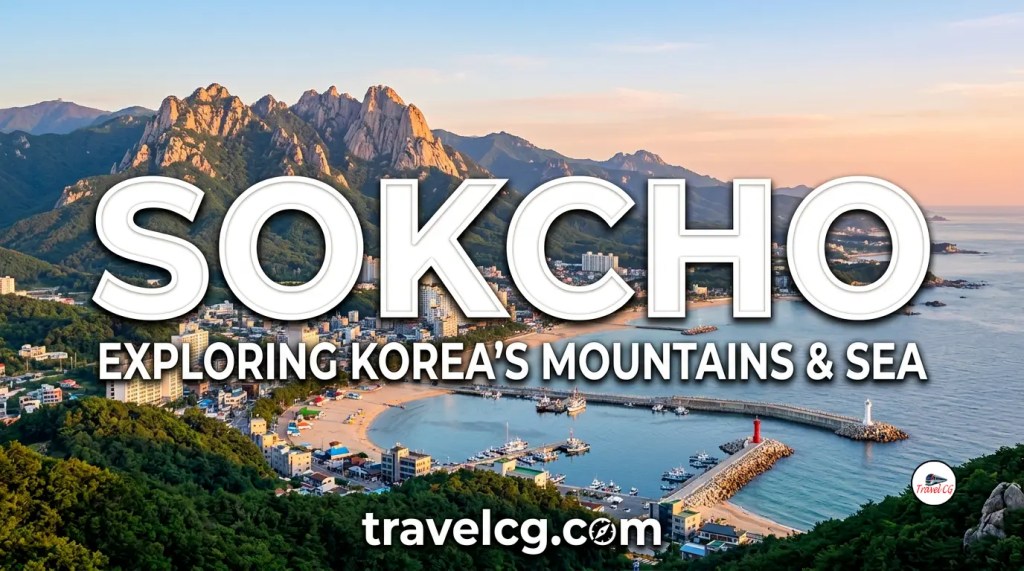
Sokcho is one of the most attractive coastal destinations in South Korea, combining the blue waters of the East Sea, beautiful beaches, mountain landscapes, lakes, traditional markets, seafood, and the spectacular scenery of Seoraksan National Park. Located in Gangwon Province on Korea’s northeastern coast, Sokcho is an excellent destination for travelers who want to experience both nature and Korean local culture in one trip.
What makes Sokcho especially appealing is its variety. You can hike in the mountains in the morning, relax beside the sea in the afternoon, explore a traditional market in the evening, and enjoy views of the mountains and coastline after sunset. The city is also one of the most convenient bases for visiting Seoraksan National Park.
Sokcho’s official tourism information highlights its combination of mountains, sea, and lakes, while Korea’s national tourism information also describes the city as a destination where visitors can experience Seoraksan, beaches, markets, Abai Village, and coastal attractions.
Where Is Sokcho?
Sokcho is located on the northeastern coast of South Korea in Gangwon Province. The city lies between the East Sea and the mountains of Seoraksan.
Its geographical setting is one of its biggest attractions. Unlike many Korean cities that are primarily urban destinations, Sokcho offers access to beaches, coastal walking trails, lakes, fishing ports, mountains, forests, and traditional neighborhoods within a relatively compact area.
The city is particularly famous as a gateway to Seoraksan National Park. Seoraksan extends across several areas of Gangwon Province, and the Sokcho side provides access to the popular Seorak-dong area.
Why Visit Sokcho?
There are many reasons to include Sokcho in a South Korea itinerary.
The first is its natural scenery. The city gives travelers the unusual opportunity to enjoy the sea and mountains during the same trip.
The second is Seoraksan National Park, one of Korea’s most famous mountain destinations. Its dramatic peaks, valleys, forests, waterfalls, and seasonal colors attract hikers and nature lovers throughout the year.
The third is food. Sokcho is well known for seafood, traditional Korean dishes, Abai-style specialties, fried chicken, squid dishes, and market snacks.
The fourth is the atmosphere. Sokcho feels considerably more relaxed than Seoul. Fishing boats, beaches, traditional markets, coastal roads, cafés, mountain scenery, and residential neighborhoods create a distinctive local character.
Best Places to Visit in Sokcho
Seoraksan National Park
Seoraksan National Park is the biggest reason many travelers visit Sokcho.
The park is famous for spectacular granite peaks, deep valleys, waterfalls, forests, and changing seasonal scenery. The highest point of Seoraksan is Daecheongbong, at approximately 1,708 meters.
The park has also been recognized for its exceptional ecological importance. The Sokcho tourism authority notes that Seoraksan was designated as Korea’s first UNESCO Biosphere Reserve in 1982.
You do not necessarily need to be an experienced hiker to enjoy Seoraksan. There are easier sightseeing routes as well as demanding mountain trails.
Popular experiences include:
- Mountain hiking
- Forest walks
- Waterfalls
- Scenic viewpoints
- Temple visits
- Cable-car sightseeing
- Autumn foliage
- Winter landscapes
- Spring flowers
- Photography
If you have only one day for nature in Sokcho, Seoraksan should generally be at the top of your list.
Sokcho Beach
Sokcho Beach is one of the city’s most popular seaside attractions.
The beach is convenient for travelers staying in the central parts of the city and is particularly lively during summer. The coastline provides opportunities for swimming, walking, photography, sunrise viewing, and relaxing beside the East Sea.
The local tourism authority describes Sokcho Beach as a major year-round attraction with numerous photo spots.
Sokcho Beach is also a good place to visit in the evening. The combination of the sea, city lights, and nearby attractions creates a different atmosphere after sunset.
Sokcho Tourist & Fishery Market
A trip to Sokcho would not be complete without visiting its traditional market.
Sokcho Tourist & Fishery Market is one of the best places to experience local food and everyday Korean market culture. You can find seafood, snacks, prepared foods, traditional dishes, sweets, and famous local specialties.
The market is particularly popular for dakgangjeong, a Korean-style sweet and crispy fried chicken, along with seafood and other regional foods. Korea’s official tourism information also highlights the market’s local specialties.
The market is ideal for travelers who enjoy food tourism because you can sample several dishes rather than committing to a single restaurant meal.
Abai Village
Abai Village is one of Sokcho’s most culturally distinctive neighborhoods.
The village is strongly connected with displaced people from the Korean peninsula who settled in the area after the Korean War. Because of this history, the neighborhood preserves a distinctive cultural identity and traditional foods.
Visitors can explore the narrow streets, murals, restaurants, food stalls, and small local attractions.
One of the most memorable experiences is the Gaetbae boat, a small manually operated ferry associated with Abai Village. Sokcho’s tourism authority specifically promotes the Gaetbae experience as a way to explore the village and understand its displaced-person history.
Cheongcho Lake
Cheongcho Lake is a beautiful natural lagoon located close to the city center.
The lake provides a completely different atmosphere from the open sea. It is especially pleasant around sunset and in the evening when the surrounding bridges and city lights begin to illuminate.
Walking around the lake can be combined with visits to Abai Village, the surrounding bridges, and central Sokcho.
Yeongnangho Lake
Yeongnangho is another scenic lake area worth visiting.
The area is suitable for travelers who enjoy peaceful walks, photography, birdwatching, and nature. It is particularly attractive for travelers who want to experience a quieter side of Sokcho away from the busiest tourist areas.
Lighthouse Beach and Lighthouse Observatory
Lighthouse Beach is another attractive coastal area.
The beach has a broad sandy shoreline and is popular for coastal walks and photography. The nearby lighthouse area offers elevated views over the coastline.
The local tourism authority lists Lighthouse Beach among Sokcho’s major natural attractions and describes it as a year-round open destination.
Oeongchi Beach
Oeongchi Beach is a smaller beach near Daepo Port.
Compared with Sokcho Beach, it generally offers a more intimate coastal atmosphere. It is a good choice for travelers who want to combine the beach with coastal walks and nearby seafood destinations.
Badahyanggiro Coastal Trail
Badahyanggiro is one of Sokcho’s most scenic coastal walking routes.
The trail runs along the coastline around Oeongchi and provides views of the East Sea, rocky shorelines, pine trees, and coastal landscapes.
The city tourism authority describes the larger coastal route between Sokcho Beach and Oeongchi Port as approximately 1.74 kilometers, while the Oeongchi section itself is described separately as an 890-meter coastal deck route.
This is an excellent activity for travelers who prefer relaxed sightseeing rather than strenuous hiking.
However, travelers should always check the current operating status before visiting because individual sections can temporarily close for maintenance or safety reasons. The official tourism information currently lists the Oeongchi section as closed for maintenance.
Daepo Port
Daepo Port is one of the best places in Sokcho for experiencing the city’s maritime character.
Fishing boats, seafood restaurants, markets, and coastal scenery make the port particularly attractive for food lovers and photographers.
Fresh seafood is one of the highlights, and the area is especially enjoyable when combined with a coastal sightseeing day.
Sokcho Lighthouse Observatory
For panoramic views, Sokcho Lighthouse Observatory is worth considering.
From elevated viewpoints around the lighthouse area, travelers can see the coastline, East Sea, city, and surrounding mountains.
It is particularly attractive around sunrise and sunset.
Seorak Hyanggiro
Seorak Hyanggiro is a newer-style scenic walking attraction designed around the landscapes of Seoraksan.
The route combines mountain scenery with landscaped walking areas and nighttime lighting. Sokcho tourism information describes it as a healing-style circular walking route that can also provide nighttime attractions.
Sokcho Museum
For travelers interested in local history and culture, Sokcho City Museum provides an opportunity to learn about the region’s traditions and folk culture.
A museum visit is particularly useful when you want to understand Sokcho beyond its beaches and mountains.
Best Things to Do in Sokcho
Go Hiking in Seoraksan
If you enjoy outdoor activities, dedicate at least half a day or a full day to Seoraksan.
Choose your trail according to your fitness level, available time, weather, and seasonal conditions.
Do not underestimate Korean mountain trails. Even routes that look manageable on a map can require significant effort.
Watch the Sunrise
Sokcho’s east-facing coastline makes it a wonderful destination for sunrise.
Sokcho Beach, Lighthouse Beach, and other coastal viewpoints can provide beautiful morning views.
Arriving before sunrise also allows you to experience the beaches when they are quieter.
Eat Your Way Through the Market
Instead of having one large meal, consider trying several small portions at the market.
Look for local specialties such as:
- Dakgangjeong
- Abai sundae
- Ojingeo sundae
- Fresh seafood
- Grilled fish
- Korean pancakes
- Dumplings
- Rice cakes
- Local desserts
Food preferences vary, so travelers should also check ingredients if they have dietary restrictions.
Take the Gaetbae Boat
The small Gaetbae boat is one of Sokcho’s more distinctive experiences.
It is not simply transportation; it is connected with the cultural history of Abai Village and provides an unusual way to experience the neighborhood.
Walk Along the Coast
A coastal walk is one of the easiest ways to enjoy Sokcho.
You can combine beaches, ports, cafés, viewpoints, and sunset spots into one relaxed day.
Explore Sokcho at Night
Sokcho is not only a daytime destination.
The beaches, bridges, markets, waterfront areas, and illuminated attractions can look completely different after dark.
The city’s current tourism promotion also features nighttime attractions such as the “Sea of Light Sokcho” media-art experience at Sokcho Beach.
What to Eat in Sokcho
Sokcho is an excellent destination for food lovers.
Abai Sundae
Abai sundae is one of the city’s signature foods.
It is a regional variation of Korean sundae associated with the food traditions of displaced people from northern Korea.
Ojingeo Sundae
Ojingeo sundae uses squid rather than the traditional casing associated with Korean sundae.
It is one of the foods travelers should consider trying in Abai Village.
Dakgangjeong
Dakgangjeong is crispy Korean fried chicken coated in a sweet and flavorful sauce.
Sokcho’s market is particularly famous for this snack.
Seafood
Because Sokcho is a coastal city, seafood is an important part of the local food culture.
Depending on the season, you may find different fish, squid, shellfish, crab, and other seafood.
Grilled Fish
Grilled fish is another popular choice, especially around traditional seafood districts.
Cold Noodles
Regional Korean cold-noodle dishes can also be found in Sokcho, making them particularly refreshing during warmer weather.
Best Time to Visit Sokcho
Sokcho can be visited throughout the year, but each season offers a different experience.
Spring
Spring brings pleasant temperatures and fresh greenery.
It is a good season for walking, sightseeing, and exploring Seoraksan without the extreme cold of winter or the peak heat of summer.
Summer
Summer is ideal for beaches and coastal activities.
Sokcho Beach becomes particularly lively, but summer can also bring crowds and higher accommodation demand.
Autumn
Autumn is arguably one of the most spectacular seasons for Sokcho.
Seoraksan becomes famous for colorful autumn foliage, attracting large numbers of visitors.
If autumn colors are your priority, plan carefully because weekends and peak foliage periods can be very busy.
Winter
Winter transforms Seoraksan into a dramatically different landscape.
Snow-covered mountains can be spectacular, but mountain conditions can also be challenging. Travelers planning winter hikes should check weather, trail closures, transportation conditions, and safety information before setting out.
How Many Days Do You Need in Sokcho?
One Day
One day is enough for a quick introduction.
A possible plan is:
Morning: Seoraksan
Afternoon: Sokcho Beach
Evening: Sokcho Tourist & Fishery Market
Night: Central Sokcho or the waterfront
However, this schedule can feel rushed.
Two Days
Two days is a much better option for first-time visitors.
You can dedicate one day to Seoraksan and another day to the city, beaches, market, Abai Village, lakes, and coastal attractions.
Three Days
Three days allows a slower experience.
You can explore Seoraksan properly, visit several beaches, spend time around the lakes, enjoy the market, explore Abai Village, and have relaxed meals.
For travelers who enjoy photography, hiking, food, and nature, three days can be ideal.
Suggested Two-Day Sokcho Itinerary
Day 1: Seoraksan and Mountain Scenery
Start early and travel toward Seoraksan National Park.
Spend the morning exploring the park and hiking or sightseeing according to your fitness level.
Have lunch near the mountain area or return toward Sokcho.
In the afternoon, relax and explore a nearby attraction.
In the evening, visit Sokcho Tourist & Fishery Market and enjoy local food.
Day 2: Sea, Culture and Food
Start with Sokcho Beach.
Continue toward Abai Village and experience the Gaetbae boat.
Explore Cheongcho Lake and the surrounding area.
Visit the coastal area around Oeongchi or Daepo Port, depending on current trail accessibility.
Finish the day with seafood or local specialties and enjoy Sokcho’s evening scenery.
Where to Stay in Sokcho
The best area depends on the purpose of your trip.
Near Sokcho Beach
Ideal for:
- Beach lovers
- Couples
- First-time visitors
- Sunrise lovers
- Travelers who enjoy cafés
Near Central Sokcho
Ideal for:
- Food lovers
- Market visitors
- Travelers using public transportation
- Short stays
Near Seoraksan
Ideal for:
- Hikers
- Nature lovers
- Early-morning mountain trips
- Travelers who want to spend more time in the national park
Near Abai Village and Cheongcho Lake
Ideal for:
- Walkers
- Photographers
- Travelers interested in local culture
- Visitors who want waterfront scenery
Getting Around Sokcho
Sokcho is relatively compact, but you will probably use a combination of walking, buses, taxis, and occasionally private vehicles.
Walking is excellent around the central waterfront, market, Abai Village, beaches, and lake areas.
Public buses are useful for reaching Seoraksan and other attractions, although travel times can vary.
Taxis can save considerable time when visiting several attractions in one day.
If you are renting a car, parking availability should be considered, especially during weekends, holidays, summer beach season, and autumn foliage season.
What to Pack for Sokcho
Your packing list should depend on the season and your activities.
For a general trip, consider:
- Comfortable walking shoes
- Lightweight daypack
- Weather-appropriate clothing
- Sunscreen
- Sunglasses
- Reusable water bottle
- Portable power bank
- Small umbrella or rain jacket
- Camera or smartphone
- Basic hiking supplies if visiting Seoraksan
For mountain hiking, add appropriate hiking footwear, extra water, snacks, weather protection, and layers.
In winter, warm clothing is essential, particularly if you plan to spend significant time in Seoraksan.
Sokcho for Different Types of Travelers
For Families
Families can enjoy beaches, lakes, markets, museums, coastal walks, and relatively easy nature attractions.
A family trip does not need to involve strenuous mountain hiking.
For Couples
Couples can enjoy sunrise at the beach, coastal walks, cafés, sunset views, market food, and evening walks around the waterfront.
For Solo Travelers
Sokcho is particularly attractive for solo travelers interested in hiking and food.
Seoraksan can provide a full day of outdoor activity, while the market makes it easy to sample different foods.
For Photographers
Sokcho offers extraordinary variety:
- Mountains
- Beaches
- Fishing boats
- Lakes
- Bridges
- Sunrises
- Autumn foliage
- Traditional neighborhoods
- Markets
- Coastal rocks
- Nighttime city lights
For Hikers
Seoraksan should be the main focus.
Choose trails according to your experience and always check current conditions before starting a hike.
Practical Travel Tips
Sokcho is a destination where weather can significantly affect your experience.
Mountain weather can change quickly, particularly at higher elevations. Check conditions before hiking.
Start mountain activities early if you want to avoid crowds and have sufficient daylight.
During autumn foliage season, transportation and popular attractions can become extremely busy.
During summer, beaches are more crowded and accommodation can become more expensive.
For food markets, going hungry is actually a good strategy because there are many things worth sampling.
Do not try to fit every attraction into one day. Sokcho is best enjoyed at a moderate pace.
Is Sokcho Worth Visiting?
Absolutely.
Sokcho is one of South Korea’s best destinations for travelers who want variety without constantly changing cities.
Within a relatively short trip, you can experience a major national park, beautiful beaches, traditional Korean food, seafood markets, historic communities, lakes, coastal walking trails, and mountain scenery.
Its greatest strength is this combination of landscapes. Seoraksan provides dramatic mountain scenery, while the East Sea provides beaches and coastal views. Between them are lakes, markets, neighborhoods, ports, restaurants, and cultural attractions.
For a first visit, two full days is a strong starting point. Add another day if you enjoy hiking, photography, food, or slow travel.
Frequently Asked Questions About Sokcho
Is Sokcho worth visiting from Seoul?
Yes. Sokcho makes an excellent short trip from Seoul, particularly for travelers who want to experience Seoraksan and Korea’s northeastern coastline.
How long should I stay in Sokcho?
Two nights and two full days is a good choice for a first visit. Three nights are better if you want to hike, explore slowly, or visit many attractions.
What is Sokcho famous for?
Sokcho is famous for Seoraksan National Park, beaches, seafood, Sokcho Tourist & Fishery Market, Abai Village, traditional food, coastal scenery, and beautiful mountain landscapes.
Is Sokcho good for families?
Yes. Beaches, markets, museums, lakes, coastal walks, and easier nature attractions make Sokcho suitable for family travel.
Is Sokcho good for hiking?
Yes. Sokcho is one of the best bases for exploring Seoraksan National Park. Hiking difficulty ranges from relatively easy walks to demanding mountain routes.
What food should I try in Sokcho?
Consider trying Abai sundae, squid sundae, dakgangjeong, seafood, grilled fish, and regional Korean noodle dishes.
What is the best season for Sokcho?
Autumn is particularly popular because of Seoraksan’s colorful foliage. Summer is excellent for beaches, spring is pleasant for nature and walking, and winter offers dramatic snowy mountain scenery.
Can Sokcho be visited in one day?
Yes, but one day will require prioritizing. For a more comfortable experience, stay at least two days.
Is Sokcho only a beach destination?
No. The beach is only one part of the experience. Sokcho is equally important as a gateway to Seoraksan and as a destination for food, culture, markets, lakes, and coastal scenery.
Final Thoughts
Sokcho is a destination where South Korea’s natural beauty and local culture come together unusually well.
The mountains of Seoraksan, the blue waters of the East Sea, peaceful lakes, traditional markets, fishing ports, beaches, Abai Village, and regional food create a travel experience that is much broader than a typical seaside holiday.
If you are planning a South Korea itinerary beyond Seoul and Busan, Sokcho deserves serious consideration. Whether your priority is hiking, photography, beaches, Korean food, cultural experiences, or simply escaping the pace of a major city, Sokcho offers something memorable.
The best approach is to give yourself enough time to experience both sides of the city: the mountains and the sea. Spend time in Seoraksan, explore the waterfront, taste local food, walk through Abai Village, and leave room for an unplanned sunset or market stop.
That combination is what makes Sokcho one of the most rewarding destinations on South Korea’s northeastern coast.









Leave a Reply