
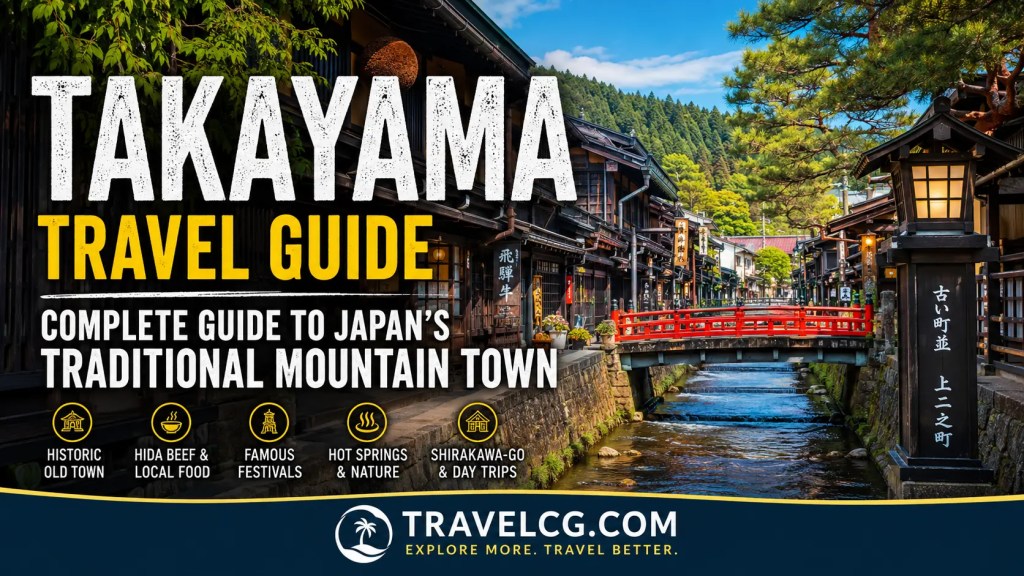
Takayama is one of the most charming destinations in Japan’s Gifu Prefecture. Surrounded by the mountains of the Japanese Alps, the city is famous for its beautifully preserved old town, traditional wooden houses, morning markets, historic festivals, local cuisine, sake breweries, and peaceful countryside atmosphere.
Often called Hida-Takayama, the city offers a different experience from Japan’s major destinations such as Tokyo, Kyoto, and Osaka. Takayama is ideal for travelers who want to experience traditional Japan, scenic mountain landscapes, historic streets, local culture, and a slower pace of travel.
This complete Takayama travel guide explains everything you need to know, including the best places to visit, things to do, food, transportation, accommodation, festivals, shopping, day trips, the best time to visit, and practical travel tips.
Where Is Takayama?
Takayama is located in the mountainous Hida region of Gifu Prefecture in central Japan.
The city lies approximately:
- North of Nagoya
- East of Kanazawa
- West of Matsumoto
- North of Gifu City
- South of Toyama
Because Takayama is surrounded by mountains, the journey to the city itself can be part of the travel experience.
The surrounding Hida region is particularly famous for its natural beauty, traditional villages, hot springs, forests, and Hida beef.
Why Is Takayama Famous?
Takayama is famous for several unique attractions and cultural traditions.
The most important highlights include:
- Takayama Old Town
- Takayama Jinya
- Takayama Festival
- Miyagawa Morning Market
- Hida Folk Village
- Hida beef
- Traditional sake breweries
- Sanmachi historic streets
- Traditional wooden architecture
- Mountain scenery
- Nearby Shirakawa-go
- Nearby Kamikochi
- Local hot springs
- Hida regional culture
The city is particularly attractive to visitors interested in traditional Japanese architecture and rural culture.
Best Time to Visit Takayama
Takayama can be visited throughout the year, but every season provides a different experience.
Spring
Spring is one of the most beautiful seasons in Takayama.
Cherry blossoms generally appear later than in many warmer parts of Japan because Takayama is located at a higher elevation.
Spring is also famous because of the Takayama Spring Festival, one of Japan’s most celebrated traditional festivals.
The weather can still be cold, especially in March and early April.
Summer
Summer brings green mountains, comfortable temperatures compared with many Japanese cities, and excellent opportunities for exploring the surrounding countryside.
June and July can be rainy, while August is generally warmer.
Summer is a good season for hiking and visiting nearby mountain destinations.
Autumn
Autumn is one of the best times to visit Takayama.
The surrounding mountains become covered in beautiful autumn colors.
October is particularly attractive because of the Takayama Autumn Festival.
The combination of historic streets, colorful trees, traditional architecture, and cool weather makes autumn highly popular.
Winter
Winter transforms Takayama into a snowy mountain destination.
Snow-covered traditional houses and streets create a beautiful atmosphere.
The region can receive significant snowfall, so travelers should be prepared for cold conditions.
Winter is particularly attractive for visitors who want to combine Takayama with Shirakawa-go.
How Many Days Are Enough for Takayama?
A typical Takayama visit can be planned as follows:
One Day
One day is enough to see the major attractions in central Takayama.
You can visit:
- Morning Market
- Takayama Old Town
- Takayama Jinya
- Nakabashi Bridge
- Sanmachi streets
- Local restaurants
- Sake breweries
Two Days
Two days provide a much better experience.
You can explore the city at a relaxed pace and visit Hida Folk Village or another nearby attraction.
Three Days or More
Three or more days are recommended if you want to explore the surrounding Hida region.
You can add:
- Shirakawa-go
- Gero Onsen
- Kamikochi
- Hida Furukawa
- Shinhotaka Ropeway
- Mountain hiking
For most first-time visitors, 2 days and 1–2 nights is an excellent balance.
Top Places to Visit in Takayama
Takayama Old Town
Takayama Old Town is the city’s most famous attraction.
The historic district contains beautifully preserved traditional wooden buildings dating from the Edo and Meiji periods.
The streets are lined with:
- Restaurants
- Cafes
- Traditional shops
- Sake breweries
- Souvenir stores
- Sweet shops
- Craft stores
The area is particularly attractive early in the morning or later in the afternoon when it becomes quieter.
The main historic streets are generally associated with the Sanmachi area.
Sanmachi Suji
Sanmachi Suji is the heart of Takayama’s historic district.
Traditional dark wooden buildings line narrow streets, creating one of the most recognizable traditional townscapes in Japan.
Many buildings now operate as:
- Sake breweries
- Restaurants
- Cafes
- Craft shops
- Food stores
- Souvenir shops
Walking through Sanmachi Suji is one of the essential things to do in Takayama.
Takayama Jinya
Takayama Jinya is one of the most important historical buildings in the city.
It was a government office during the Edo period when the area was administered under the Tokugawa shogunate.
The complex provides insight into Japan’s historical administrative system.
Visitors can explore traditional rooms, offices, tatami areas, gardens, and historical facilities.
It is located close to the old town, making it easy to combine with a walking tour.
Miyagawa Morning Market
Miyagawa Morning Market is located along the Miyagawa River.
The market is one of Takayama’s most popular morning attractions.
Local vendors sell products such as:
- Fresh vegetables
- Pickles
- Fruits
- Local snacks
- Traditional crafts
- Souvenirs
- Regional food products
The market is best visited in the morning.
Try arriving relatively early because some vendors may finish for the day before the afternoon.
Hida Folk Village
Hida Folk Village is an open-air museum located a short distance from central Takayama.
It contains traditional houses from the Hida region.
Many of the buildings have distinctive steeply pitched roofs designed to handle heavy snowfall.
The village provides an opportunity to learn about traditional rural life in the Japanese mountains.
It is particularly beautiful during:
- Spring
- Autumn
- Winter
Winter can be especially atmospheric when the traditional houses are surrounded by snow.
Nakabashi Bridge
Nakabashi Bridge is one of Takayama’s recognizable landmarks.
The bridge crosses the Miyagawa River near the historic district.
It is surrounded by traditional architecture and is particularly attractive during cherry blossom and autumn foliage seasons.
It is also a convenient landmark when exploring central Takayama.
Sakurayama Hachimangu Shrine
Sakurayama Hachimangu is one of Takayama’s important shrines.
The shrine is associated with the Takayama Autumn Festival.
The surrounding area is peaceful and provides another opportunity to experience traditional Japanese religious architecture.
The nearby festival exhibition facilities can also help visitors understand the elaborate floats used during the festival.
Takayama Festival Floats
The famous Takayama Festival is known for its highly decorated traditional floats.
The floats feature intricate craftsmanship and represent generations of local artistic traditions.
If you cannot visit during the festival itself, exhibitions in the city can provide an opportunity to see some of these magnificent structures.
Higashiyama Walking Course
The Higashiyama area contains temples, shrines, quiet streets, and wooded paths.
The walking route is a good choice for travelers who want to escape the busier historic center.
The route provides a combination of:
- Temples
- Shrines
- Nature
- Traditional architecture
- Peaceful walking paths
Allow several hours if you want to explore the area slowly.
Takayama Museum of History and Art
Takayama and the surrounding Hida region have a strong tradition of craftsmanship.
Museums and cultural facilities in the city provide opportunities to learn about:
- Local history
- Traditional crafts
- Art
- Regional culture
- Historical lifestyles
These attractions are particularly useful during rainy or snowy weather.
Hida Kokubunji Temple
Hida Kokubunji is a historic Buddhist temple located near Takayama Station.
One of its most recognizable features is its large gingko tree.
The temple is convenient to visit because of its central location.
It is a good stop for visitors exploring Takayama on foot.
Things to Do in Takayama
Walk Through the Historic Streets
Walking is arguably the best way to experience central Takayama.
Instead of rushing between attractions, spend time exploring small streets, traditional buildings, shops, cafes, and local food stalls.
Early morning is especially peaceful.
Try Hida Beef
Hida beef is one of Takayama’s most famous foods.
It is a high-quality Japanese beef associated with Gifu Prefecture.
You can find it prepared in different ways, including:
- Grilled beef
- Sushi-style preparations
- Steak
- Sukiyaki
- Shabu-shabu
- Beef croquettes
- Beef skewers
Trying Hida beef is one of the highlights of visiting Takayama.
Visit a Sake Brewery
Takayama’s cold mountain climate and high-quality water have contributed to its sake-making tradition.
Several traditional breweries can be found around the old town.
Look for the distinctive cedar balls known as sugidama, which are traditionally associated with sake breweries.
Some breweries offer tastings or small samples.
Explore Local Cafes
Takayama has many small cafes in traditional buildings.
You can enjoy:
- Japanese tea
- Coffee
- Traditional sweets
- Puddings
- Local desserts
- Hida milk products
Taking a cafe break is a pleasant way to experience the slower pace of the city.
Buy Local Crafts
The Hida region is known for traditional woodworking.
Popular souvenirs include:
- Wooden crafts
- Hida furniture-inspired products
- Traditional toys
- Lacquerware
- Local pottery
- Japanese sweets
- Pickles
- Sake
- Food products
Experience a Japanese Onsen
The Hida region has several hot spring destinations.
A stay at a traditional Japanese inn with an onsen can be one of the most memorable experiences around Takayama.
You can choose between:
- Public baths
- Ryokan with private baths
- Outdoor rotenburo
- Day-use hot springs
Gero Onsen is one of the most famous hot spring destinations within reach of Takayama.
Takayama Festival
The Takayama Festival is one of the most famous traditional festivals in Japan.
It is held twice a year.
Spring Festival
The spring festival takes place around April and is associated with Sakurayama Hachimangu Shrine.
Autumn Festival
The autumn festival takes place around October and is associated with Hachiman Shrine.
The festivals feature:
- Elaborate floats
- Traditional performances
- Processions
- Mechanical puppets
- Traditional costumes
- Evening lantern displays
Festival dates are fixed annually, but exact travel arrangements should be checked before planning a trip because accommodation can become very difficult to find.
Takayama Food Guide
Takayama is one of the best destinations in Japan for regional food.
Hida Beef
Hida beef should be at the top of your food list.
For a special meal, try grilled or steak-style Hida beef.
For a cheaper experience, look for Hida beef skewers or croquettes.
Takayama Ramen
Takayama ramen is a regional noodle specialty.
It usually features:
- Thin curly noodles
- Soy-based broth
- Green onions
- Bamboo shoots
- Slices of pork
It is relatively simple but flavorful.
Hoba Miso
Hoba miso is a traditional Hida dish.
Miso is cooked on a large magnolia leaf, often together with vegetables or other ingredients.
It is especially enjoyable during colder weather.
Mitarashi Dango
These small rice dumplings are grilled and coated with a savory-sweet sauce.
They are popular as a street snack.
Hida Milk
The Hida region is also known for dairy products.
Milk, pudding, ice cream, and other dairy-based desserts are commonly available.
Sake
Local sake is another important part of Takayama’s food culture.
Because of the area’s clean mountain water and traditional brewing practices, Takayama has a strong sake reputation.
Takayama Shopping Guide
The old town is the best place for traditional shopping.
Popular souvenirs include:
- Hida beef products
- Sake
- Wooden crafts
- Sarubobo dolls
- Traditional sweets
- Pickles
- Local tea
- Ceramics
- Handcrafted items
Sarubobo
Sarubobo is a traditional red doll associated with the Hida region.
It is one of the most recognizable souvenirs from Takayama.
The doll has a distinctive faceless design and is traditionally associated with wishes for happiness, health, and good fortune.
Takayama Transportation Guide
Getting to Takayama by Train
Takayama Station is the main railway station serving the city.
Visitors commonly travel to Takayama from:
- Nagoya
- Toyama
- Gifu
- Tokyo
- Osaka
- Kyoto
- Kanazawa
Train travel is comfortable and scenic, especially as the route enters the mountainous Hida region.
Getting to Takayama by Bus
Highway buses are extremely useful for reaching Takayama.
Direct or convenient bus connections exist from major destinations such as:
- Tokyo
- Nagoya
- Kanazawa
- Toyama
- Matsumoto
- Osaka
- Kyoto
Buses can sometimes be more convenient than trains for specific routes.
Getting Around Takayama
Central Takayama is highly walkable.
Most major attractions in the historic center can be reached on foot.
For attractions farther away, consider:
- Local buses
- Tourist buses
- Taxis
- Rental bicycles
- Rental cars
A rental car becomes particularly useful if you want to explore remote mountain areas.
Takayama Station
Takayama Station is an important transportation hub.
The station area contains:
- Hotels
- Restaurants
- Convenience stores
- Tourist information
- Bus facilities
- Shops
Staying near the station can be convenient if you plan several day trips.
Where to Stay in Takayama
Takayama offers accommodation for different budgets.
Hotels Near Takayama Station
Best for:
- First-time visitors
- Short stays
- Travelers using public transportation
- Day trips
Traditional Ryokan
A ryokan provides a more traditional Japanese experience.
Depending on the property, you may experience:
- Tatami rooms
- Futon bedding
- Japanese meals
- Yukata
- Traditional baths
Guesthouses and Budget Accommodation
Budget accommodation is available for backpackers and travelers looking for simple lodging.
Luxury Accommodation
Takayama and the wider Hida region also have upscale hotels and traditional inns.
Some offer private baths, mountain views, and elaborate Japanese meals.
Best Areas to Stay
Near Takayama Station
Best for transportation and convenience.
Old Town Area
Best for atmosphere and easy access to historic attractions.
Around Miyagawa River
Good for visitors who want scenic surroundings and access to the morning market.
Hida Mountain Area
Best for travelers seeking nature, onsens, and a peaceful retreat.
Takayama Day Trips
Takayama is an excellent base for exploring the wider Hida region.
Shirakawa-go
Shirakawa-go is one of Japan’s most famous traditional mountain villages.
It is particularly famous for its traditional gassho-zukuri houses with steeply sloping roofs.
The village is beautiful throughout the year but is especially popular during snowy winter.
A day trip from Takayama is one of the most popular excursions.
Gero Onsen
Gero Onsen is one of Japan’s most famous hot spring destinations.
It is known for its hot spring waters, traditional inns, and relaxing atmosphere.
It is a good choice for travelers who want to experience Japanese onsen culture.
Shinhotaka Ropeway
The Shinhotaka Ropeway offers spectacular mountain scenery.
It provides access to elevated viewpoints in the Northern Japan Alps.
The scenery changes dramatically with the seasons.
It is particularly impressive during:
- Spring
- Summer
- Autumn
- Winter
Kamikochi
Kamikochi is one of Japan’s most famous mountain destinations.
It is known for:
- Alpine landscapes
- Clear rivers
- Forests
- Mountain views
- Hiking trails
It is particularly popular in spring, summer, and autumn.
Access is seasonal and weather-dependent, so check operating conditions before visiting.
Hida Furukawa
Hida Furukawa is a quieter traditional town near Takayama.
It offers:
- Traditional streets
- White-walled storehouses
- Canals
- Sake breweries
- Local culture
It is a good choice for travelers looking for a less crowded alternative to Takayama’s main tourist areas.
Suggested 1-Day Takayama Itinerary
Start early at the Miyagawa Morning Market.
After breakfast, walk toward the historic Sanmachi district.
Explore the traditional streets and local shops.
Visit Takayama Jinya.
Have lunch featuring Hida beef or Takayama ramen.
After lunch, visit Hida Kokubunji Temple or another nearby attraction.
Spend the afternoon exploring cafes and traditional shops.
In the evening, enjoy a local Japanese dinner.
If you have energy, take an evening walk through the historic district.
Suggested 2-Day Takayama Itinerary
Day 1
Morning:
- Miyagawa Morning Market
- Takayama Old Town
- Sanmachi Suji
Late morning:
- Takayama Jinya
- Nakabashi Bridge
Afternoon:
- Hida Kokubunji Temple
- Local museums
- Shopping
Evening:
- Hida beef dinner
- Sake tasting
- Evening walk
Day 2
Morning:
- Hida Folk Village
Afternoon:
Choose one:
- Higashiyama Walking Course
- Hida Furukawa
- Local museums
- Additional old-town exploration
Evening:
- Traditional Japanese dinner
- Onsen experience
Suggested 3-Day Takayama Itinerary
Day 1
Explore Takayama Old Town and the central historic attractions.
Day 2
Visit Hida Folk Village and explore the Higashiyama area.
Day 3
Take a day trip to Shirakawa-go, Shinhotaka, Kamikochi, or Gero Onsen depending on the season.
Takayama Travel Budget
Your budget will depend heavily on accommodation and food choices.
Budget Traveler
A budget traveler can reduce expenses by using:
- Guesthouses
- Affordable hotels
- Convenience stores
- Local restaurants
- Public transportation
- Free attractions
Mid-Range Traveler
A comfortable mid-range trip might include:
- Business or mid-range hotels
- Regional restaurants
- Train and bus travel
- Paid attractions
- One special Hida beef meal
Luxury Traveler
A luxury trip could include:
- High-end ryokan
- Private onsen
- Traditional kaiseki meals
- Premium Hida beef
- Private transportation
- Luxury accommodation in the mountains
Accommodation prices can rise significantly during festivals and peak seasons.
Is Takayama Expensive?
Takayama is generally more affordable than some of Japan’s most expensive tourist destinations, but prices vary considerably.
The biggest differences usually come from:
- Accommodation
- Festival periods
- Ryokan stays
- Hida beef restaurants
- Private transportation
- Seasonal demand
Travelers can visit Takayama on a moderate budget by staying near the station and eating at local restaurants.
What to Wear in Takayama
Takayama experiences colder temperatures than many major Japanese cities because of its mountainous location.
Spring
Bring:
- Light jacket
- Layers
- Comfortable shoes
Summer
Bring:
- Light clothing
- Comfortable walking shoes
- Rain protection
Autumn
Bring:
- Warm layers
- Jacket
- Comfortable walking shoes
Winter
Bring:
- Heavy winter coat
- Gloves
- Warm socks
- Hat
- Waterproof shoes
- Good traction footwear
Snow and icy conditions can occur during winter.
Takayama Travel Tips
Start Your Day Early
The old town and morning markets are much more peaceful early in the day.
Carry Some Cash
Although card payments are increasingly common, some smaller shops and traditional establishments may still prefer cash.
Reserve Accommodation Early
This is particularly important during:
- Takayama Festival
- Golden Week
- Autumn foliage season
- Winter holiday periods
Check Weather Conditions
Mountain weather can change quickly.
This is especially important if you plan to visit hiking destinations.
Wear Comfortable Shoes
Takayama is best explored on foot.
Comfortable walking shoes are essential.
Plan Transportation in Advance
Some mountain and rural destinations have limited transportation.
Check schedules before leaving Takayama.
Don’t Rush the Old Town
Takayama’s charm lies in its atmosphere.
Take time to explore small shops, cafes, temples, breweries, and side streets.
Is Takayama Worth Visiting?
Yes, Takayama is absolutely worth visiting, particularly if you enjoy traditional Japanese culture, historic architecture, mountain scenery, regional food, and quieter destinations.
It provides a different experience from Tokyo, Osaka, and Kyoto.
The city combines:
- Traditional Japan
- Mountain landscapes
- Local cuisine
- Historic architecture
- Festivals
- Craftsmanship
- Hot springs
- Rural culture
For travelers who want to see another side of Japan, Takayama can be one of the most rewarding destinations on a Japan itinerary.
Takayama vs Kyoto
Kyoto is larger and has a much greater number of temples, shrines, gardens, and cultural attractions.
Takayama is smaller, quieter, and more closely connected with mountain and rural culture.
Choose Kyoto if you want:
- Major temples
- Famous gardens
- Large cultural attractions
- More extensive nightlife
- A bigger city experience
Choose Takayama if you want:
- Traditional wooden streets
- Mountain scenery
- Rural Japanese culture
- Local food
- A relaxed atmosphere
- Historic town experiences
Many travelers can enjoy both.
Takayama vs Kanazawa
Kanazawa is known for:
- Kenrokuen Garden
- Samurai districts
- Geisha districts
- Contemporary art
- Seafood
Takayama is known for:
- Mountain scenery
- Old Town
- Hida beef
- Traditional festivals
- Rural culture
- Hida architecture
Both are excellent destinations and can be combined in the same Japan itinerary.
Who Should Visit Takayama?
Takayama is particularly suitable for:
- Couples
- Families
- Solo travelers
- Photographers
- Food lovers
- History enthusiasts
- Architecture lovers
- Nature lovers
- Culture travelers
- First-time visitors to rural Japan
Who May Not Enjoy Takayama?
Takayama may not be ideal if your main interests are:
- Nightlife
- Shopping malls
- Modern city attractions
- Large entertainment districts
- Fast-paced urban experiences
The city is primarily about culture, food, history, nature, and atmosphere.
Photography in Takayama
Takayama offers excellent photography opportunities.
Popular subjects include:
- Traditional wooden buildings
- Miyagawa River
- Nakabashi Bridge
- Morning market
- Sake brewery entrances
- Hida Folk Village
- Mountain landscapes
- Snow-covered streets
- Autumn foliage
- Festival floats
For the best atmosphere, photograph the old town in the early morning or around sunset.
Takayama for Families
Families can enjoy Takayama because many attractions are easy to explore.
Children may particularly enjoy:
- Hida Folk Village
- Traditional crafts
- Local sweets
- Hida beef
- Festivals
- Rural scenery
- Train and bus journeys through the mountains
Winter snow can also be exciting for children, although families should prepare for cold conditions.
Takayama for Couples
Takayama can be a romantic destination because of its traditional architecture and mountain surroundings.
Couples can enjoy:
- Historic street walks
- Traditional ryokan stays
- Onsen experiences
- Hida beef dinners
- Scenic day trips
- Evening walks
- Autumn foliage
- Snowy winter scenery
Takayama for Solo Travelers
Takayama is also well suited to solo travelers.
The compact city center makes independent exploration easy.
Solo travelers can spend the day walking through the old town, visiting museums, trying local food, and taking day trips.
Frequently Asked Questions About Takayama
Is Takayama worth visiting?
Yes. Takayama is one of Japan’s best destinations for traditional townscapes, regional food, mountain scenery, and cultural experiences.
How long should I stay in Takayama?
Two days and one or two nights are ideal for a first visit. Stay longer if you want to explore nearby mountain destinations.
What is Takayama famous for?
Takayama is famous for its historic old town, Takayama Festival, Hida beef, traditional sake breweries, morning markets, and mountain scenery.
Is Takayama good in winter?
Yes. Winter gives Takayama a beautiful snowy atmosphere. However, travelers should prepare for cold temperatures and possible heavy snowfall.
Is Takayama good for a day trip?
Yes, particularly if you are traveling from nearby destinations. However, staying overnight allows you to experience the city more comfortably.
Can I visit Shirakawa-go from Takayama?
Yes. Shirakawa-go is one of the most popular day trips from Takayama and can be reached by highway bus.
What food should I try in Takayama?
Try Hida beef, Takayama ramen, hoba miso, mitarashi dango, Hida dairy products, and local sake.
Is Takayama walkable?
Yes. Central Takayama is compact and most major attractions can be explored on foot.
When is the best season for Takayama?
Spring and autumn are excellent for festivals and scenery. Winter is ideal for snow landscapes, while summer is good for exploring the surrounding mountains.
Does Takayama get snow?
Yes. Takayama receives substantial snowfall during winter, and the surrounding mountain region can receive even more.
Final Takayama Travel Advice
Takayama is a destination where the journey is as memorable as the attractions themselves. Its historic streets, traditional wooden houses, mountain landscapes, local food, sake breweries, festivals, and nearby villages make it one of the most distinctive destinations in central Japan.
For a first visit, spend two days exploring Takayama, with enough time for the old town, morning market, Takayama Jinya, Hida Folk Village, local food, and traditional culture. If you have additional time, add Shirakawa-go, Gero Onsen, Kamikochi, Shinhotaka, or Hida Furukawa to experience more of the Hida region.
The best way to experience Takayama is not to rush from attraction to attraction. Walk slowly through the historic streets, try regional food, enter a traditional brewery or craft shop, visit a shrine, enjoy the mountain scenery, and take time to experience the atmosphere of this remarkable Japanese town.
Travelcg.com — Travel guides for discovering amazing places around the world.
Related Other Places (Travel Guide)







Leave a Reply