
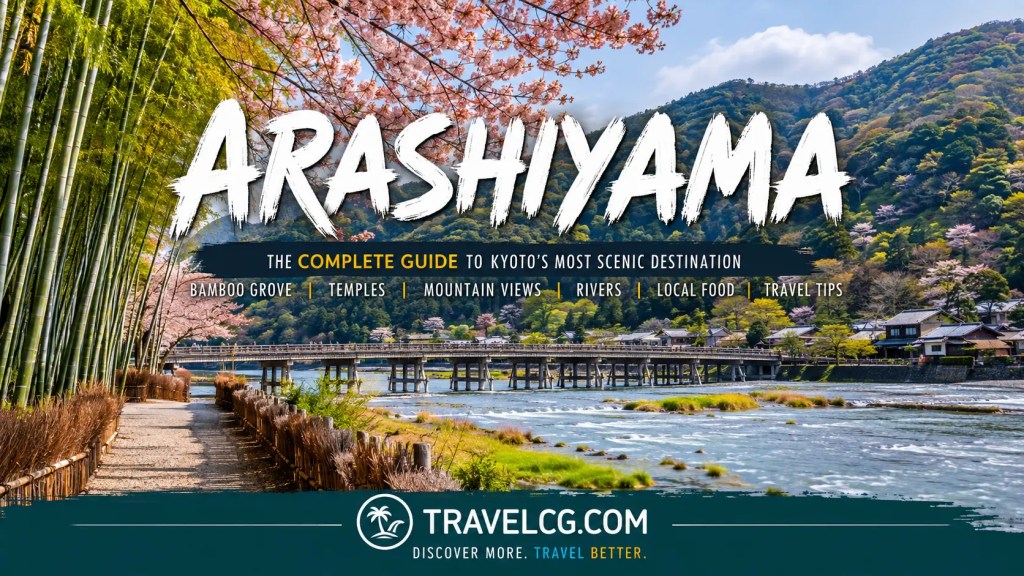
Arashiyama is one of the most beautiful and popular areas of Kyoto, Japan. Located on the western side of Kyoto, it is famous for its spectacular bamboo grove, traditional temples, scenic mountains, the Katsura River, historic streets, Japanese gardens, and peaceful natural surroundings.
Although many visitors come to Arashiyama mainly to see the famous Bamboo Grove, the area offers much more. A complete visit can include temples, gardens, river scenery, traditional food, cultural experiences, scenic walks, and viewpoints.
Where Is Arashiyama?
Arashiyama is located in the western part of Kyoto. It lies around the Katsura River and the foothills of the Arashiyama mountains.
The area is easy to reach from central Kyoto and is one of the most popular day-trip destinations in the city.
Arashiyama is especially attractive during:
- Spring, when cherry blossoms appear
- Summer, when the bamboo and greenery are especially vibrant
- Autumn, when the mountains become covered with colorful foliage
- Winter, when the area becomes quieter and occasionally receives snow
Why Is Arashiyama Famous?
Arashiyama is famous for its combination of nature, history, religion, and traditional Japanese culture.
Its major attractions include:
- Arashiyama Bamboo Grove
- Tenryu-ji Temple
- Togetsukyo Bridge
- Katsura River
- Arashiyama Monkey Park
- Okochi Sanso Garden
- Jojakko-ji Temple
- Gio-ji Temple
- Adashino Nenbutsu-ji Temple
- Daikaku-ji Temple
- Traditional streets and shops
- Scenic mountain views
The area can be enjoyed as a quick half-day excursion, but spending a full day allows you to explore it much more comfortably.
Best Time to Visit Arashiyama
Spring
Spring is one of the most attractive seasons in Arashiyama. Cherry blossoms add color to the temples, riverbanks, gardens, and surrounding mountains.
March to April is particularly popular, although exact flowering dates vary each year.
Summer
Summer brings lush greenery and beautiful bamboo landscapes. The weather can be hot and humid, so early-morning sightseeing is recommended.
Autumn
October and November are among the best months for visitors who want to see autumn foliage. The mountains surrounding Arashiyama become especially beautiful.
The combination of red, orange, yellow, and green leaves with traditional temples creates some of Kyoto’s most memorable scenery.
Winter
Winter is generally quieter. The bamboo grove and temples can feel more peaceful, particularly on cold mornings.
Snow is not guaranteed, but when it occurs, Arashiyama can become exceptionally scenic.
How Many Days Do You Need in Arashiyama?
For the main attractions, half a day can be enough.
However, one full day is recommended if you want to explore the area without rushing.
A full-day visit can include:
Morning: Bamboo Grove and Tenryu-ji
Late morning: Okochi Sanso Garden
Afternoon: Jojakko-ji and Gio-ji
Late afternoon: Togetsukyo Bridge and Katsura River
Evening: Traditional streets, shopping, and dinner
If you enjoy temples, photography, gardens, and walking, you can easily spend a full day here.
Arashiyama Bamboo Grove
The Arashiyama Bamboo Grove is the area’s most famous attraction.
Tall bamboo plants create a natural green corridor through which visitors can walk. The bamboo stalks rise high above the path, producing a distinctive atmosphere that has become one of Kyoto’s most recognizable landscapes.
The experience is particularly impressive early in the morning when visitor numbers are lower.
Best Time to Visit the Bamboo Grove
Early morning is generally the best choice.
Advantages include:
- Fewer crowds
- Better photography opportunities
- Cooler temperatures
- A more peaceful atmosphere
- Softer natural light
During the middle of the day, the main paths can become extremely busy.
How Long to Spend There
You can walk through the main bamboo area relatively quickly, but allowing around 30–60 minutes gives you enough time for photographs and a relaxed walk.
Remember that the bamboo grove is not an isolated attraction. Several important temples and gardens are located nearby.
Tenryu-ji Temple
Tenryu-ji is one of the most important temples in Arashiyama and should be included in a first visit.
The temple is particularly famous for its beautiful garden, which incorporates the surrounding mountains into its landscape design.
The garden provides an excellent example of traditional Japanese garden aesthetics.
Visitors can enjoy:
- Temple architecture
- Pond gardens
- Seasonal flowers
- Autumn foliage
- Mountain scenery
- Traditional Japanese landscape design
Tenryu-ji is also conveniently located near the Bamboo Grove, making it easy to combine both attractions.
Togetsukyo Bridge
Togetsukyo Bridge is another symbol of Arashiyama.
The bridge crosses the Katsura River and provides beautiful views of the surrounding mountains.
The scenery changes significantly with the seasons.
In spring, cherry blossoms surround the area. In summer, the mountains become intensely green. In autumn, colorful foliage dominates the landscape, while winter brings a quieter atmosphere.
Walking along the river near the bridge is one of the simplest and most enjoyable things to do in Arashiyama.
Katsura River
The Katsura River is central to the character of Arashiyama.
The riverside is an excellent place to slow down after visiting temples and crowded tourist streets.
You can:
- Walk beside the river
- Enjoy mountain views
- Take photographs
- Sit and relax
- Explore nearby restaurants and cafés
- Watch seasonal scenery
The river is particularly beautiful in spring and autumn.
Arashiyama Monkey Park
Arashiyama Monkey Park is located on a hillside overlooking the area.
Visitors must walk uphill to reach the park, so comfortable shoes are recommended.
The park is known for its Japanese macaques and also provides an impressive panoramic view over Kyoto.
It is especially suitable for:
- Families
- Wildlife lovers
- Photographers
- Travelers who enjoy hiking
- Visitors looking for a viewpoint
Allow additional time for the uphill walk.
Okochi Sanso Garden
Okochi Sanso is a beautiful traditional Japanese garden located near the Bamboo Grove.
The garden was developed around a former villa and features carefully designed landscapes, walking paths, ponds, trees, and viewpoints.
One of its advantages is that it can provide a quieter experience compared with some of Arashiyama’s busiest attractions.
The elevated sections of the garden also offer views toward Kyoto and the surrounding mountains.
Jojakko-ji Temple
Jojakko-ji is a peaceful temple located in the hills of Arashiyama.
It is especially famous during autumn, when its trees create a spectacular display of colors.
The temple grounds include:
- Traditional buildings
- Moss-covered areas
- Stone paths
- Wooden structures
- Forested surroundings
- Elevated viewpoints
Jojakko-ji is an excellent choice for travelers who want to experience a quieter side of Arashiyama.
Gio-ji Temple
Gio-ji is famous for its beautiful moss garden.
The temple is surrounded by dense greenery, creating a peaceful and almost magical atmosphere.
It is much smaller than some of Kyoto’s major temple complexes, but its intimate environment is one of its greatest attractions.
The temple is particularly attractive during the rainy season and autumn.
Adashino Nenbutsu-ji
Adashino Nenbutsu-ji is a historic Buddhist temple known for the large number of stone Buddhist statues located within its grounds.
It lies farther from the busiest central area of Arashiyama, so visiting it can provide a more peaceful experience.
The journey toward the temple also takes you through traditional streets and quieter parts of the district.
Daikaku-ji Temple
Daikaku-ji is another important historical temple in the wider Arashiyama area.
It has a long connection with Japanese imperial history and is known for its traditional architecture, gardens, and pond.
The temple is particularly interesting for visitors who want to go beyond the most famous tourist attractions.
Kimono Forest
Near Arashiyama Station, you may find the colorful Kimono Forest installation.
It consists of decorative cylinders featuring traditional kimono textile patterns.
The installation is especially attractive in the evening when the displays are illuminated.
It is a convenient attraction because it can easily be visited while arriving in or leaving Arashiyama.
Arashiyama’s Traditional Streets
The streets around the major attractions are filled with:
- Japanese sweets
- Tea shops
- Souvenir stores
- Restaurants
- Pickles
- Traditional crafts
- Matcha products
- Local snacks
Walking through these streets is part of the Arashiyama experience.
However, the central streets can become crowded during peak tourist hours.
What to Eat in Arashiyama
Arashiyama offers many Japanese food options.
Popular choices include:
Yudofu
Yudofu, or hot tofu, is a traditional Kyoto-style dish and is particularly associated with temple areas.
It is simple, light, and suitable for travelers looking for a traditional meal.
Matcha
Kyoto is famous for matcha, and Arashiyama has many places selling matcha-based foods.
You can find:
- Matcha tea
- Matcha ice cream
- Matcha sweets
- Matcha cakes
- Matcha drinks
Japanese Sweets
Traditional sweets are widely available throughout the shopping streets.
Look for seasonal wagashi and other Kyoto-style confectionery.
Vegetarian and Buddhist-Style Food
Because of Arashiyama’s strong connection with temples, vegetarian and Buddhist-inspired cuisine can be found in the area.
Shopping in Arashiyama
Arashiyama is a good place to buy traditional Japanese souvenirs.
Popular items include:
- Japanese sweets
- Matcha products
- Handcrafted accessories
- Traditional fabrics
- Ceramics
- Fans
- Small decorative items
- Japanese tea
- Local food products
Avoid buying too many fragile items if you have a long journey ahead.
How to Reach Arashiyama
Arashiyama can be reached by several forms of public transportation.
By Train
The JR Sagano Line is convenient for travelers coming from Kyoto Station.
You can travel toward Saga-Arashiyama Station and continue toward the main sightseeing area on foot.
By Hankyu Railway
Hankyu Railway provides another option, particularly for visitors coming from the Kyoto city center or Osaka side.
The nearest station for the central Arashiyama area is Arashiyama Station.
By Randen
The Randen tram is a charming option for reaching Arashiyama.
The route has a more local and traditional atmosphere and connects Arashiyama with other parts of western Kyoto.
By Bus
Kyoto’s bus network also serves Arashiyama.
However, buses can become slow during busy tourist periods because of road congestion.
For many visitors, trains are more predictable.
Getting Around Arashiyama
Walking is the best way to explore the central attractions.
Many major sights are relatively close together.
You can also use:
- Local trains
- Buses
- Taxis
- Rental bicycles
Walking is particularly enjoyable because many interesting streets, temples, gardens, and small shops are located between the major attractions.
Suggested One-Day Arashiyama Itinerary
7:00 AM – Bamboo Grove
Start early and visit the Bamboo Grove before the biggest crowds arrive.
8:00 AM – Tenryu-ji
Explore the temple and its garden.
9:30 AM – Okochi Sanso
Walk through the garden and enjoy the surrounding scenery.
11:00 AM – Jojakko-ji
Continue into the quieter temple area.
12:30 PM – Lunch
Enjoy a traditional Japanese meal in Arashiyama.
2:00 PM – Gio-ji
Visit the moss-covered temple and surrounding forest.
3:00 PM – Adashino Nenbutsu-ji
Explore one of the area’s more peaceful historical attractions.
4:30 PM – Togetsukyo Bridge
Return toward the river and enjoy the scenery.
5:00 PM – Shopping and Tea
Explore the main streets, enjoy matcha, and purchase souvenirs.
Evening – Return to Kyoto
Take the train or other public transportation back to central Kyoto.
Arashiyama Half-Day Itinerary
If you have limited time, concentrate on the highlights.
A practical route is:
- Arashiyama Station
- Bamboo Grove
- Tenryu-ji
- Okochi Sanso
- Togetsukyo Bridge
- Katsura River
- Shopping streets
This route covers the most famous parts without requiring a full-day visit.
Arashiyama for Families
Arashiyama can be an enjoyable destination for families.
Children may particularly enjoy:
- Bamboo Grove
- Monkey Park
- Train rides
- River scenery
- Japanese sweets
- Traditional shops
- Open walking areas
The Monkey Park requires an uphill walk, so parents traveling with young children should consider the effort involved.
Arashiyama for Couples
Arashiyama is also an excellent destination for couples.
Romantic experiences include:
- Walking beside the Katsura River
- Exploring quiet temple gardens
- Visiting the Bamboo Grove early
- Enjoying traditional Japanese tea
- Watching the sunset around the river
- Exploring the area during autumn
Arashiyama for Photographers
Arashiyama offers countless photography opportunities.
Good subjects include:
- Bamboo stalks
- Temple gardens
- Mountain landscapes
- Togetsukyo Bridge
- Katsura River
- Autumn foliage
- Cherry blossoms
- Traditional streets
- Japanese architecture
- Moss gardens
Early morning and late afternoon generally provide more pleasant light than the harsh midday period.
Best Places for Scenic Views
For scenic views, consider:
- Togetsukyo Bridge
- Katsura River
- Arashiyama Monkey Park
- Okochi Sanso
- Jojakko-ji
- Mountain paths around the area
The Monkey Park and Okochi Sanso are particularly useful if you want elevated views.
Arashiyama During Cherry Blossom Season
Spring transforms Arashiyama into a colorful landscape.
Cherry trees can be seen around:
- Katsura River
- Temple grounds
- Parks
- Streets
- Mountain slopes
Because spring is extremely popular, visiting early in the day is advisable.
Arashiyama During Autumn
Autumn is arguably one of the most spectacular seasons in Arashiyama.
The mountains become covered with colorful foliage, while temples and gardens provide beautifully composed scenery.
Popular autumn locations include:
- Tenryu-ji
- Jojakko-ji
- Gio-ji
- Okochi Sanso
- Togetsukyo Bridge
- Katsura River
Expect significant crowds during peak foliage season.
Arashiyama in Winter
Winter is a good choice for travelers who prefer fewer visitors.
The absence of dense summer greenery or autumn crowds can give the temples and bamboo forest a different character.
If temperatures are low, dress warmly because much of the sightseeing involves walking outdoors.
Arashiyama in the Rain
Do not automatically cancel an Arashiyama visit because of rain.
Rain can make:
- Bamboo appear deeper green
- Moss look more vibrant
- Temple gardens more atmospheric
- Streets quieter
- Photography more dramatic
Carry suitable rain protection and wear shoes that are comfortable on potentially wet paths.
Tips for Visiting Arashiyama
Start Early
This is probably the most important tip.
The Bamboo Grove and central sightseeing areas become much busier later in the morning.
Wear Comfortable Shoes
Arashiyama is best explored on foot.
You may walk several kilometers during a full-day visit.
Keep Extra Time
Transportation and crowded streets can make your schedule slower than expected.
Avoid planning every minute.
Respect Temple Rules
Some temples require visitors to remove shoes or follow specific photography restrictions.
Follow signs and staff instructions.
Do Not Feed Wildlife
If you visit the Monkey Park, follow all safety instructions and never attempt to touch or improperly feed the monkeys.
Avoid Blocking Paths
The Bamboo Grove is narrow in places. Stop at the side if you want to take photographs rather than blocking other visitors.
Carry Water
Walking around Arashiyama can become tiring, especially during summer.
Visit Less Famous Areas
If the central attractions feel too crowded, walk farther toward the quieter temples and residential streets.
Common Mistakes to Avoid
Visiting Only the Bamboo Grove
The Bamboo Grove is beautiful, but it represents only a small part of Arashiyama.
Arriving at Midday
The most famous attractions can become extremely crowded.
Underestimating Walking
The distance between attractions can add up quickly.
Trying to See Everything
Arashiyama has many attractions. Trying to visit all of them in a few hours can make the experience exhausting.
Ignoring the Weather
Summer heat, winter cold, and rainy conditions can significantly affect your experience.
Is Arashiyama Worth Visiting?
Yes. Arashiyama is worth visiting for almost every first-time visitor to Kyoto.
Its biggest strength is the variety of experiences available within one relatively compact area.
You can experience:
- Nature
- Japanese gardens
- Buddhist temples
- Traditional architecture
- Wildlife
- Mountain scenery
- River landscapes
- Japanese cuisine
- Shopping
- Cultural experiences
The area is particularly rewarding when you move beyond the most famous attractions and explore at a relaxed pace.
How Much Time Should You Spend at Each Major Attraction?
A rough guide is:
- Bamboo Grove: 30–60 minutes
- Tenryu-ji: 1–2 hours
- Okochi Sanso: 1 hour
- Jojakko-ji: 45–60 minutes
- Gio-ji: 30–45 minutes
- Monkey Park: 1.5–2 hours including the hike
- Togetsukyo Bridge and river: 30–60 minutes
- Shopping streets: 1–2 hours
You do not need to visit all of them.
Estimated Arashiyama Budget
Your actual spending depends heavily on transportation, food, temple admissions, shopping, and activities.
A budget traveler can keep costs relatively low by using public transportation, walking, eating inexpensive meals, and selecting only a few paid attractions.
A mid-range traveler can budget more for restaurants, temple visits, cafés, and souvenirs.
Luxury travelers can choose high-end restaurants, traditional experiences, private transportation, and premium accommodation in the wider Kyoto area.
Where to Stay Near Arashiyama
Staying in Arashiyama can be a good choice if you want a peaceful atmosphere after the day-trippers leave.
Possible accommodation styles include:
- Traditional ryokan
- Luxury hotels
- Boutique accommodations
- Guesthouses
- Budget hotels
Staying near central Kyoto, however, may provide greater transportation flexibility if you plan to explore many other parts of the city.
What to Pack for Arashiyama
Useful items include:
- Comfortable walking shoes
- Weather-appropriate clothing
- Small backpack
- Water bottle
- Portable charger
- Camera or smartphone
- Umbrella during rainy periods
- Light jacket in cooler seasons
- Sun protection during summer
Accessibility Considerations
Some central parts of Arashiyama are relatively easy to explore, but not every attraction is equally accessible.
Hilly temples, stone paths, stairs, and the Monkey Park can be challenging for travelers with mobility limitations.
If accessibility is important, plan the route carefully and prioritize attractions with easier paths.
Is Arashiyama Expensive?
Arashiyama itself does not have to be expensive.
Walking through the Bamboo Grove, viewing the river, crossing Togetsukyo Bridge, and exploring the surrounding streets can be done with little or no admission cost.
Expenses increase when you add:
- Temple admissions
- Restaurants
- Cafés
- Monkey Park
- Gardens
- Shopping
- Transportation
A carefully planned visit can therefore suit both budget and luxury travelers.
Is Arashiyama Safe?
Arashiyama is generally considered a tourist-friendly destination.
Nevertheless, normal travel precautions are recommended.
Keep personal belongings secure, especially in crowded areas, and pay attention while walking near roads, bicycles, rivers, and uneven paths.
When visiting the Monkey Park, follow the posted wildlife safety rules.
Arashiyama Travel FAQs
What is Arashiyama best known for?
Arashiyama is best known for its Bamboo Grove, Togetsukyo Bridge, temples, gardens, Katsura River, and mountain scenery.
Is Arashiyama a day trip from Kyoto?
Yes. Arashiyama is within Kyoto and is commonly visited as a half-day or full-day excursion from central Kyoto.
How long should I spend in Arashiyama?
Half a day is enough for the main highlights, while one full day is better for a relaxed exploration.
What is the best time to visit Arashiyama?
Early morning is best for avoiding crowds. Spring and autumn are particularly beautiful for seasonal scenery.
Is Arashiyama free to enter?
Some attractions and public areas, such as the main Bamboo Grove paths and riverside areas, can be visited without an admission fee. Individual temples, gardens, and attractions may charge separate entrance fees.
Can I visit Arashiyama in one day?
Yes. A well-planned one-day itinerary can cover the Bamboo Grove, Tenryu-ji, Okochi Sanso, several temples, Togetsukyo Bridge, the river, and shopping streets.
Is Arashiyama good for children?
Yes. Children can enjoy the bamboo forest, Monkey Park, trains, river scenery, sweets, and open walking areas.
Is Arashiyama worth visiting in winter?
Yes. Winter offers a quieter atmosphere and beautiful scenery, although temperatures can be cold.
Is Arashiyama crowded?
Yes, particularly around the Bamboo Grove, Tenryu-ji, Togetsukyo Bridge, and central shopping streets during peak hours and popular seasons.
Can I explore Arashiyama on foot?
Yes. Walking is one of the best ways to experience the area.
Final Arashiyama Travel Plan
For a first visit, the ideal strategy is to start early, visit the Bamboo Grove before the crowds, explore Tenryu-ji and Okochi Sanso, continue toward the quieter temples, and finish around Togetsukyo Bridge and the Katsura River.
If you have additional time, add the Monkey Park, Jojakko-ji, Gio-ji, and Adashino Nenbutsu-ji.
Arashiyama is much more than a bamboo forest. It is a complete Kyoto experience combining nature, temples, gardens, mountains, rivers, traditional food, Japanese culture, and seasonal beauty. Taking your time and exploring beyond the most photographed locations is the best way to appreciate what makes Arashiyama special.
Travelcg.com — Travel guides for discovering amazing places around the world.
Related Other Places (Travel Guide)







Leave a Reply