
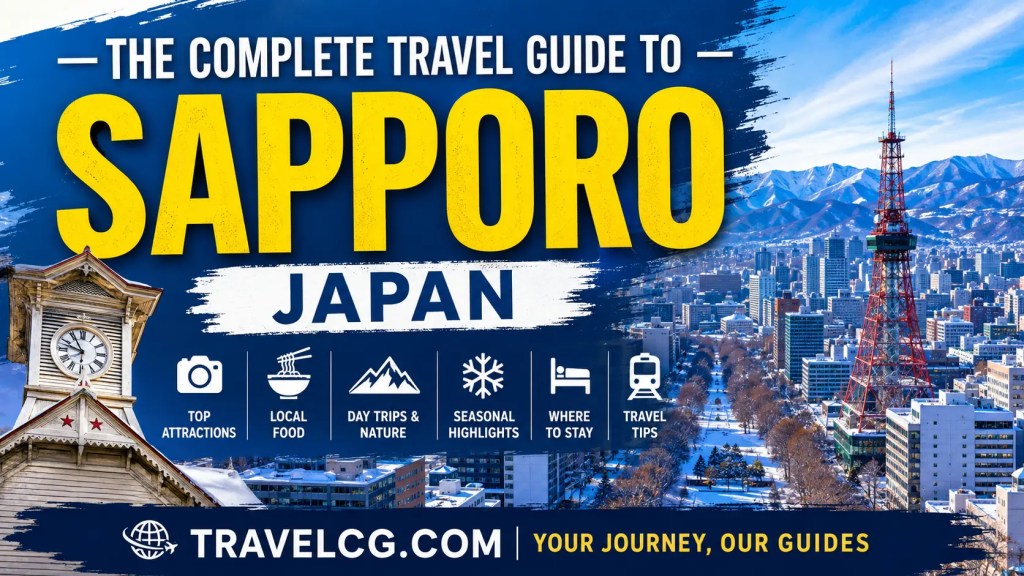
Sapporo is the capital of Hokkaido and one of Japan’s most fascinating cities. Famous for heavy winter snowfall, the Sapporo Snow Festival, excellent food, spacious streets, beautiful parks, nearby mountains, and easy access to Hokkaido’s natural attractions, Sapporo offers a different experience from Japan’s more crowded destinations such as Tokyo, Kyoto, and Osaka.
Whether you are planning a winter holiday, a summer trip, a family vacation, a honeymoon, a food-focused journey, or a longer Hokkaido itinerary, Sapporo can be an excellent base.
Where Is Sapporo?
Sapporo is located in southwestern Hokkaido, Japan’s northernmost main island. It is the largest city in Hokkaido and serves as the island’s political, economic, cultural, and transportation center.
The city is surrounded by mountains and has a distinct seasonal climate. Winters are snowy and cold, while summers are relatively comfortable compared with many other major Japanese cities.
Sapporo is also an important starting point for exploring other parts of Hokkaido, including Otaru, Furano, Biei, Noboribetsu, Lake Toya, Asahikawa, and the ski resorts around Niseko.
Why Visit Sapporo?
There are many reasons to include Sapporo on a Japan itinerary.
Sapporo is particularly attractive because it combines:
- Modern Japanese city life
- Beautiful parks and open spaces
- Heavy winter snowfall
- World-famous winter events
- Excellent seafood
- Hokkaido dairy products
- Ramen and local cuisine
- Skiing and snow activities
- Easy access to nature
- Nearby historical towns and resorts
- Vibrant shopping and nightlife
- Comfortable summer weather
- Convenient public transportation
Unlike some older Japanese cities, Sapporo has a relatively modern and organized urban layout. The wide streets and grid-style city center make it comparatively easy for first-time visitors to navigate.
Best Time to Visit Sapporo
The best time to visit Sapporo depends on what you want to experience.
Sapporo in Winter
Winter is one of the biggest reasons travelers visit Sapporo.
December through February brings substantial snowfall, and the city becomes a winter destination with snow-covered streets, illuminated attractions, ski resorts, snow activities, and seasonal food.
February is especially popular because of the Sapporo Snow Festival.
Winter is ideal for:
- Snow festivals
- Snow photography
- Skiing
- Snowboarding
- Winter landscapes
- Hot springs
- Winter food
- Christmas and New Year atmosphere
However, temperatures can be very low and snowfall can affect transportation.
Sapporo in Spring
Spring arrives relatively late compared with many parts of Japan.
April can still feel cold, while May becomes more comfortable.
Spring is suitable for travelers who want:
- Pleasant sightseeing
- Fewer winter conditions
- Parks and gardens
- Seasonal flowers
- More comfortable walking
Cherry blossoms generally appear later than in Tokyo and Kyoto.
Sapporo in Summer
June to August is an excellent period for exploring Sapporo and wider Hokkaido.
Sapporo’s summer climate is generally more comfortable than the hot and humid conditions experienced in many parts of central and southern Japan.
Summer is ideal for:
- City sightseeing
- Parks
- Hiking
- Day trips
- Flower fields
- Outdoor activities
- Festivals
- Food tours
July and August can be particularly enjoyable for exploring the countryside around Sapporo.
Sapporo in Autumn
September and October are beautiful months for visiting.
The weather gradually becomes cooler, and autumn colors appear around the city and surrounding mountains.
Autumn is ideal for:
- Scenic drives
- Hiking
- Photography
- Parks
- Mountain views
- Local food
- Day trips
November is much colder and can begin transitioning toward winter.
How Many Days Are Enough for Sapporo?
For Sapporo itself, three to four days is a good starting point.
2 Days in Sapporo
Two days can cover the major city attractions.
You can visit:
- Odori Park
- Sapporo Clock Tower
- Former Hokkaido Government Office area
- Sapporo TV Tower
- Susukino
- Nijo Market
- Mount Moiwa
3 Days in Sapporo
Three days allows you to explore the city more comfortably and include a nearby attraction.
A possible plan is:
Day 1: Central Sapporo
Day 2: Parks, markets, and Mount Moiwa
Day 3: Otaru or another nearby destination
4 to 5 Days
Four or five days allows a more relaxed trip and makes it possible to combine Sapporo with destinations such as Otaru, Noboribetsu, Lake Toya, or nearby ski areas.
Top Places to Visit in Sapporo
Odori Park
Odori Park is one of the defining landmarks of Sapporo.
The long green space stretches through the center of the city and separates the northern and southern parts of central Sapporo.
The park is attractive throughout the year.
In winter, it becomes one of the main locations for the Sapporo Snow Festival.
In warmer months, it is a pleasant place for walking, relaxing, seasonal events, flowers, and city views.
Sapporo TV Tower
Located near the eastern end of Odori Park, Sapporo TV Tower is one of the city’s recognizable landmarks.
The observation area provides views over central Sapporo and Odori Park.
It is particularly attractive around sunset and after dark when the city lights become visible.
Sapporo Clock Tower
The Sapporo Clock Tower is one of the city’s best-known historic buildings.
It represents an important part of Sapporo’s early development and is a popular stop for first-time visitors.
The building is relatively small compared with many major Japanese landmarks, but its historical importance makes it worth visiting.
Former Hokkaido Government Office
The Former Hokkaido Government Office is another important historical attraction in central Sapporo.
Its distinctive red-brick architecture makes it one of the most recognizable buildings in the city.
The surrounding area is particularly attractive for photography.
Susukino
Susukino is Sapporo’s major entertainment and nightlife district.
The area is packed with:
- Restaurants
- Bars
- Cafes
- Ramen shops
- Entertainment venues
- Shopping
- Hotels
- Neon signs
It becomes particularly lively after sunset.
For travelers interested in Sapporo’s nightlife and local food scene, Susukino is one of the best areas to explore.
Tanukikoji Shopping Street
Tanukikoji is a covered shopping arcade in central Sapporo.
The covered design makes it useful during both snowy winters and rainy weather.
You can find:
- Souvenirs
- Clothing
- Cosmetics
- Restaurants
- Snacks
- Local products
- Convenience stores
- Specialty shops
It is an easy place to combine shopping with sightseeing.
Nijo Market
Nijo Market is an excellent place to experience Sapporo’s seafood culture.
Hokkaido is famous for its seafood, and the market offers opportunities to try dishes involving:
- Crab
- Sea urchin
- Salmon roe
- Scallops
- Fresh fish
- Seafood rice bowls
Morning is generally a good time to visit because seafood markets are particularly active earlier in the day.
Mt. Moiwa
Mount Moiwa is one of Sapporo’s most popular viewpoints.
From the summit, visitors can see the city spread across the surrounding landscape.
The nighttime view is particularly impressive.
Mount Moiwa is a good choice for:
- Couples
- Photographers
- Families
- First-time visitors
- Night sightseeing
Maruyama Park
Maruyama Park is a peaceful green space in Sapporo.
It is particularly popular during cherry blossom season and autumn.
The park also provides access to the Mount Maruyama area for travelers interested in walking and hiking.
Hokkaido Shrine
Located near Maruyama Park, Hokkaido Shrine is an important Shinto shrine.
The surrounding forest creates a peaceful contrast to central Sapporo.
The shrine is especially attractive during seasonal celebrations and when the surrounding trees change color.
Sapporo Beer Museum
Sapporo has a long association with beer production.
The Sapporo Beer Museum introduces visitors to the history of the city’s beer industry.
The museum can be combined with nearby attractions and is particularly interesting for visitors who want to learn about local food and industrial history.
Shiroi Koibito Park
Shiroi Koibito Park is a popular attraction associated with one of Hokkaido’s famous sweets.
The attraction combines food, factory-style experiences, displays, gardens, and shopping.
It is especially suitable for:
- Families
- Couples
- Dessert lovers
- Chocolate enthusiasts
Sapporo Station Area
Sapporo Station is much more than a transportation hub.
The surrounding district contains:
- Shopping centers
- Restaurants
- Hotels
- Department stores
- Observation facilities
- Underground shopping areas
It is one of the most convenient areas to stay if you want easy access to transportation.
Sapporo Snow Festival
The Sapporo Snow Festival is the city’s most famous winter event.
It is traditionally held in February and attracts visitors with enormous snow and ice sculptures.
The event transforms parts of Sapporo into a winter exhibition featuring:
- Giant snow sculptures
- Ice sculptures
- Illuminations
- Food stalls
- Winter activities
- Entertainment
Because the festival attracts large numbers of visitors, accommodation can become expensive and difficult to find.
If the festival is the main reason for your trip, booking accommodation well in advance is strongly recommended.
Things to Do in Sapporo
Sapporo offers activities beyond conventional sightseeing.
Explore Local Food
Food is one of the strongest reasons to visit Hokkaido.
Try local specialties such as:
- Sapporo miso ramen
- Soup curry
- Jingisukan
- Seafood bowls
- Hokkaido crab
- Sea urchin
- Salmon roe
- Hokkaido dairy products
- Soft-serve ice cream
- Local sweets
Try Sapporo Miso Ramen
Sapporo is famous for miso ramen.
The dish is typically rich, warming, and particularly satisfying during the cold winter months.
Ramen restaurants can be found throughout the city, especially around Susukino and other central districts.
Eat Soup Curry
Soup curry is another food closely associated with Sapporo.
Unlike conventional thick curry, soup curry has a thinner, aromatic broth and is often served with vegetables, meat, seafood, and rice.
It is one of the foods travelers should consider trying while in the city.
Eat Jingisukan
Jingisukan is a Hokkaido-style grilled lamb dish.
The meat is cooked on a distinctive dome-shaped grill and is commonly eaten with vegetables.
It is particularly enjoyable during a cold evening in Sapporo.
Visit a Japanese Onsen
Sapporo’s surrounding region has several hot spring destinations.
For a traditional Japanese experience, consider combining your Sapporo stay with an onsen trip.
Jozankei is one of the most convenient hot spring areas near Sapporo.
Day Trips From Sapporo
One of Sapporo’s biggest advantages is its location.
Several interesting destinations can be visited as day trips.
Otaru
Otaru is one of the easiest and most popular day trips from Sapporo.
The city is known for:
- Historic warehouses
- Canal scenery
- Glass shops
- Music boxes
- Seafood
- Cafes
- Romantic evening scenery
Otaru can be explored comfortably in a single day.
Jozankei
Jozankei is a hot spring resort area in the mountains near Sapporo.
It is particularly attractive during autumn when the surrounding forests turn colorful.
Winter also creates a beautiful snowy atmosphere.
Jozankei is ideal for travelers seeking relaxation without traveling far from Sapporo.
Asahikawa
Asahikawa is farther from Sapporo but can be included in a longer Hokkaido itinerary.
It is known for its zoo, ramen, and access to central Hokkaido.
A dedicated overnight stay may be more comfortable than attempting to rush through it as a day trip.
Furano
Furano is famous for its flower fields and rural scenery.
Summer is particularly attractive because of the lavender fields and colorful agricultural landscapes.
Furano is better suited to travelers with additional time because travel from Sapporo takes longer than reaching nearby destinations.
Biei
Biei is known for rolling agricultural landscapes and scenic countryside.
It is especially popular with photographers.
Biei can be combined with Furano in a wider Hokkaido itinerary.
Noboribetsu
Noboribetsu is one of Hokkaido’s most famous hot spring destinations.
The area is known for dramatic volcanic landscapes and hot spring resorts.
Jigokudani, or Hell Valley, is one of the main attractions.
For travelers who enjoy hot springs and nature, Noboribetsu is worth considering.
Lake Toya
Lake Toya is a beautiful volcanic lake surrounded by mountains.
The area is suitable for:
- Scenic views
- Hot springs
- Boat rides
- Outdoor activities
- Photography
- Relaxation
An overnight stay can make the experience more enjoyable.
Skiing Near Sapporo
Sapporo is an excellent destination for winter sports.
Several ski areas and resorts can be reached from the city or its surrounding region.
Popular activities include:
- Skiing
- Snowboarding
- Snowshoeing
- Snowmobiling
- Winter sightseeing
Beginners can find ski schools and rental services in major resort areas.
If skiing is the primary purpose of your trip, you may also want to consider staying closer to a major ski resort rather than remaining in central Sapporo for the entire trip.
Where to Stay in Sapporo
Choosing the right neighborhood can make your trip much easier.
Sapporo Station
Best for:
- First-time visitors
- Transportation convenience
- Day trips
- Families
- Business travelers
The area provides excellent access to trains and shopping.
Odori
Best for:
- Sightseeing
- Central location
- Parks
- Shopping
- First-time travelers
Odori is one of the most convenient areas for exploring central Sapporo on foot.
Susukino
Best for:
- Nightlife
- Restaurants
- Ramen
- Entertainment
- Young travelers
The area is lively after dark.
Nakajima Park
Best for:
- Couples
- Relaxation
- Quieter surroundings
- Longer stays
It provides a greener environment while remaining relatively close to central Sapporo.
Getting to Sapporo
Most international travelers arrive through New Chitose Airport.
New Chitose Airport is the main airport serving Sapporo and the surrounding region.
From the airport, travelers can use:
- Airport trains
- Buses
- Taxis
- Rental cars
The airport railway connection is particularly convenient for reaching central Sapporo.
Getting Around Sapporo
Sapporo has a well-developed public transportation network.
The main options include:
- Subway
- Local trains
- Buses
- Streetcars
- Taxis
- Walking
- Rental cars
The subway is particularly useful for reaching many major attractions within the city.
Walking is also enjoyable in central Sapporo, especially around Odori Park, Sapporo Station, Susukino, and Tanukikoji.
Public Transportation Tips
A transportation card can make travel easier if you are using public transportation frequently.
For day trips outside central Sapporo, check train schedules carefully.
During winter, allow additional time because heavy snow can occasionally affect transportation.
Renting a Car in Hokkaido
A rental car can be extremely useful if you plan to explore rural Hokkaido.
Driving provides greater flexibility for destinations such as:
- Furano
- Biei
- Lake Toya
- Rural areas
- Scenic countryside
- Remote hot springs
However, driving in heavy winter snow requires additional caution and experience.
If you are not comfortable driving in snow, public transportation and organized tours may be better choices.
Sapporo Travel Costs
Sapporo can be visited on different budgets.
Budget Travel
Budget travelers can reduce costs by choosing:
- Hostels
- Budget hotels
- Convenience-store meals
- Affordable restaurants
- Public transportation
- Free parks and viewpoints
Mid-Range Travel
A mid-range trip can include:
- Comfortable hotels
- Restaurant meals
- Paid attractions
- Day trips
- Occasional taxis
Luxury Travel
Luxury travelers can enjoy:
- High-end hotels
- Premium seafood
- Private tours
- Luxury transport
- Traditional ryokan stays
- Premium onsen experiences
Winter festival periods can significantly increase accommodation prices.
What to Eat in Sapporo
Sapporo is one of Japan’s best food destinations.
Must-Try Foods
Consider trying:
- Sapporo miso ramen
- Soup curry
- Jingisukan
- Seafood rice bowls
- Crab
- Sea urchin
- Salmon roe
- Scallops
- Hokkaido milk products
- Soft-serve ice cream
- Hokkaido cheese
- Local sweets
Shopping in Sapporo
Sapporo offers a wide range of shopping opportunities.
Popular shopping areas include:
- Sapporo Station
- Odori
- Susukino
- Tanukikoji
- Underground shopping areas
What to Buy
Popular souvenirs include:
- Hokkaido sweets
- Chocolate
- Cookies
- Local snacks
- Dairy products
- Seafood products
- Japanese cosmetics
- Traditional souvenirs
- Regional food products
Food souvenirs are particularly popular among visitors.
Sapporo With Family
Sapporo can be an excellent family destination.
Children may enjoy:
- Shiroi Koibito Park
- Sapporo Beer Museum
- Snow activities
- Parks
- Seasonal festivals
- Zoos and nearby attractions
- Aquarium visits in surrounding destinations
Winter requires extra planning because young children may find the cold uncomfortable.
Sapporo for Couples
Sapporo can also be a romantic destination.
Good experiences for couples include:
- Mount Moiwa at night
- Otaru day trip
- Winter illuminations
- Romantic restaurants
- Hot springs
- Snow walks
- Cafes
- Evening views
A combination of Sapporo and an onsen resort can make a particularly relaxing couple’s itinerary.
Sapporo for Solo Travelers
Sapporo is well suited to solo travel.
The city is relatively easy to navigate, and restaurants frequently accommodate individual diners.
Solo travelers can comfortably explore:
- Markets
- Ramen shops
- Parks
- Museums
- Shopping areas
- Nightlife
- Day-trip destinations
Is Sapporo Safe?
Sapporo is generally considered a safe destination for tourists.
As with any major city, travelers should take normal precautions:
- Keep valuables secure
- Watch belongings in crowded areas
- Follow local rules
- Be careful around traffic
- Avoid unsafe areas late at night
- Keep emergency information accessible
Winter creates an additional safety issue because sidewalks can become slippery.
Wear shoes with good traction and walk carefully on icy surfaces.
Winter Travel Tips
If you visit Sapporo in winter, preparation is important.
Bring:
- Warm winter coat
- Thermal layers
- Gloves
- Hat
- Scarf
- Waterproof footwear
- Warm socks
- Moisture-resistant clothing
Good footwear is particularly important because snow and ice can make sidewalks slippery.
Avoid assuming that normal fashion shoes will be suitable for snowy conditions.
Summer Travel Tips
Summer clothing can be lighter, but weather can change.
Bring:
- Comfortable walking shoes
- Light clothing
- Light jacket
- Sun protection
- Rain protection
Summer is an excellent time to explore Sapporo on foot and take trips into the countryside.
Japanese Etiquette in Sapporo
Respect for local customs is important.
Remember to:
- Keep public spaces clean
- Avoid loud conversations on trains
- Queue properly
- Follow restaurant rules
- Remove shoes where required
- Avoid littering
- Respect temples and shrines
- Follow photography restrictions
- Be considerate of other passengers
Learning a few basic Japanese expressions can also make communication easier.
Useful expressions include:
- Konnichiwa — Hello
- Arigatou gozaimasu — Thank you
- Sumimasen — Excuse me
- Onegaishimasu — Please
- Ohayou gozaimasu — Good morning
Internet and Connectivity
Travelers can usually access the internet through hotel Wi-Fi, public Wi-Fi, SIM cards, and eSIM services.
For navigation and translation, having mobile internet is highly recommended.
Download important maps and travel information before leaving your hotel, especially if you plan to explore rural areas.
Money and Payments
Japan increasingly accepts cashless payments, but carrying some Japanese yen is still advisable.
Some smaller restaurants, shops, markets, and rural businesses may prefer cash.
Keep a combination of:
- Cash
- Credit or debit card
- Transportation card
- Mobile payment options
This provides greater flexibility.
Sapporo Travel Itinerary
One-Day Sapporo Itinerary
Morning:
Visit Sapporo Clock Tower and the central city area.
Late morning:
Explore Odori Park.
Lunch:
Try Sapporo miso ramen.
Afternoon:
Explore Tanukikoji Shopping Street and surrounding shopping areas.
Evening:
Visit Susukino and enjoy dinner.
Two-Day Sapporo Itinerary
Day 1:
Sapporo Station
Sapporo Clock Tower
Former Hokkaido Government Office area
Odori Park
Sapporo TV Tower
Susukino
Day 2:
Nijo Market
Hokkaido Shrine
Maruyama Park
Shiroi Koibito Park
Mount Moiwa
Three-Day Sapporo Itinerary
Day 1:
Central Sapporo and Odori Park
Day 2:
Nijo Market, Hokkaido Shrine, Maruyama Park, and Mount Moiwa
Day 3:
Take a day trip to Otaru
Five-Day Sapporo and Hokkaido Itinerary
Day 1:
Arrive in Sapporo and explore the city center.
Day 2:
Central Sapporo, markets, shopping, and Susukino.
Day 3:
Otaru day trip.
Day 4:
Jozankei or another nearby destination.
Day 5:
Sapporo sightseeing and departure.
For a longer trip, consider adding Furano, Biei, Noboribetsu, Lake Toya, or other Hokkaido destinations.
Best Areas for Photography
Sapporo provides excellent photography opportunities throughout the year.
Consider photographing:
- Odori Park
- Sapporo TV Tower
- Mount Moiwa
- Sapporo Clock Tower
- Red-brick government building
- Susukino at night
- Snow-covered streets
- Hokkaido Shrine
- Maruyama Park
- Winter festival sculptures
Snowy Sapporo is especially photogenic after sunset.
Sapporo in Different Seasons
Winter
Best for snow, skiing, festivals, and winter food.
Spring
Best for parks, flowers, and comfortable sightseeing.
Summer
Best for outdoor activities, countryside trips, flowers, and festivals.
Autumn
Best for colorful foliage, photography, hiking, and cooler weather.
Common Mistakes to Avoid in Sapporo
Packing the Wrong Shoes
Snow and ice can make ordinary shoes dangerous during winter.
Planning Too Many Day Trips
Hokkaido is much larger than it may appear on a map.
Do not underestimate travel times.
Ignoring Weather
Weather can change quickly, especially during winter.
Check forecasts before heading outside.
Booking Too Late During the Snow Festival
Accommodation can become expensive or sell out during major winter events.
Eating Only at Tourist Restaurants
Some of Sapporo’s best food experiences can be found in ordinary local restaurants and neighborhood establishments.
Spending the Entire Trip in the City
If you have enough time, consider adding at least one day trip.
Sapporo Travel Tips for First-Time Visitors
Plan your major attractions by geographical area to reduce unnecessary travel.
Stay near Sapporo Station, Odori, or Susukino if convenience is important.
Use public transportation for city sightseeing.
Keep some cash with you.
Reserve accommodation early for peak winter periods.
Wear appropriate footwear during snowy months.
Try local Hokkaido food rather than relying only on familiar international cuisine.
Allow extra time for winter transportation.
Do not underestimate Hokkaido’s distances when planning day trips.
Is Sapporo Worth Visiting?
Yes, Sapporo is absolutely worth visiting, particularly if you want to experience a different side of Japan.
It combines the conveniences of a modern Japanese city with access to mountains, snow, hot springs, countryside, seafood, and seasonal attractions.
Winter travelers can experience one of Japan’s most famous snow festivals, while summer visitors can enjoy comfortable weather and easy access to Hokkaido’s natural landscapes.
Food lovers will find plenty to explore, from miso ramen and soup curry to fresh seafood and Hokkaido dairy products.
For travelers with more time, Sapporo also works as an excellent base for exploring wider Hokkaido.
Final Sapporo Travel Guide Summary
Sapporo is a destination that changes dramatically with the seasons.
Winter transforms the city into a snowy wonderland, making it ideal for snow festivals, skiing, winter photography, and warming bowls of ramen. Summer brings comfortable weather, green parks, outdoor activities, and opportunities to explore Hokkaido’s countryside. Autumn adds colorful mountain landscapes, while spring provides a quieter and refreshing sightseeing experience.
For a first visit, spending three to four days in Sapporo is a good choice. Include central attractions such as Odori Park, Sapporo Clock Tower, Sapporo TV Tower, Nijo Market, Susukino, Hokkaido Shrine, and Mount Moiwa. If your schedule permits, add a day trip to Otaru or Jozankei.
Most importantly, do not treat Sapporo simply as another large Japanese city. Its real appeal comes from the combination of urban life, Hokkaido cuisine, dramatic seasons, nearby nature, winter culture, hot springs, and easy access to some of northern Japan’s most beautiful destinations.
Travelcg.com — Travel guides for discovering amazing places around the world.
Related Other Places (Travel Guide)






Leave a Reply