
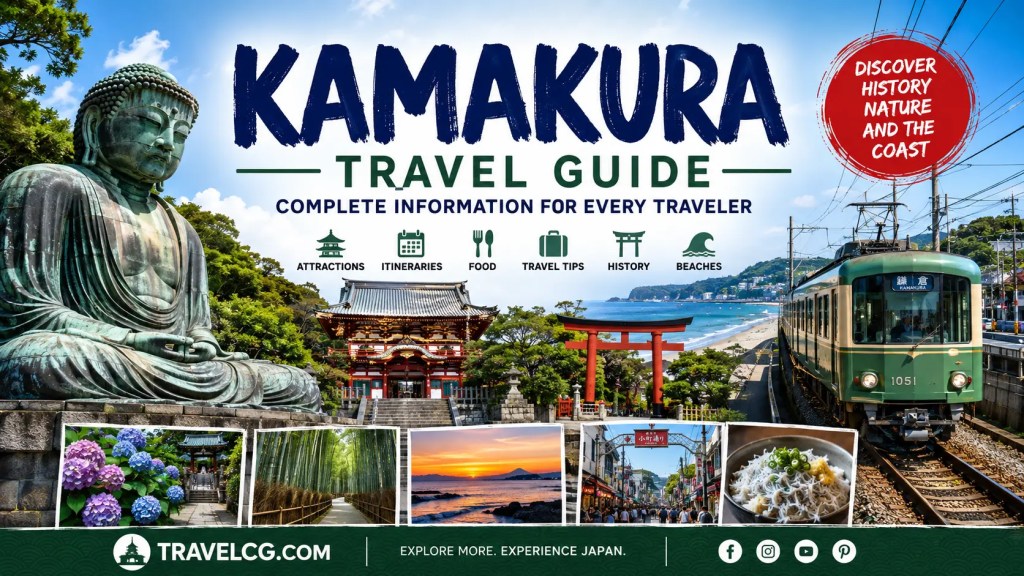
Kamakura is one of Japan’s most attractive historic destinations, known for its ancient temples, Buddhist heritage, traditional streets, beautiful coastline, and the famous Great Buddha. Located in Kanagawa Prefecture, about an hour from central Tokyo, Kamakura is an excellent destination for travelers who want to experience Japan’s history and culture while staying close to the capital.
The city was once the political center of Japan during the Kamakura Period and today combines historical attractions with beaches, walking trails, gardens, cafés, and traditional Japanese neighborhoods. A day trip is enough to see the major highlights, but staying overnight allows you to explore the city at a much more relaxed pace.
Where Is Kamakura?
Kamakura is located in Kanagawa Prefecture on the Pacific coast south of Tokyo. It is surrounded by hills on three sides and faces Sagami Bay on the fourth side.
Its location makes it especially convenient for travelers staying in Tokyo. Depending on the train and starting point, the journey generally takes around one hour.
Kamakura is also close to Enoshima, making it possible to combine both destinations in one trip.
Why Is Kamakura Famous?
Kamakura is famous for several things:
- The Great Buddha of Kamakura
- Historic Buddhist temples
- Shinto shrines
- Traditional Japanese architecture
- Kamakura’s samurai history
- Beautiful gardens
- Coastal scenery
- Kamakura beaches
- Hiking trails
- Traditional sweets and local food
- The scenic Enoden railway
- Easy access from Tokyo
The combination of history, nature, spirituality, and seaside scenery makes Kamakura different from many other Japanese destinations.
History of Kamakura
Kamakura played an extremely important role in Japanese history.
In 1185, Minamoto no Yoritomo established his military government in Kamakura, and in 1192 he was formally appointed shogun. The city became the political center of Japan during the Kamakura Period.
The Kamakura Shogunate lasted until 1333. During this period, the city developed into an important center of samurai culture and Buddhism.
Several major Buddhist temples were established or expanded during and after this period. Zen Buddhism also became particularly influential in Kamakura.
Although Kamakura is no longer a political capital, its historical importance remains visible throughout the city.
Best Time to Visit Kamakura
Kamakura can be visited throughout the year, but each season offers a different experience.
Spring
Spring is one of the most popular seasons.
Cherry blossoms add beautiful scenery around temples, shrines, streets, and parks. The weather is generally comfortable for sightseeing and walking.
Late March to early April is usually the main cherry blossom period, although exact flowering dates vary each year.
Summer
Summer brings warm and humid weather.
The beaches become particularly popular, and visitors can enjoy Kamakura’s coastal atmosphere. However, summer can be crowded and hot, especially during weekends and holidays.
Hydration and sun protection are important.
Autumn
Autumn is another excellent season.
The changing colors of Japanese maple trees create beautiful scenery around temples and gardens. November is particularly attractive for autumn foliage.
The cooler weather also makes walking and hiking more comfortable.
Winter
Winter is generally quieter.
The weather can be cold, but clear days may offer excellent views. Fewer tourists can make winter a good choice for travelers who prefer a peaceful atmosphere.
How to Reach Kamakura from Tokyo
Kamakura is very easy to reach from Tokyo by train.
JR Yokosuka Line
The JR Yokosuka Line connects Tokyo and Kamakura directly.
This is one of the simplest options for travelers staying around Tokyo Station or Shinagawa.
JR Shonan-Shinjuku Line
Travelers staying around Shinjuku, Shibuya, or nearby areas can often use the Shonan-Shinjuku Line.
Some trains provide direct service toward Kamakura, while others require a transfer depending on the service.
Enoden Railway
The Enoden, officially known as the Enoshima Electric Railway, is one of the most enjoyable ways to explore the Kamakura area.
The historic-looking railway connects Kamakura with destinations including Hase and Enoshima.
The journey itself is part of the experience because the train passes through residential neighborhoods and along the coast.
How to Travel Around Kamakura
Kamakura’s major attractions are spread across several neighborhoods, so a combination of walking, trains, and buses is useful.
Walking
Walking is one of the best ways to experience Kamakura.
You can discover small streets, traditional houses, cafés, temples, shops, and quiet neighborhoods that you might miss from a vehicle.
Enoden
The Enoden is particularly useful for visiting attractions around Hase and the coast.
Important stations include:
- Kamakura
- Hase
- Gokurakuji
- Inamuragasaki
- Shichirigahama
- Enoshima
Local Buses
Buses are useful for reaching attractions that are farther from railway stations.
Bicycle
Cycling can also be an enjoyable option, although traffic, narrow roads, hills, and busy tourist areas require caution.
Top Places to Visit in Kamakura
Kamakura has many temples, shrines, historic monuments, and natural attractions.
Great Buddha of Kamakura
The Great Buddha is Kamakura’s most famous landmark.
The enormous bronze statue of Amitabha Buddha is located at Kotoku-in Temple in the Hase area.
The statue is approximately 11.3 meters tall and is one of Japan’s best-known Buddhist monuments.
Unlike many large Buddhist statues that are housed inside buildings, Kamakura’s Great Buddha stands outdoors.
The statue has survived earthquakes, storms, and other disasters over the centuries.
Visiting the Great Buddha is usually considered essential on a first trip to Kamakura.
Kotoku-in Temple
Kotoku-in is the Buddhist temple associated with the Great Buddha.
The temple grounds are relatively compact, making it easy to combine the visit with other Hase-area attractions.
The Great Buddha is the main attraction, but the temple’s historical atmosphere is also worth experiencing.
Hasedera Temple
Hasedera is one of Kamakura’s most beautiful temples.
The temple is famous for its large wooden statue of Kannon, the Buddhist bodhisattva associated with compassion.
Hasedera is also known for:
- Beautiful gardens
- Seasonal flowers
- Traditional architecture
- Hilltop views
- Small Buddhist statues
- Views toward the sea
The elevated areas of the temple provide excellent views over Kamakura and Sagami Bay.
The temple is particularly beautiful during hydrangea season.
Meigetsu-in Temple
Meigetsu-in is widely known as the “Hydrangea Temple.”
During the rainy season, usually around June, thousands of hydrangeas can create spectacular scenery.
The temple is also famous for its round window, which frames the garden beautifully.
Because of its popularity during hydrangea season, expect crowds during peak periods.
Hokokuji Temple
Hokokuji is a relatively small but exceptionally atmospheric temple.
Its most famous feature is the bamboo grove.
The tall bamboo creates a peaceful green corridor that feels very different from the busy streets of central Kamakura.
Visitors can also enjoy matcha tea in the bamboo garden.
Tsurugaoka Hachimangu Shrine
Tsurugaoka Hachimangu is one of Kamakura’s most important Shinto shrines.
It was established by Minamoto no Yoritomo and became closely associated with the samurai government.
A long approach leads toward the shrine complex.
The grounds include:
- Large gates
- Stone steps
- Shrine buildings
- Ponds
- Gardens
- Traditional Japanese architecture
The shrine is an excellent place to learn about Kamakura’s connection with samurai history.
Kenchoji Temple
Kenchoji is one of Kamakura’s most important Zen temples.
It is regarded as the oldest of the great Zen temples in Kamakura.
The temple complex contains multiple buildings, gardens, gates, and religious monuments.
The surrounding hills also offer opportunities for walking and hiking.
Engakuji Temple
Engakuji is another major Zen temple located near Kita-Kamakura Station.
Its peaceful grounds contain traditional buildings, gardens, gates, and historic monuments.
Because of its location near the station, Engakuji is convenient for travelers beginning a Kita-Kamakura temple tour.
Autumn is especially attractive here because of the surrounding foliage.
Jufukuji Temple
Jufukuji is one of Kamakura’s important Zen temples.
It was founded by Hōjō Masako, the wife of Minamoto no Yoritomo, and is associated with the early development of Zen Buddhism in Kamakura.
The approach to the temple is particularly scenic.
The temple itself is generally quieter than some of Kamakura’s major tourist attractions.
Zuisenji Temple
Zuisenji is known for its beautiful Zen garden and peaceful surroundings.
The temple is located farther from central Kamakura, which means it often feels quieter than the more famous attractions.
Its garden was designed to integrate natural rock formations into the landscape.
It is a good destination for travelers interested in Japanese garden design and Zen aesthetics.
Hokai-ji Temple
Hokai-ji is a small temple near Tsurugaoka Hachimangu.
It is particularly associated with white clover flowers in autumn and has a peaceful atmosphere.
Its smaller scale makes it a nice addition to a walking route around central Kamakura.
Sasuke Inari Shrine
Sasuke Inari Shrine is associated with numerous fox statues and a wooded atmosphere.
The shrine is dedicated to Inari, a Japanese deity traditionally associated with rice, agriculture, prosperity, and business.
The path through the forest gives the shrine a secluded feeling.
Zeniarai Benten Shrine
Zeniarai Benten is one of Kamakura’s more unusual and popular shrines.
Visitors traditionally wash money in the shrine’s sacred spring water, following the belief that doing so can bring financial prosperity.
The shrine is surrounded by rocky scenery and reached through a tunnel-like entrance.
It provides a different cultural experience from Kamakura’s larger temple complexes.
Daibutsu Hiking Trail
Kamakura is surrounded by hills, making hiking another popular activity.
The Daibutsu Hiking Trail connects areas around Kita-Kamakura with the Great Buddha area.
The route passes through wooded landscapes and provides a different perspective of Kamakura away from the main tourist streets.
Wear comfortable shoes because some sections can be uneven.
Kamakura Beaches
Kamakura’s location beside Sagami Bay means the city also has a beach culture.
Yuigahama Beach
Yuigahama is one of the most accessible beaches from central Kamakura.
It is popular during summer and provides a pleasant coastal atmosphere.
Zaimokuza Beach
Zaimokuza is another major beach.
It is generally associated with a more relaxed coastal atmosphere and is suitable for walking and enjoying views of the sea.
Inamuragasaki
Inamuragasaki is famous for coastal scenery and sunset views.
On clear days, Mount Fuji may sometimes be visible across the water.
Kamakura’s Famous Hydrangeas
Hydrangeas are strongly associated with Kamakura.
The rainy season creates ideal conditions for these flowers, and several temples become especially attractive during June.
Popular places for hydrangeas include:
- Meigetsu-in
- Hasedera
- Joju-in
- Other temple gardens throughout the city
If you specifically want to photograph hydrangeas, visiting in June can be rewarding, but this is also one of the busiest periods.
Kamakura Food Guide
Kamakura has a wide range of food options, from traditional Japanese dishes to modern cafés.
Shirasu
Shirasu, or young whitebait fish, is one of the area’s best-known local foods.
It is commonly served over rice and may also appear in sushi, pasta, omelets, and other dishes.
Kamakura Vegetable Cuisine
The region around Kamakura produces a variety of vegetables.
Restaurants and cafés often use locally grown seasonal produce.
Matcha
Matcha is widely available around Kamakura’s temples and shopping streets.
You can enjoy matcha tea with traditional Japanese sweets.
Japanese Sweets
Kamakura has many traditional confectionery shops.
Popular items include:
- Manju
- Dorayaki
- Rice crackers
- Mochi
- Bean-paste sweets
- Matcha desserts
Street Food
The Komachi Street area has numerous food stalls and small shops selling snacks.
Popular choices can include rice crackers, sweet treats, savory snacks, and soft-serve desserts.
Komachi Street
Komachi Street is one of Kamakura’s busiest shopping and dining areas.
It stretches from near Kamakura Station toward Tsurugaoka Hachimangu.
The street is packed with:
- Souvenir shops
- Restaurants
- Cafés
- Japanese sweets
- Fashion stores
- Local snacks
- Traditional crafts
It is an excellent place to shop for souvenirs after visiting the temples.
Because it can become extremely crowded, visiting earlier in the day can provide a more comfortable experience.
Kamakura Shopping
Kamakura offers plenty of opportunities to purchase traditional and modern souvenirs.
Popular souvenirs include:
- Japanese sweets
- Tea
- Pottery
- Handmade crafts
- Traditional fabrics
- Buddhist-themed items
- Small decorative objects
- Local food products
Kamakura also has many independent shops selling handmade goods.
Kamakura for Photography
Kamakura is an excellent destination for photography.
Some particularly photogenic locations include:
- Great Buddha
- Hasedera
- Meigetsu-in
- Hokokuji Bamboo Grove
- Tsurugaoka Hachimangu
- Enoden railway
- Yuigahama Beach
- Inamuragasaki
- Traditional streets
- Temple gardens
Early morning and late afternoon generally provide softer light and a more peaceful atmosphere.
Kamakura and Enoden Railway
The Enoden is more than transportation.
It is part of Kamakura’s identity.
The small electric trains travel through narrow urban areas and along sections of the coastline.
The journey between Kamakura and Enoshima is particularly scenic.
For many visitors, riding the Enoden is one of the highlights of the trip.
Kamakura and Enoshima
Kamakura and Enoshima are often visited together.
Enoshima is a small island connected to the mainland by a bridge.
It offers:
- Sea views
- Shrines
- Gardens
- Observation facilities
- Caves
- Restaurants
- Coastal walking
- Sunset views
A combined Kamakura-Enoshima itinerary can make an excellent full-day trip.
One-Day Kamakura Itinerary
If you have only one day, an efficient itinerary could be:
Morning
Start at Kamakura Station.
Walk toward Tsurugaoka Hachimangu.
Explore the shrine and surrounding historical area.
Then walk through nearby streets toward Komachi Street.
Have lunch in central Kamakura.
Afternoon
Take the Enoden toward Hase.
Visit Hasedera.
Then walk to Kotoku-in and see the Great Buddha.
Afterward, continue toward the coast.
Evening
Visit Yuigahama Beach or travel toward Inamuragasaki.
Enjoy the coastal scenery and sunset.
Return to Kamakura Station or continue toward Enoshima if time permits.
Two-Day Kamakura Itinerary
A two-day visit allows a much more relaxed experience.
Day 1: Central Kamakura
Visit:
- Tsurugaoka Hachimangu
- Komachi Street
- Hokokuji
- Zeniarai Benten
- Jufukuji
- Kenchoji
- Engakuji
Day 2: Hase and Coast
Visit:
- Hasedera
- Great Buddha
- Kotoku-in
- Yuigahama Beach
- Inamuragasaki
- Enoshima
This itinerary can be adjusted according to weather, opening hours, walking ability, and personal interests.
Kamakura for Families
Kamakura can be a good family destination.
Children may particularly enjoy:
- Great Buddha
- Enoden railway
- Beaches
- Bamboo forests
- Street food
- Traditional sweets
- Enoshima
However, some temple routes include stairs and uneven paths, so families with young children should plan accordingly.
Kamakura for Couples
Kamakura is also popular with couples.
Romantic experiences include:
- Walking through temple gardens
- Exploring traditional streets
- Riding the Enoden
- Visiting the beach
- Watching the sunset
- Enjoying cafés
- Exploring Enoshima
The coastal areas are particularly attractive around sunset.
Kamakura for Solo Travelers
Kamakura is suitable for solo travel because many attractions can be explored independently.
Solo travelers can spend time at temples, walk hiking trails, explore cafés, photograph historic architecture, or simply enjoy the coastal scenery.
Kamakura for History Lovers
History enthusiasts can spend an entire day exploring Kamakura’s temples and shrines.
The most important historical themes include:
- Samurai culture
- Kamakura Shogunate
- Zen Buddhism
- Shinto traditions
- Medieval Japanese architecture
- Buddhist art
A visit to Tsurugaoka Hachimangu combined with the major Zen temples provides a strong introduction to Kamakura’s history.
Kamakura for Nature Lovers
Although Kamakura is famous for its temples, nature is equally important.
The city is surrounded by hills and forests and sits beside the sea.
Nature-focused activities include:
- Hiking
- Beach walks
- Temple gardens
- Hydrangea viewing
- Autumn foliage viewing
- Coastal walks
- Sunset watching
Best Things to Do in Kamakura
For a quick summary, the best experiences include:
- See the Great Buddha.
- Visit Hasedera Temple.
- Explore Tsurugaoka Hachimangu.
- Walk along Komachi Street.
- Visit the Hokokuji Bamboo Grove.
- Explore Kamakura’s Zen temples.
- Ride the Enoden railway.
- Visit Zeniarai Benten.
- Walk along Yuigahama Beach.
- See Kamakura’s hydrangeas in June.
- Enjoy traditional Japanese food.
- Explore local cafés.
- Hike through the surrounding hills.
- Visit Enoshima.
- Watch the sunset near the coast.
How Many Days Are Enough for Kamakura?
One Day
One day is sufficient for the major highlights.
You can visit the Great Buddha, Hasedera, Tsurugaoka Hachimangu, Komachi Street, and the coast.
Two Days
Two days are better if you want to explore temples, hiking trails, beaches, and local neighborhoods without rushing.
Three Days
Three days allow a slower cultural experience and make it easier to combine Kamakura with Enoshima and other nearby destinations.
Where to Stay in Kamakura
Staying near Kamakura Station is convenient for first-time visitors.
Advantages include:
- Easy train connections
- Restaurants nearby
- Shopping
- Easy access to Komachi Street
- Convenient access to buses
The Hase area is another attractive option for travelers who want to stay closer to the Great Buddha, Hasedera, and the coast.
For a quieter atmosphere, areas around Kita-Kamakura can be appealing.
Is Kamakura Expensive?
Kamakura can be visited on different budgets.
Budget travelers can save money by:
- Using public transportation
- Walking between attractions
- Choosing casual restaurants
- Eating at local shops
- Selecting affordable accommodation
- Focusing on temples, shrines, beaches, and walking routes
Entrance fees apply to many major temples and attractions, so visitors should keep some additional budget for sightseeing.
What to Wear in Kamakura
Comfortable walking shoes are essential.
Kamakura involves considerable walking, stairs, temple grounds, and sometimes hiking trails.
Summer
Wear light clothing and carry:
- Water
- Hat
- Sunscreen
- Umbrella or rain protection
Winter
Wear warm layers, particularly in the morning and evening.
Rainy Season
Bring waterproof footwear or shoes suitable for wet conditions.
An umbrella or rain jacket is useful.
Important Travel Tips
Start Early
Kamakura becomes crowded, especially on weekends and during peak seasons.
Starting early makes sightseeing more enjoyable.
Respect Temple and Shrine Rules
Remember that temples and shrines are active religious sites.
Maintain a respectful attitude and follow photography rules.
Carry Cash
Although Japan has become increasingly cashless, smaller shops, temples, and local establishments may still prefer cash.
Wear Comfortable Shoes
You will likely walk much more than expected.
Avoid Peak Weekend Hours
If possible, visit popular attractions early on weekdays.
Check Seasonal Conditions
Hydrangeas, cherry blossoms, autumn leaves, and beach conditions are seasonal, so plan according to your interests.
Keep the Streets Clean
Japan is known for its clean public spaces. Carry your trash until you find an appropriate disposal point.
Cultural Etiquette in Kamakura
Visitors should follow basic Japanese etiquette.
Avoid loud conversations inside temples and shrines.
Do not touch religious objects unless permitted.
Follow designated photography rules.
Do not block narrow pathways while taking photographs.
When entering certain religious buildings, follow instructions regarding shoes.
Be respectful when visiting cemeteries or religious areas.
Is Kamakura Worth Visiting?
Absolutely.
Kamakura is one of the best destinations near Tokyo for travelers interested in Japanese history, Buddhism, traditional architecture, nature, and coastal scenery.
Its biggest advantage is variety.
In a single day, you can see a centuries-old Buddhist statue, walk through a bamboo grove, visit an ancient shrine, ride a historic railway, eat traditional Japanese food, and finish the day beside the ocean.
Kamakura vs Tokyo
Tokyo offers an enormous modern urban experience, while Kamakura provides a slower and more traditional atmosphere.
Choose Tokyo for:
- Skyscrapers
- Shopping
- Nightlife
- Modern entertainment
- Major museums
- Contemporary Japanese culture
Choose Kamakura for:
- Temples
- Shrines
- Samurai history
- Traditional neighborhoods
- Beaches
- Hiking
- Japanese gardens
- A quieter atmosphere
The two destinations work particularly well together because Kamakura can be visited as a day trip from Tokyo.
Kamakura vs Kyoto
Kamakura and Kyoto are both famous for Japanese temples and traditional culture, but they offer different experiences.
Kyoto has a much larger number of historic districts, temples, gardens, and cultural attractions.
Kamakura is smaller and easier to explore in a short period.
Kamakura also has something Kyoto does not have to the same extent: a combination of historic temples and a seaside environment.
If you have limited time in Japan, Kamakura is an excellent option for experiencing traditional Japan without traveling far from Tokyo.
Common Mistakes to Avoid
Trying to See Everything in One Day
Kamakura has many attractions, and rushing between all of them can make the experience tiring.
Choose a manageable route.
Visiting Only the Great Buddha
The Great Buddha is famous, but Kamakura’s temples, gardens, shrines, and streets are equally important.
Ignoring the Weather
Rain can significantly affect hiking and outdoor sightseeing.
Check the forecast before planning your route.
Arriving Late
Popular areas can become very crowded later in the morning.
Wearing Uncomfortable Shoes
Kamakura is best experienced on foot, so comfortable footwear is essential.
Frequently Asked Questions About Kamakura
Is Kamakura a day trip from Tokyo?
Yes. Kamakura is one of the most convenient day trips from Tokyo.
How far is Kamakura from Tokyo?
Kamakura is roughly an hour from central Tokyo by train, depending on your starting station and train service.
What is Kamakura most famous for?
Kamakura is most famous for the Great Buddha, historic temples and shrines, samurai history, and its coastal scenery.
Can I visit Kamakura and Enoshima in one day?
Yes, although you will need to prioritize attractions and manage your time carefully.
Is Kamakura good for first-time visitors to Japan?
Yes. It provides a compact introduction to Japanese history, Buddhism, traditional architecture, food, nature, and coastal culture.
Is Kamakura worth visiting in winter?
Yes. Winter is quieter and can provide a more peaceful temple experience.
When is the best time to see hydrangeas?
June is generally the best period for hydrangeas, particularly around temples such as Meigetsu-in and Hasedera.
How long should I spend in Kamakura?
One day is enough for the highlights, while two days are better for a relaxed exploration.
Is Kamakura expensive?
It can be relatively affordable compared with some major Japanese tourist destinations, especially if you use public transportation, walk between attractions, and choose casual restaurants.
Is Kamakura suitable for children?
Yes. Families can enjoy the Great Buddha, Enoden railway, beaches, food streets, and several temples.
Final Travel Recommendation
Kamakura is much more than a simple sightseeing destination near Tokyo. It is a place where Japan’s medieval history, Buddhist traditions, Shinto culture, natural landscapes, and modern local life come together.
For a first visit, prioritize Tsurugaoka Hachimangu, Hasedera, the Great Buddha, Komachi Street, the Enoden railway, and the coastal area. If you have additional time, explore the Zen temples around Kita-Kamakura, visit Hokokuji’s bamboo grove, walk one of the hiking trails, and consider extending the trip to Enoshima.
The ideal Kamakura experience is not about visiting the maximum number of attractions. It is about slowing down, walking through historic streets, appreciating Japanese temples and gardens, tasting local food, and experiencing the unique meeting point of ancient Japan and the sea.
Travelcg.com — Travel guides for discovering amazing places around the world.
Related Other Places (Travel Guide)





Leave a Reply