
Introduction
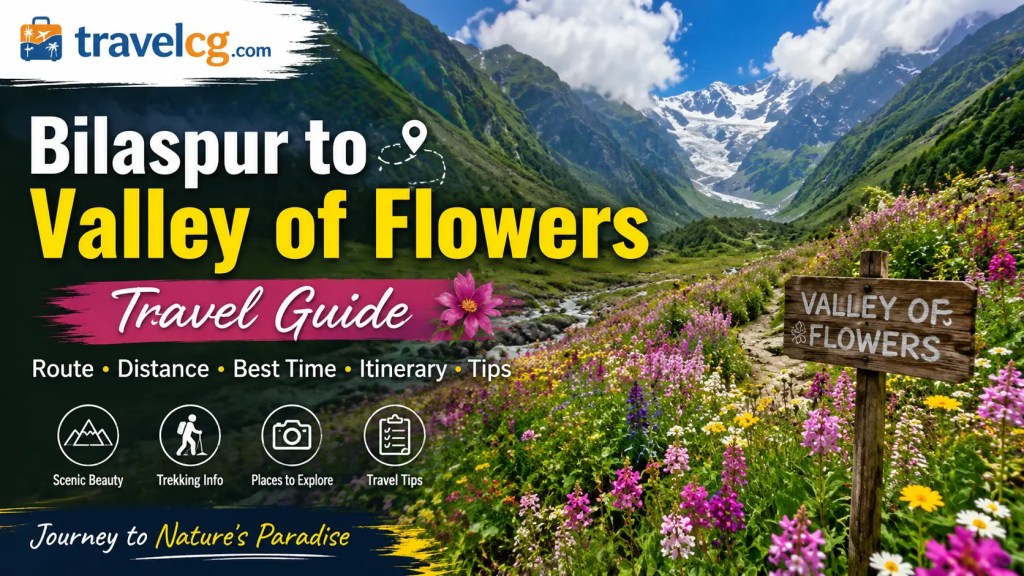
The Valley of Flowers National Park is one of India’s most spectacular natural destinations, famous for its breathtaking alpine meadows covered with thousands of colorful wildflowers. Nestled in the Chamoli district of Uttarakhand, this UNESCO World Heritage Site attracts nature lovers, trekkers, photographers, botanists, and adventure enthusiasts from around the world.
If you are planning a Bilaspur to Valley of Flowers trip, you should know that the journey covers approximately 1,450–1,600 kilometers, depending on the route you choose. The trip combines train, flight, road travel, and trekking, making it an unforgettable adventure through the Himalayan landscapes.
Whether you’re traveling with family, friends, or solo, this guide provides everything you need to know—from transportation and trekking details to accommodation, expenses, weather, safety tips, and nearby attractions.
Where is the Valley of Flowers Located?
Location
- State: Uttarakhand
- District: Chamoli
- Altitude: Approximately 3,658 meters (12,000 feet)
- Area: Around 87.5 square kilometers
- UNESCO World Heritage Site: Yes
The Valley of Flowers lies within the Nanda Devi Biosphere Reserve, one of the richest biodiversity zones in the Himalayas. The valley remains snow-covered during winter and transforms into a vibrant floral paradise during the monsoon season.
Distance from Bilaspur to Valley of Flowers
Total Distance
- By Road: Approximately 1,500–1,600 km
- Travel Time: Around 30–36 hours (excluding trekking and overnight stays)
Since there is no direct road to the Valley of Flowers, the final section of the journey must be completed on foot.
How to Reach Valley of Flowers from Bilaspur
By Train
The most economical option is traveling by train to Haridwar or Rishikesh.
Possible train routes include:
- Bilaspur → Prayagraj → Haridwar
- Bilaspur → Delhi → Haridwar
- Bilaspur → Nagpur → Delhi → Haridwar
From Haridwar, continue by road toward Govindghat.
By Flight
The nearest airport is:
- Jolly Grant Airport, Dehradun
Suggested route:
- Bilaspur → Raipur
- Raipur → Dehradun (Flight)
- Dehradun → Govindghat (Taxi or Bus)
This option significantly reduces travel time.
By Road
Driving from Bilaspur offers scenic views across northern India.
Suggested route:
Bilaspur → Raipur → Jabalpur → Sagar → Jhansi → Agra → Delhi → Haridwar → Rishikesh → Srinagar → Rudraprayag → Karnaprayag → Joshimath → Govindghat
The roads in Uttarakhand become mountainous after Rishikesh, so careful driving is essential.
Final Trek to Valley of Flowers
Govindghat to Pulna
- Distance: About 4 km
- Shared jeeps are available.
Pulna to Ghangaria
- Trek Distance: Approximately 9–10 km
- Travel options:
- Walking
- Pony
- Porter
- Palanquin
Ghangaria serves as the base camp for both Valley of Flowers and Hemkund Sahib.
Ghangaria to Valley of Flowers
- Trek Distance: Around 4 km (one way)
- Round-trip Trek: Approximately 8 km
The trail is well-maintained and surrounded by forests, waterfalls, streams, and mountain scenery.
Suggested 6–7 Day Itinerary
Day 1
Travel from Bilaspur to Haridwar or Rishikesh.
Day 2
Drive from Haridwar to Govindghat.
Day 3
Trek from Govindghat to Ghangaria.
Day 4
Visit Valley of Flowers and return to Ghangaria.
Day 5
Optional trek to Hemkund Sahib.
Day 6
Return to Govindghat and travel toward Haridwar.
Day 7
Return to Bilaspur.
Best Time to Visit
July
- Flowers begin to bloom.
- Lush green landscapes.
August
- Peak flowering season.
- Maximum variety of flowers.
- Best photography opportunities.
September
- Clear mountain views.
- Fewer tourists.
- Pleasant weather.
The park generally remains open from June to early October.
Major Attractions
Thousands of Wildflowers
More than 600 species of flowering plants bloom here during the monsoon.
Snow-Capped Mountains
Magnificent Himalayan peaks surround the valley.
Crystal-Clear Streams
Several glacier-fed streams flow through the valley.
Waterfalls
Numerous waterfalls enhance the beauty of the trekking route.
Alpine Meadows
Expansive green meadows covered with colorful flowers create postcard-perfect scenery.
Famous Flowers Found in the Valley
Brahma Kamal
The state flower of Uttarakhand, mostly found near Hemkund Sahib.
Blue Poppy
A rare Himalayan flower known for its striking blue petals.
Cobra Lily
Named for its cobra-shaped flower.
Himalayan Bellflower
Beautiful blue and purple blossoms.
Primula
Found in vibrant shades of pink, purple, yellow, and white.
Daisy
Bright white flowers spread across the meadows.
Geranium
One of the most colorful flowering species in the valley.
Wildlife
Himalayan Black Bear
Occasionally spotted in higher forest regions.
Snow Leopard
Extremely rare and elusive.
Musk Deer
A protected Himalayan species.
Himalayan Monal
The colorful state bird of Uttarakhand.
Red Fox
Commonly seen in alpine regions.
Himalayan Tahr
A mountain goat adapted to steep rocky terrain.
Entry Fee
Indian Citizens
Approximately ₹200 per person
Foreign Tourists
Approximately ₹800 per person
Entry fees may change, so check the latest rates before your visit.
Park Timings
- Entry begins around 7:00 AM
- Entry closes in the afternoon.
- Visitors must return to Ghangaria before evening.
Night stay inside the national park is not permitted.
Accommodation
Ghangaria
Accommodation options include:
Budget Hotels
₹1,000–2,000 per night
Mid-Range Hotels
₹2,500–5,000 per night
Premium Hotels
₹6,000 and above
Basic guesthouses and lodges are also available.
Food Options
Restaurants in Ghangaria serve:
- Indian meals
- Rice and dal
- Rajma Chawal
- Parathas
- Maggi noodles
- Tea and coffee
- Snacks
- South Indian dishes
- Simple vegetarian meals
Since the area is a pilgrimage route, vegetarian food is widely available.
Estimated Travel Cost from Bilaspur
Train Fare
₹2,000–5,000
Flight
₹5,000–12,000 (depending on season)
Road Transportation
₹3,000–8,000
Accommodation
₹5,000–15,000
Food
₹2,000–4,000
Trek and Miscellaneous Expenses
₹2,000–5,000
Total Estimated Budget
₹15,000–35,000 per person
Costs vary depending on transportation, hotel category, and travel style.
Essential Packing List
Documents
- Government ID
- Hotel bookings
- Trek permits (if applicable)
Clothing
- Waterproof jacket
- Warm sweater
- Thermal wear
- Gloves
- Woolen cap
- Raincoat
Trekking Gear
- Trekking shoes
- Trekking pole
- Backpack
- Water bottle
Personal Items
- Sunscreen
- Sunglasses
- Power bank
- Torch
- Camera
- First-aid kit
- Medicines
- Energy snacks
Important Travel Tips
Be Prepared for Sudden Weather Changes
Rain is common during the flowering season.
Wear Good Trekking Shoes
The trail can become slippery due to rainfall.
Stay Hydrated
Drink enough water during the trek.
Walk Slowly
High altitude can cause fatigue.
Respect Nature
Avoid littering and help preserve the ecosystem.
Do Not Pick Flowers
The Valley of Flowers is a protected national park, and removing plants or flowers is strictly prohibited.
Stay on the Marked Trail
Leaving the designated path can damage fragile vegetation and increase safety risks.
Nearby Places to Visit
Hemkund Sahib
One of the world’s highest Sikh pilgrimage sites.
Joshimath
A beautiful Himalayan town and gateway to many trekking routes.
Badrinath Temple
One of the four sacred Char Dham pilgrimage sites.
Auli
A famous skiing destination offering panoramic Himalayan views.
Vishnuprayag
The confluence of the Alaknanda and Dhauliganga rivers.
Photography Tips
Visit Early Morning
Soft natural light enhances landscape photography.
Carry a Wide-Angle Lens
Perfect for capturing the valley’s vast floral carpets.
Protect Your Camera
Use waterproof covers during the rainy season.
Bring Extra Batteries
Cold weather can drain batteries quickly.
Is the Trek Suitable for Families?
Yes, but participants should have moderate fitness.
Children and senior citizens can complete the trek with proper preparation, though pony and porter services are available for those needing assistance. People with heart or respiratory conditions should consult a doctor before traveling.
Can You Camp Inside the Valley?
No.
Camping inside the Valley of Flowers National Park is strictly prohibited. Visitors must stay in Ghangaria, which serves as the official base for exploring the area.
Why is Valley of Flowers Famous?
UNESCO World Heritage Site
Recognized for its exceptional biodiversity and natural beauty.
Rich Floral Diversity
Home to over 600 species of flowering plants, including several rare Himalayan flowers.
Rare Medicinal Plants
The valley contains numerous medicinal herbs used in traditional Himalayan medicine.
Incredible Himalayan Landscapes
Snow-covered mountains, waterfalls, glaciers, and alpine meadows create spectacular scenery.
Paradise for Nature Lovers
Ideal for trekking, photography, birdwatching, wildlife observation, and botanical research.
Peaceful Environment
The valley offers a refreshing escape from crowded tourist destinations.
Conclusion
A Bilaspur to Valley of Flowers trip is much more than a vacation—it’s an unforgettable journey into one of the most beautiful alpine landscapes in the world. From the spiritual towns of Haridwar and Joshimath to the scenic trek through Ghangaria and finally into a valley blooming with hundreds of colorful Himalayan flowers, every stage of the journey offers a unique experience.
Whether you are an adventure enthusiast, a wildlife lover, a photographer, or someone seeking tranquility in nature, the Valley of Flowers promises memories that will last a lifetime. Plan your visit between July and September, prepare well for the high-altitude trek, respect the fragile ecosystem, and enjoy one of India’s most extraordinary natural wonders.
Other Places To Visit from Bilaspur

Something went wrong. Please refresh the page and/or try again.


Leave a Reply