
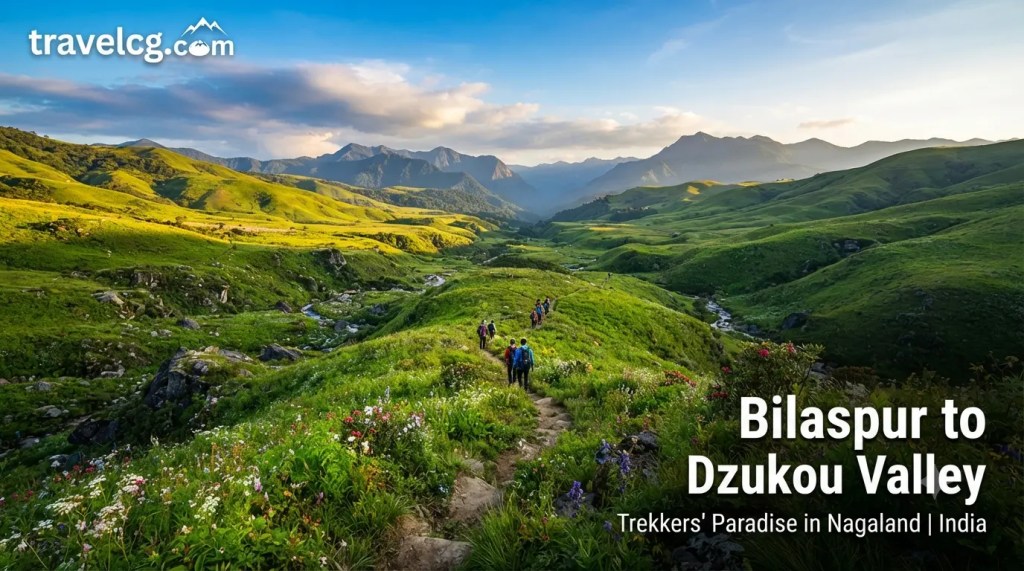
Dzukou Valley is one of the most beautiful trekking destinations in Northeast India. Located on the border of Nagaland and Manipur, this high-altitude valley is famous for its rolling green landscapes, seasonal flowers, cold streams, dramatic hills and the rare Dzukou Lily. For travellers from Bilaspur, Chhattisgarh, visiting Dzukou Valley is a long but extremely rewarding journey that combines train or air travel with a scenic road trip and an adventurous trek.
This guide provides complete information about travelling from Bilaspur to Dzukou Valley, including the best routes, distance, transportation options, approximate budget, trekking routes, accommodation, best time to visit, permits, packing list and a practical itinerary.
Bilaspur to Dzukou Valley: Quick Travel Overview
Destination
Dzukou Valley, Nagaland–Manipur border
Starting Point
Bilaspur, Chhattisgarh
Approximate Total Distance
The complete distance depends on the route and mode of transportation. By road, the journey from Bilaspur to Kohima is extremely long and can cover approximately 1,700–2,000 km or more depending on the selected route. From Kohima, the Dzukou Valley trekking area is approximately 20–30 km away by road, followed by a trek of several kilometres.
Nearest Airport
Dimapur Airport is the nearest major airport to Dzukou Valley. The airport is approximately 96 km from the valley area, although the actual travel route and trekking access point can make the total journey longer.
Nearest Railway Station
Dimapur Railway Station is the nearest major railway station. From Dimapur, travellers generally continue towards Kohima by shared taxi, bus or private vehicle.
Dzukou Valley Altitude
Dzukou Valley is situated at approximately 2,452 metres above sea level. The valley is famous for its unique landscape and seasonal flowers, particularly the Dzukou Lily.
Why Should You Visit Dzukou Valley from Bilaspur?
Dzukou Valley is a perfect destination for travellers who enjoy nature, trekking, photography and peaceful mountain landscapes. Unlike many popular Himalayan destinations, Dzukou Valley offers a different kind of scenery. Instead of high snow-covered peaks, you will find vast green hills, open grasslands, winding trails, misty landscapes and beautiful valleys.
Major Attractions of Dzukou Valley
Beautiful Rolling Hills
The valley is surrounded by beautiful hills and open landscapes. During clear weather, the panoramic views are spectacular.
Dzukou Lily
The Dzukou Lily is one of the most famous attractions of the valley. This unique flower is associated with the region and is especially admired during the flowering season.
Peaceful Natural Environment
The valley is comparatively peaceful and offers a refreshing escape from crowded tourist destinations.
Trekking Adventure
The journey to Dzukou Valley itself is an adventure. The trek includes steep sections, forest trails, open grasslands and changing weather conditions.
Best Route from Bilaspur to Dzukou Valley
For most travellers from Bilaspur, the most practical route is:
Bilaspur → Raipur → Guwahati → Dimapur → Kohima → Viswema or Zakhama → Dzukou Valley
This route can be completed using a combination of train, flight, bus, taxi and trekking.
Route Option 1: Bilaspur to Dzukou Valley by Train
This is generally the most economical option for budget travellers.
Step 1: Bilaspur to Guwahati
You can first travel from Bilaspur Junction towards Guwahati by train. Depending on the available train schedule, you may need to choose a direct or connecting train.
The journey can take a considerable amount of time, so check the latest railway schedule before planning your trip.
Step 2: Guwahati to Dimapur
From Guwahati, you can take a train towards Dimapur. Dimapur is the major railway gateway to Nagaland.
Step 3: Dimapur to Kohima
Kohima is approximately a two- to three-hour road journey from Dimapur, depending on traffic and the type of transport used. Shared taxis, private taxis and buses are commonly used for this route.
Step 4: Kohima to the Trek Starting Point
From Kohima, you travel towards Viswema or Zakhama, depending on your selected trekking route.
Route Option 2: Bilaspur to Dzukou Valley by Flight
The fastest option is generally to travel by air to Dimapur, usually via a connecting city depending on available flights.
Bilaspur to Dimapur by Air
Bilaspur does not normally offer the same level of direct connectivity as major metropolitan airports. Therefore, travellers may need to travel first to a nearby major airport or use a connecting flight route.
After reaching Dimapur Airport, continue to Kohima by taxi or other road transport.
Dimapur to Kohima
The journey from Dimapur to Kohima generally takes around two to three hours by road. From Kohima, you can arrange transportation to the Dzukou Valley trekking access point.
This option saves considerable time but is generally more expensive than travelling by train.
Bilaspur to Dzukou Valley by Road
A complete road journey from Bilaspur to Dzukou Valley is possible, but it is extremely long and tiring.
Possible Road Route
A broad route may include:
Bilaspur → Raipur → Nagpur or eastern-central India → Guwahati → Dimapur → Kohima → Dzukou Valley
The exact route depends on road conditions, vehicle type and the driver’s preferred route.
A road trip is suitable for people who want to explore multiple destinations in Central and Northeast India. However, travelling directly by car from Bilaspur to Dzukou Valley is not ideal for a short vacation because the journey requires several days.
How to Reach Dzukou Valley from Kohima
Kohima is the main base for most travellers visiting Dzukou Valley.
From Kohima, travellers generally travel towards the villages and trekking access points associated with the valley.
Viswema Route
The Viswema route is one of the most popular access routes to Dzukou Valley. A vehicle can take trekkers part of the way towards the trailhead, after which the actual trekking journey begins.
The trek involves an initial steep section followed by beautiful open landscapes and valley trails. The complete hike can take several hours depending on your fitness level, weather and the exact point where you begin walking. Official tourism information describes the Dzukou trek as approximately nine kilometres and taking around five to six hours, with the Viswema route being a commonly used access route
Zakhama or Jakhama Route
The Zakhama route is another option. It is known for its steep sections and can be physically demanding.
Some travellers choose different routes for entering and exiting the valley to experience more of the landscape.
Which Route Is Better?
For first-time visitors, the Viswema route is generally considered more convenient because vehicles can reach closer to the trekking point and the trail is commonly used by visitors.
The Zakhama route may be preferred by experienced trekkers who want a more challenging route.
Dzukou Valley Trekking Experience
The trek to Dzukou Valley is not simply a short walk to a viewpoint. It is a genuine mountain trekking experience.
Difficulty Level
The trek is generally considered moderate to challenging depending on the route and weather conditions.
The difficulty increases during:
Heavy Rain
Wet trails can become slippery.
Cold Weather
The temperature can drop significantly, especially at night.
Steep Ascents
The initial sections of some routes can be physically demanding.
Lack of Facilities
You should not expect the same facilities available in a city or a developed hill station.
How Many Days Are Needed from Bilaspur?
A practical trip from Bilaspur should ideally take at least five to seven days.
Recommended 6-Day Itinerary
Day 1: Bilaspur to Guwahati or Transit City
Begin your journey from Bilaspur. Depending on your train or flight, travel towards Guwahati or another major transit point.
Day 2: Guwahati to Dimapur and Kohima
Travel from Guwahati to Dimapur and then continue to Kohima.
If you arrive late, stay overnight in Kohima.
Day 3: Kohima Local Exploration and Preparation
Use the day to rest, purchase supplies and arrange transport for the trek.
You may also explore selected attractions around Kohima.
Day 4: Kohima to Dzukou Valley Trek
Travel towards the trekking access point and begin the trek.
Depending on your plan, you may stay overnight near the valley or at a designated camping or accommodation facility.
Day 5: Explore Dzukou Valley and Return
Spend time exploring the valley, taking photographs and enjoying the landscape. Return towards the base area and Kohima.
Day 6: Kohima to Dimapur and Return Journey
Travel back to Dimapur and begin your return journey towards Bilaspur.
Best Time to Visit Dzukou Valley
Choosing the correct season is extremely important.
May to June
This period can offer pleasant weather and beautiful greenery. The valley may be especially attractive during the flowering season.
July to September
The monsoon season can bring heavy rainfall. Trails may become slippery, and visibility can be poor. Trekking conditions may become more difficult.
October to November
This is often considered a beautiful period for clear views and comfortable trekking conditions, although temperatures may begin to fall.
December to February
Winter can be extremely cold. Night temperatures may fall significantly, and trekkers must carry proper winter equipment.
The official tourism information notes that the region can experience very cold winter conditions and that the valley is particularly attractive during its flowering months.
Dzukou Valley Weather
The weather can change quickly.
Daytime Weather
During the warmer months, daytime conditions may be comfortable for trekking.
Night Weather
Nights can become very cold, particularly during winter.
Rain
Rain can make trails slippery and increase trekking difficulty.
Fog
Fog may reduce visibility and make navigation more difficult.
Therefore, always carry waterproof and warm clothing even if the weather looks pleasant at the beginning of your journey.
Accommodation Options
Hotels in Kohima
Kohima offers the widest range of accommodation options, including hotels, guesthouses, hostels and homestays.
Staying in Kohima before and after the trek is a convenient option.
Homestays
Homestays can provide a more local experience and may help you arrange transport and trekking support.
Camping and Trekking Accommodation
Facilities near Dzukou Valley are more basic than hotels in Kohima. Depending on current local arrangements, trekkers may use designated camping or basic accommodation facilities.
Always confirm current availability before starting your trek.
Approximate Budget for Bilaspur to Dzukou Valley
The total budget depends heavily on your transport choice.
Budget Train Trip
A budget traveller may need approximately ₹12,000–₹25,000 or more for the complete trip, depending on train fares, food, accommodation, local transport and trekking expenses.
Flight-Based Trip
A flight-based journey can cost considerably more. The total budget may easily exceed ₹25,000–₹50,000 depending on airfare and the season.
Important Expenses
Bilaspur to Transit City
Train or transport fare.
Transit City to Dimapur
Train or flight fare.
Dimapur to Kohima
Bus, shared taxi or private taxi.
Kohima Accommodation
The price depends on the type of hotel or hostel.
Trekking Transport
You may need a vehicle to reach the trailhead.
Guide Charges
Local guide requirements and charges can vary. Confirm the current rules and fees locally before beginning the trek.
Food and Supplies
Carry sufficient snacks and drinking water for the trekking section.
What to Pack for Dzukou Valley
Essential Clothing
Carry:
Warm Jacket
Temperatures can drop quickly.
Thermal Wear
Especially important during colder months.
Rain Jacket
Useful even outside the peak monsoon season.
Trekking Pants
Choose comfortable, quick-drying clothing.
Extra Socks
Wet socks can make trekking uncomfortable.
Trekking Equipment
Good Trekking Shoes
Shoes should have proper grip and ankle support.
Headlamp or Torch
Do not depend only on your mobile phone flashlight.
Power Bank
Mobile connectivity and charging facilities may be limited.
Backpack
A comfortable backpack is essential.
Water Bottle
Carry reusable bottles and avoid unnecessary plastic waste.
Basic First-Aid Kit
Carry basic personal medicines and first-aid supplies.
Food and Water During the Trek
Food facilities inside the valley can be limited. Carry energy-rich snacks such as:
Recommended Snacks
Dry Fruits
Energy Bars
Biscuits
Chocolates
Glucose Powder
Instant Food
Always confirm local water availability and carry sufficient drinking water.
Important Environmental Rules
Dzukou Valley is a fragile natural ecosystem. Visitors should follow responsible tourism practices.
Do Not Throw Plastic
The region has introduced measures to protect the valley from plastic pollution. Visitors may be required to account for plastic items they carry, so follow local instructions carefully.
Do Not Damage Plants
Do not pick flowers, including the famous Dzukou Lily.
Do Not Leave Waste
Carry your waste back or dispose of it only in designated locations.
Avoid Loud Music
Respect the peaceful natural environment.
Respect Local Communities
The valley has deep cultural and ecological importance for local communities, including traditional custodians from the region. Recent official communication has emphasised community-led conservation and the ecological importance of Dzukou Valley.
Is Dzukou Valley Safe for First-Time Trekkers?
Yes, many first-time trekkers visit Dzukou Valley, but you should not underestimate the trek.
Follow These Safety Tips
Hire a Local Guide
A local guide can help with route navigation, weather changes and local conditions. Official tourism guidance recommends having a local guide, particularly because the terrain and routes can be challenging.
Start Early
Starting early gives you more daylight and reduces the risk of returning after dark.
Check Weather Conditions
Avoid starting a difficult trek during severe weather.
Do Not Trek Alone Without Proper Preparation
If you are inexperienced, joining a group or travelling with a guide is a better option.
Inform Someone About Your Plan
Share your itinerary with your family or travel companions.
Mobile Network and Internet Connectivity
Connectivity may be limited in remote trekking areas. You should not depend completely on mobile internet for navigation.
Download important maps and save important contact information before beginning the trek.
Photography Opportunities
Dzukou Valley is an excellent destination for photography.
Best Things to Photograph
Misty Hills
Clouds and fog can create dramatic landscapes.
Green Valley
The rolling green landscape is the signature attraction of the region.
Seasonal Flowers
The flowering season offers beautiful photography opportunities.
Sunrise and Sunset
The changing light creates stunning views across the valley.
Trekking Trails
The trail itself offers excellent landscape photography opportunities.
Important Travel Tips from Bilaspur
Plan the Journey Carefully
Because Bilaspur is far from Nagaland, avoid planning a very short trip.
Keep Buffer Days
Train delays, weather conditions and transport changes can affect your schedule.
Carry Cash
Remote areas may have limited digital payment facilities.
Confirm Local Rules
Trekking rules, guide requirements, entry fees and local arrangements can change. Confirm the latest information before your trip.
Avoid Overpacking
You must carry your backpack during the trek, so pack only essential items.
Respect Local Culture
Nagaland has a rich cultural identity. Be respectful while photographing people, villages and local traditions.
Bilaspur to Dzukou Valley: Final Travel Recommendation
For travellers from Bilaspur, the most practical and budget-friendly route is generally to travel by train towards Guwahati and Dimapur, continue by road to Kohima, and then proceed towards the Dzukou Valley trekking route through Viswema or Zakhama.
The journey is long, but Dzukou Valley offers a completely different experience from the usual tourist destinations. Its high-altitude grasslands, misty hills, seasonal flowers, cold streams and peaceful atmosphere make it an unforgettable destination for nature lovers and trekking enthusiasts.
If you are planning your first trip from Bilaspur to Dzukou Valley, keep at least five to seven days, choose the season carefully, carry proper trekking equipment, arrange local transport and guide support in advance, and always follow the region’s environmental rules. With proper preparation, this journey can become one of the most memorable Northeast India travel experiences of your life.
Other Places To Visit from Bilaspur




















Something went wrong. Please refresh the page and/or try again.


Leave a Reply