
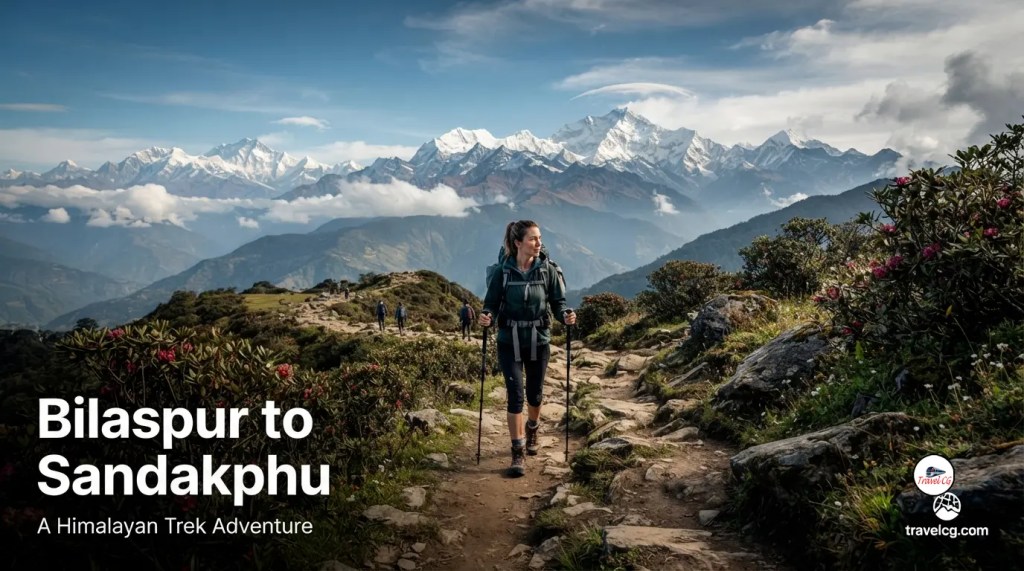
Sandakphu is one of the most spectacular high-altitude destinations in India and the highest point in West Bengal. Located at an altitude of approximately 3,636 metres (11,930 feet) above sea level, Sandakphu is famous for its breathtaking views of some of the world’s highest mountains, including Mount Everest, Kangchenjunga, Lhotse and Makalu. For travellers from Bilaspur, Chhattisgarh, reaching Sandakphu is a long but incredibly rewarding journey involving rail or air travel, road travel and finally a mountain trek or 4×4 jeep journey.
The journey from Bilaspur to Sandakphu takes you from the plains of central India towards the beautiful Himalayan region of West Bengal and the India–Nepal border. It is an excellent adventure for people who enjoy trekking, mountain landscapes, forests, remote villages and peaceful Himalayan surroundings.
Where Is Sandakphu Located?
Sandakphu is situated in the Singalila Ridge on the border of India and Nepal. The region is famous for its high-altitude trekking route, beautiful rhododendron forests and panoramic Himalayan views.
The Sandakphu region is primarily accessed through Manebhanjan, a small mountain town near Darjeeling. From Manebhanjan, travellers can either:
- Trek towards Sandakphu
- Travel in a specially permitted 4×4 vehicle
- Combine trekking and jeep travel depending on their itinerary
The area falls within the Singalila National Park, which is known for its rich biodiversity, forests and mountain scenery.
Bilaspur to Sandakphu Distance
The exact distance depends on the route and mode of transport.
A practical journey generally follows this route:
Bilaspur → New Jalpaiguri (NJP) → Siliguri → Manebhanjan → Sandakphu
The approximate road and travel distance from Bilaspur to the Sandakphu region is around 1,000 to 1,200 kilometres, depending on the selected route and the final access point.
The journey can be divided into the following sections:
- Bilaspur to New Jalpaiguri/Siliguri: By train or flight combination
- Siliguri to Manebhanjan: By road
- Manebhanjan to Sandakphu: By trek or 4×4 jeep
Because Sandakphu is located in a remote Himalayan region, the last part of the journey is not a normal highway journey.
Best Ways to Travel from Bilaspur to Sandakphu
There are several ways to plan the journey from Bilaspur.
By Train
For most travellers, the train is one of the most convenient and economical options.
You can travel from Bilaspur Junction towards New Jalpaiguri (NJP) or another suitable railway station near Siliguri. From NJP, you can continue by road towards Manebhanjan.
A typical route is:
Bilaspur → New Jalpaiguri → Siliguri → Manebhanjan → Sandakphu
Train travel is generally preferred by budget travellers and people who want to avoid the higher cost of flights.
By Flight
The nearest major airport for the Sandakphu journey is Bagdogra Airport, near Siliguri.
A flight-based journey may involve:
Bilaspur → Raipur Airport → Bagdogra Airport → Siliguri → Manebhanjan → Sandakphu
Since Bilaspur does not have the same level of air connectivity as major metropolitan cities, travellers may need to travel to Raipur or another nearby airport before flying to Bagdogra.
Flying can save significant time, but the overall cost is usually much higher than travelling by train.
By Road
A complete road journey from Bilaspur to Sandakphu is possible, but it is long and tiring. The route passes through several states and mountainous areas.
A road trip can be planned in stages:
Bilaspur → Raipur → Ranchi or another eastern route → Siliguri → Darjeeling region → Manebhanjan
However, driving directly for such a long distance is not recommended for a short holiday. A train or flight to Siliguri followed by a road journey is generally more practical.
Bilaspur to Manebhanjan: The Most Important Road Section
Manebhanjan is the main gateway to Sandakphu.
After reaching Siliguri or New Jalpaiguri, you can hire a taxi or use shared transportation towards Manebhanjan. The journey passes through beautiful Himalayan landscapes and gradually climbs into the hills.
The road journey may take several hours depending on:
- Traffic
- Weather
- Road conditions
- Landslides
- Seasonal restrictions
- Vehicle type
Manebhanjan is also an important place for arranging:
- Trek registration
- Guides
- Permitted vehicles
- Accommodation
- Local transport
Manebhanjan to Sandakphu Trek
The classic Sandakphu trek begins from Manebhanjan.
The trek passes through beautiful mountain villages and forests. Some of the famous stops on the traditional route include:
- Chitrey
- Tonglu
- Tumling
- Kalipokhri
- Sandakphu
The exact itinerary may vary depending on the trek operator and the traveller’s fitness level.
Manebhanjan to Chitrey
This is one of the initial steep sections of the trek. The trail climbs through mountain landscapes and forests.
Chitrey is a popular resting point and may be used as an overnight stop by some trekkers.
Chitrey to Tonglu or Tumling
This section offers beautiful views of the surrounding Himalayan landscape. Tumling is particularly popular because it is located near the India–Nepal border.
The landscape changes dramatically depending on the season.
Tumling to Kalipokhri
This section passes through forests and high-altitude terrain. The trail can be challenging, especially in cold or wet weather.
Kalipokhri to Sandakphu
The final stretch towards Sandakphu can be physically demanding. The altitude increases significantly and the weather may change rapidly.
However, reaching the summit is extremely rewarding.
Sandakphu Jeep Journey
Travellers who do not want to complete the entire trek can travel towards Sandakphu by specially permitted 4×4 vehicles.
The mountain roads are rough and challenging in many sections. This is not a regular smooth road journey.
A jeep journey can be a good option for:
- Families
- Older travellers
- People with limited trekking experience
- Travellers with limited time
- People who want to experience the destination without completing a long trek
However, the road journey can still be physically uncomfortable because of rough terrain and high altitude.
Best Time to Visit Sandakphu from Bilaspur
The best time to plan a Sandakphu trip is generally during the spring, autumn and early winter seasons.
Spring Season
Spring is famous for:
- Rhododendron flowers
- Colourful forests
- Pleasant daytime weather
- Beautiful mountain scenery
The forest landscapes can be especially attractive during this period.
Autumn Season
Autumn is often considered one of the best seasons for clear Himalayan views.
The weather is generally more stable and the skies can be clearer, making it an excellent time for photography and mountain views.
Winter Season
Winter brings cold temperatures and the possibility of snow.
Travellers should be prepared for:
- Freezing temperatures
- Snow-covered trails
- Icy roads
- Difficult travel conditions
Winter can be magical but requires proper preparation.
Monsoon Season
The monsoon season can make the journey more difficult because of:
- Heavy rainfall
- Slippery trails
- Landslides
- Poor visibility
- Road disruptions
Travellers should carefully check local conditions before planning a monsoon journey.
How Many Days Are Needed from Bilaspur to Sandakphu?
A comfortable trip from Bilaspur usually requires approximately 7 to 12 days, depending on the travel mode and itinerary.
A sample itinerary could look like this:
Day 1: Bilaspur to New Jalpaiguri or Siliguri
Travel from Bilaspur by train or another suitable mode.
Day 2: Siliguri to Manebhanjan
Travel by road and rest in Manebhanjan.
Day 3: Manebhanjan to Chitrey or Tonglu
Begin the trek or travel by permitted vehicle.
Day 4: Tonglu to Kalipokhri
Continue towards higher altitude.
Day 5: Kalipokhri to Sandakphu
Reach Sandakphu and enjoy the magnificent mountain views.
Day 6: Return Journey
Begin the return journey towards lower altitude.
Additional Days
Additional days may be required for:
- Travel delays
- Weather changes
- Rest
- Sightseeing in Darjeeling or nearby destinations
Travellers who are travelling from Bilaspur should ideally keep at least one or two buffer days.
Estimated Budget for Bilaspur to Sandakphu
The total cost depends heavily on your mode of transport and the type of accommodation you choose.
Budget Travel
A budget traveller may spend approximately:
- Train travel: Moderate cost
- Shared vehicles: Economical
- Basic homestays: Budget-friendly
- Food: Affordable but limited in remote areas
A complete trip may cost approximately $150–$300 per person, depending on the length of the trip and transportation arrangements.
Mid-Range Travel
Travellers choosing better accommodation, private taxis and organised trekking arrangements may spend more.
The total cost may range from approximately $300–$600 or more per person.
These figures are only broad estimates. Actual expenses can change depending on the season, transportation availability, hotel prices and whether you travel independently or through a tour operator.
Accommodation During the Sandakphu Journey
Accommodation in the remote Sandakphu region is generally basic compared with hotels in cities.
You may find:
- Homestays
- Trekker lodges
- Basic guesthouses
- Small mountain accommodations
Facilities may be limited.
In many places, travellers should not expect:
- Luxury rooms
- Reliable hot water throughout the day
- High-speed internet
- Large restaurants
- Extensive food choices
The experience is more about nature and adventure than luxury.
Food on the Sandakphu Route
Food options are limited in the high-altitude areas.
You may find simple meals such as:
- Rice
- Dal
- Vegetables
- Noodles
- Soups
- Eggs
- Momos
- Tea
- Basic snacks
It is advisable to carry some energy snacks from the lower regions.
Useful items include:
- Dry fruits
- Chocolate
- Energy bars
- Biscuits
- Glucose powder
Travellers should also drink enough water during the journey.
What to Pack for Bilaspur to Sandakphu
Packing correctly is extremely important because Sandakphu can be very cold.
Essential Clothing
Carry:
- Warm jacket
- Thermal innerwear
- Woollen sweater
- Warm socks
- Gloves
- Cap or woollen hat
- Waterproof jacket
- Comfortable trekking trousers
Layering is better than carrying only one extremely heavy jacket.
Footwear
Good trekking shoes are highly recommended.
Your footwear should have:
- Good grip
- Comfortable fitting
- Water resistance
- Ankle support
Avoid wearing ordinary sports shoes on difficult mountain trails.
Important Accessories
Carry:
- Sunglasses
- Sunscreen
- Torch or headlamp
- Power bank
- Water bottle
- Personal medicines
- Small first-aid kit
- Identity documents
- Extra cash
Remote areas may have limited ATM facilities and poor network connectivity.
Physical Fitness Required for Sandakphu
The Sandakphu trek can be challenging because of:
- Steep climbs
- High altitude
- Cold weather
- Long walking distances
- Limited oxygen compared with the plains
People from Bilaspur who are not used to mountain trekking should begin preparation several weeks before the trip.
Helpful preparation includes:
- Daily walking
- Stair climbing
- Light jogging
- Strength training
- Regular cardiovascular exercise
The goal is not necessarily to become an athlete. The main objective is to improve stamina and endurance.
Altitude and Acclimatization
One of the most important things to remember is that Sandakphu is located at high altitude.
Some travellers may experience symptoms such as:
- Headache
- Tiredness
- Breathlessness
- Dizziness
- Loss of appetite
- Nausea
Travellers should not ignore serious symptoms.
A gradual ascent is generally better than rushing quickly to the highest point. If symptoms become severe, descending to a lower altitude may be necessary.
Important Travel Tips for Bilaspur Travellers
Start the Journey with Extra Time
The journey from Bilaspur to Sandakphu is long. Avoid planning the entire trip with extremely tight connections.
Train delays, road conditions and weather can affect the schedule.
Carry Cash
Remote Himalayan areas may have limited digital payment facilities.
It is advisable to carry enough cash for:
- Food
- Local transport
- Accommodation
- Emergency expenses
Check Weather Before Departure
Weather can change quickly in the mountains.
Always check:
- Rain forecast
- Snow conditions
- Road conditions
- Trekking trail status
Do Not Overpack
You will have to carry your luggage during parts of the journey, especially if trekking.
Carry only essential items.
Respect Local Culture
The Sandakphu region has a unique local culture and beautiful mountain communities.
Travellers should:
- Avoid littering
- Respect local customs
- Avoid unnecessary noise
- Do not damage plants
- Follow national park rules
Places to Visit Near Sandakphu
If you have additional time, you can explore other destinations in the Darjeeling region.
Popular nearby attractions may include:
- Darjeeling
- Tiger Hill
- Ghoom
- Mirik
- Kurseong
- Manebhanjan
- Singalila National Park
A longer trip can combine Sandakphu with a few days in Darjeeling.
Is Sandakphu Suitable for First-Time Trekkers?
Yes, Sandakphu can be suitable for first-time trekkers who are reasonably fit and properly prepared.
However, it should not be considered an extremely easy trek.
Beginners should:
- Start physical preparation early
- Use proper footwear
- Travel with an experienced guide or organised group
- Avoid rushing
- Take sufficient rest
- Follow local instructions
The difficulty can increase significantly during snow, rain or poor weather conditions.
Final Thoughts on Bilaspur to Sandakphu
The journey from Bilaspur to Sandakphu is a wonderful adventure for travellers who want to experience the beauty of the Himalayas. Although the journey is long, the spectacular mountain views, peaceful villages, colourful forests and high-altitude landscapes make the effort worthwhile.
The best way to plan the trip is to first travel from Bilaspur towards New Jalpaiguri or Siliguri, then continue by road to Manebhanjan, the main gateway to Sandakphu. From there, travellers can choose between trekking and travelling by a permitted 4×4 vehicle.
For the most memorable experience, plan the trip carefully, select the right season, prepare physically and carry suitable warm clothing. Sandakphu is not just a destination—it is an adventure through some of the most beautiful landscapes of the Eastern Himalayas.
Other Places To Visit from Bilaspur

















Something went wrong. Please refresh the page and/or try again.


Leave a Reply