
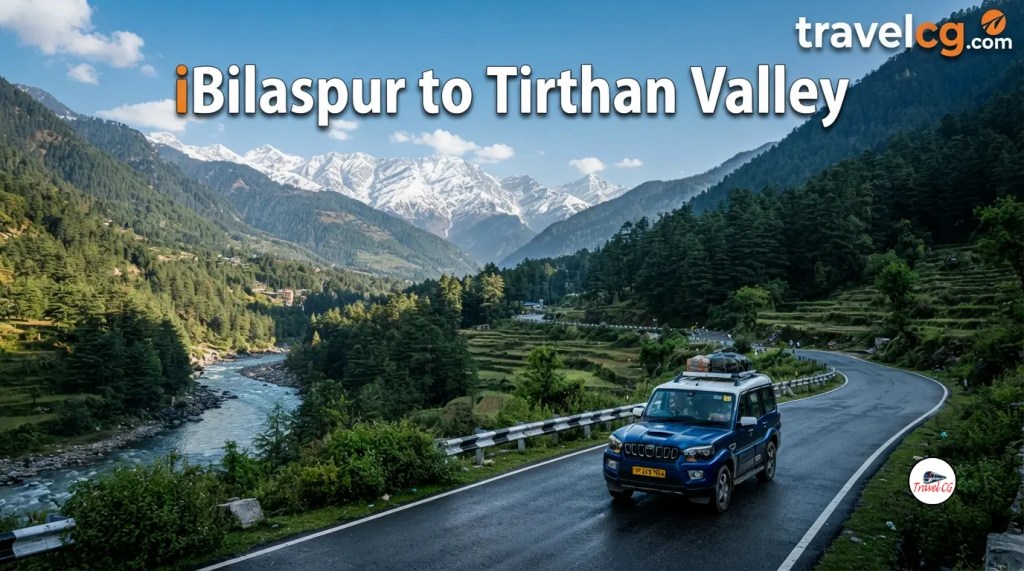
Tirthan Valley is one of Himachal Pradesh’s most peaceful and naturally beautiful destinations. Located in the Kullu district, this valley is famous for the crystal-clear Tirthan River, dense forests, traditional Himalayan villages, waterfalls, trout fishing, trekking trails and its proximity to the Great Himalayan National Park, a UNESCO World Heritage Site. For travellers from Bilaspur, Chhattisgarh, Tirthan Valley is a long but rewarding Himalayan journey that combines road travel, scenic landscapes and a peaceful mountain experience.
The valley is named after the Tirthan River, whose source is connected with the high Himalayan region around Hanskund Peak. The river flows through forests and villages before joining the Beas River system. The Tirthan Valley region is particularly attractive for people who want to enjoy nature away from the crowded tourist circuits of Shimla and Manali.
Bilaspur to Tirthan Valley Distance and Travel Time
The approximate road distance from Bilaspur, Chhattisgarh, to Tirthan Valley is around 1,500–1,700 kilometres, depending on the selected route and the exact location of your stay in the valley. The journey can take approximately 30–36 hours of actual driving time, excluding long breaks, traffic, food stops and overnight halts.
Because this is a very long journey, travelling directly in one stretch is not recommended. A comfortable trip should be planned over at least 3 to 5 days for the onward journey and return journey, depending on your schedule.
Approximate Travel Details
- Starting Point: Bilaspur, Chhattisgarh
- Destination: Tirthan Valley, Himachal Pradesh
- Approximate Distance: 1,500–1,700 km by road
- Recommended Travel Duration: 7–10 days for a comfortable round trip
- Nearest Major Town: Banjar
- Nearest Major Transport Hub: Aut
- Nearest Airport: Bhuntar Airport
- Best Travel Style: Road trip with overnight halts
The exact distance can vary significantly depending on whether you travel through Delhi and Chandigarh or choose another northern route.
Best Route from Bilaspur to Tirthan Valley by Road
The most practical road journey generally involves travelling north through major cities and highways before entering the Himalayan region.
Suggested Route
Bilaspur → Raipur → Nagpur → Delhi region → Chandigarh → Kiratpur Sahib → Bilaspur, Himachal Pradesh → Mandi → Aut → Larji → Banjar → Gushaini → Tirthan Valley
The final Himalayan section becomes more scenic as you approach Mandi, Aut, Banjar and Gushaini. The roads become narrower and winding, so the journey takes longer than the distance might suggest.
Route via Delhi and Chandigarh
For travellers using a private car, one possible route is:
Bilaspur to Central and Northern India
From Bilaspur, you can travel towards northern India through major highway connections. Depending on the navigation route, the journey may pass through cities such as Raipur, Nagpur and the Delhi region.
Delhi to Chandigarh
The Delhi–Chandigarh section generally offers better highway connectivity and is comparatively easier to drive.
Chandigarh to Mandi
From Chandigarh, the route enters the Himalayan foothills. The road passes through scenic mountain landscapes and important towns before reaching Mandi.
Mandi to Aut
From Mandi, continue towards Aut. Aut is an important junction for travellers heading towards Banjar and Tirthan Valley.
Aut to Banjar
The road from Aut towards Banjar enters a beautiful mountain region. The landscape changes from busy highway surroundings to forests, valleys and smaller settlements.
Banjar to Gushaini and Tirthan Valley
Banjar is one of the main gateways to the Tirthan region. From Banjar, travellers can proceed towards Gushaini and other villages located along the Tirthan River.
How to Reach Tirthan Valley from Bilaspur by Train
There is no railway station directly inside Tirthan Valley.
Train and Road Combination
A practical option is to travel by train towards a major railway station in northern India and continue by road. Depending on train availability, travellers may consider reaching locations such as Chandigarh or another suitable northern railway hub and then taking a bus or taxi towards Himachal Pradesh.
From Chandigarh, you can travel towards Mandi, Aut, Banjar and Tirthan Valley by road.
Why Train Travel Can Be Useful
A train journey can be more comfortable than driving the entire distance from Bilaspur. It can also reduce fatigue, especially for families and senior travellers.
However, the final journey into Tirthan Valley must be completed by road because the valley is located in a mountainous region.
How to Reach Tirthan Valley by Bus
Travellers who do not want to drive can use a combination of long-distance buses and local buses.
Step-by-Step Bus Journey
Bilaspur to Delhi or Chandigarh
First, travel from Bilaspur to a major northern transport hub such as Delhi or Chandigarh.
Chandigarh or Delhi to Aut
From there, take a bus towards the Kullu-Manali region and get down at or near Aut, depending on the available service.
Aut to Banjar
From Aut, local buses or taxis can be used to reach Banjar.
Banjar to Tirthan Valley
From Banjar, local transport can take you towards Gushaini and nearby villages.
Local buses may be economical, but they can be less frequent than buses on major routes. Therefore, travellers should plan the final connection carefully.
How to Reach Tirthan Valley by Flight
The nearest airport commonly used for reaching the Tirthan Valley region is Bhuntar Airport near Kullu. From the airport, the remaining journey must be completed by road.
Flight and Taxi Combination
The basic travel plan is:
Bilaspur → Flight to Bhuntar → Taxi or Local Transport → Tirthan Valley
This option can significantly reduce travel time but is usually more expensive than travelling completely by road.
Flight schedules to mountain airports can be affected by weather, so checking the latest flight availability before booking is important.
Best Time to Visit Tirthan Valley from Bilaspur
Tirthan Valley can be visited in different seasons, but the experience changes considerably throughout the year.
March to June: Best Overall Season
This is one of the best periods to visit Tirthan Valley.
During spring and early summer, the valley becomes green and pleasant. Forest trails become attractive, rivers flow beautifully and the weather is generally suitable for sightseeing and trekking.
April and May are particularly popular months for nature lovers.
July to August: Monsoon Season
The monsoon brings lush greenery but also creates challenges.
Heavy rain can cause:
- Landslides
- Slippery roads
- Road blockages
- Sudden changes in travel time
- Difficult trekking conditions
Travellers planning a long road journey from Bilaspur should be particularly careful during this period. Always check weather and road conditions before starting.
September to November: Excellent for Clear Views
The post-monsoon period is one of the best times to visit Tirthan Valley. The skies can become clearer, the weather is pleasant and the valley becomes peaceful.
Autumn is especially beautiful for photography, village walks and mountain views.
December to February: Winter Experience
Winter brings cold weather and snowfall in higher areas. The valley can become peaceful and less crowded.
However, snow and icy roads may affect travel, especially around higher mountain routes and passes. Travellers should carry proper winter clothing and avoid unnecessary driving during severe weather.
Places to Visit in and Around Tirthan Valley
Great Himalayan National Park
The Great Himalayan National Park is the most important attraction associated with the Tirthan Valley region. It is known for its rich biodiversity, forests, wildlife and Himalayan landscapes.
The park protects important mountain ecosystems and is recognised as a UNESCO World Heritage Site. The Tirthan Valley acts as an important gateway to this natural region.
Important Things to Know
Visitors entering the protected core area may require permission and applicable entry arrangements. Different activities may also require local guides or additional permissions.
Before visiting, check the latest official rules and fees because regulations can change.
Tirthan River
The Tirthan River is the heart of the valley.
You can spend time near the river enjoying:
- Riverside walks
- Photography
- Peaceful relaxation
- Nature observation
- Fishing activities where legally permitted
The river is extremely cold, even during summer, so visitors should be careful near deep or fast-flowing water.
Gushaini
Gushaini is one of the most popular areas for staying in the Tirthan Valley region. It offers access to riverside accommodations, local villages, forest areas and nearby attractions.
It is a good base for travellers who want a peaceful stay surrounded by nature.
Banjar
Banjar is an important town and transport centre near Tirthan Valley. It is useful for shopping, local transportation and basic supplies.
Travellers should consider purchasing essential items before moving deeper into the valley because remote areas may have limited shops.
Chhoie Waterfall
Chhoie Waterfall is a popular natural attraction in the Tirthan region. Reaching the waterfall involves a walk through a forested area.
The trail can be slippery during rainy weather, so proper shoes are recommended.
Jibhi
Jibhi is located close to the Tirthan Valley region and is often included in a combined travel itinerary.
The area is known for:
- Forest landscapes
- Waterfalls
- Traditional mountain houses
- Cafes
- Peaceful village surroundings
Many travellers combine Tirthan Valley with Jibhi and Shoja.
Jalori Pass
Jalori Pass is one of the most popular high-altitude attractions near the Tirthan–Jibhi region.
The route offers forest landscapes and mountain scenery. Road accessibility can vary seasonally, especially during winter and periods of heavy snowfall.
Serolsar Lake
Serolsar Lake is reached through a trekking route from the Jalori Pass area.
The trek is popular among nature lovers and people who want to experience a peaceful Himalayan forest trail.
Raghupur Fort
Raghupur Fort is another popular trekking destination near Jalori Pass. The trail offers beautiful mountain views when weather conditions are clear.
Chehni Kothi
Chehni Kothi is known for its traditional Himalayan architecture and historic wooden structures. It provides an opportunity to experience the cultural character of the region.
Best Things to Do in Tirthan Valley
Enjoy Riverside Walks
One of the simplest and most enjoyable activities is walking along the Tirthan River.
You do not need an expensive activity or complicated itinerary. Simply sitting beside the river and listening to the sound of flowing water can become one of the best memories of the trip.
Go Trekking
Tirthan Valley is a good destination for trekking.
Popular nearby trekking experiences include:
- Forest walks
- Waterfall trails
- Serolsar Lake trek
- Raghupur Fort trek
- Great Himalayan National Park trails
Always choose a trail according to your fitness level and weather conditions.
Enjoy Birdwatching
The forests of the region support a variety of Himalayan birds. Early morning is usually a good time for birdwatching.
Carry binoculars if you are interested in observing birds and wildlife.
Experience Village Life
Small Himalayan villages around Tirthan Valley offer a slower and more peaceful lifestyle.
Travellers can observe:
- Traditional houses
- Terraced fields
- Local farming
- Mountain architecture
- Village temples
- Local customs
Visitors should always respect local privacy and ask permission before photographing people or private homes.
Try Local Food
Local homestays may offer traditional Himachali meals along with common North Indian dishes.
Some travellers also enjoy locally prepared trout dishes in the Tirthan region, where legally and locally available.
Suggested 7-Day Itinerary from Bilaspur
Because Bilaspur, Chhattisgarh, is very far from Tirthan Valley, a 7-day itinerary can be tight. However, it is possible with efficient planning and a private vehicle.
Day 1: Bilaspur to a Northern Transit City
Start early and cover a major portion of the journey. An overnight halt is recommended.
Day 2: Continue Towards Chandigarh or Himachal Pradesh
Continue travelling north and take a proper rest stop.
Day 3: Travel Towards Mandi and Aut
Enter the Himalayan region and continue towards Aut or nearby areas.
Day 4: Reach Tirthan Valley
Travel through Banjar and reach your selected accommodation in Tirthan Valley.
Spend the evening relaxing near the river.
Day 5: Explore Tirthan Valley
Visit nearby attractions such as:
- Tirthan River
- Gushaini
- Waterfalls
- Forest trails
- Local villages
Day 6: Explore Nearby Attractions
Depending on road and weather conditions, visit Jibhi, Jalori Pass or another nearby attraction.
Day 7: Begin the Return Journey
Start your return journey towards Bilaspur.
For a more comfortable experience, an 8–10 day itinerary is much better because it provides additional time for sightseeing and rest.
Where to Stay in Tirthan Valley
Tirthan Valley offers several types of accommodation.
Homestays
Homestays are ideal for travellers who want a local experience.
They may offer:
- Home-cooked meals
- Local hospitality
- Peaceful surroundings
- Cultural experiences
Riverside Cottages
Riverside stays are popular because they allow visitors to enjoy the sound of the river and natural surroundings.
However, always follow safety instructions and avoid going too close to dangerous river sections.
Guesthouses and Small Hotels
These are suitable for travellers who want basic facilities at reasonable prices.
Camping
Camping can be a memorable experience, but it should be done only in permitted and safe locations.
Estimated Budget for Bilaspur to Tirthan Valley
The total cost depends heavily on the number of travellers and the mode of transport.
Budget Travel
A budget traveller using buses and economical accommodation may need approximately ₹15,000–₹25,000 per person, excluding certain long-distance travel variations.
Mid-Range Travel
A comfortable trip with decent hotels or homestays may cost approximately ₹25,000–₹45,000 per person.
Private Car Road Trip
The cost of a private car trip depends on:
- Fuel
- Toll charges
- Number of travellers
- Accommodation
- Food
- Number of days
For a family or group, travelling by car can become more economical per person.
These are only broad planning estimates. Actual costs change with fuel prices, hotel prices, travel season and the route selected.
Important Packing List
Clothing
Carry:
- Warm layers
- Comfortable trousers
- Jacket
- Woollen clothing during winter
- Rain protection during monsoon
- Extra socks
Footwear
Carry comfortable shoes with good grip, especially if you plan to trek.
Essential Items
You should also carry:
- Identity documents
- Medicines and personal essentials
- Power bank
- Torch
- Water bottle
- Sunscreen
- Sunglasses
- Basic first-aid items
- Offline maps
Important Travel Tips for Bilaspur Travellers
Plan the Long Journey Carefully
The journey from Bilaspur, Chhattisgarh, to Tirthan Valley is extremely long. Avoid driving continuously without adequate rest.
Avoid Overplanning
Tirthan Valley is best experienced slowly. Do not try to visit too many places in a single day.
Check Weather Before Travelling
Mountain weather can change quickly. Rain, snowfall and landslides can affect travel plans.
Carry Cash
Remote areas may have limited ATM access and digital payment connectivity can sometimes be unreliable.
Download Offline Maps
Mobile network coverage can vary in mountainous areas. Offline navigation can be useful.
Respect Nature
Do not throw plastic waste, disturb wildlife or pollute the river.
Avoid Risky River Activities
Mountain rivers can be deceptively dangerous. Never enter fast-flowing or deep water without proper local guidance.
Is Tirthan Valley Worth Visiting from Bilaspur?
Yes, Tirthan Valley can be an excellent destination for travellers from Bilaspur who enjoy long road trips and peaceful mountain destinations.
The journey is long, but the destination offers something different from crowded tourist cities. Instead of large commercial markets and busy tourist attractions, Tirthan Valley provides forests, rivers, small villages, trekking trails and a relaxed Himalayan atmosphere.
The valley is particularly suitable for:
- Nature lovers
- Families seeking peaceful holidays
- Couples
- Photographers
- Trekkers
- Backpackers
- Birdwatchers
- People looking for a digital detox
Final Conclusion
A trip from Bilaspur, Chhattisgarh, to Tirthan Valley, Himachal Pradesh, is a long Himalayan adventure that requires proper planning. The most practical journey involves travelling north through major transport hubs and then entering Himachal Pradesh through the Mandi–Aut–Banjar route.
Tirthan Valley is famous for its peaceful river, beautiful forests, traditional villages and access to the Great Himalayan National Park. The best seasons are generally spring to early summer and the post-monsoon autumn period, while the monsoon requires extra caution because of rain and possible road disruptions. The official Great Himalayan National Park information describes Tirthan Valley as an ecologically rich region associated with the park and its diverse Himalayan landscapes.
For the best experience, plan at least 8–10 days for a comfortable round trip from Bilaspur, especially if travelling by road. Travel slowly, keep your itinerary flexible, respect the local environment and enjoy the peaceful beauty of one of Himachal Pradesh’s most scenic valley destinations.
Other Places To Visit from Bilaspur
























Something went wrong. Please refresh the page and/or try again.


Leave a Reply