
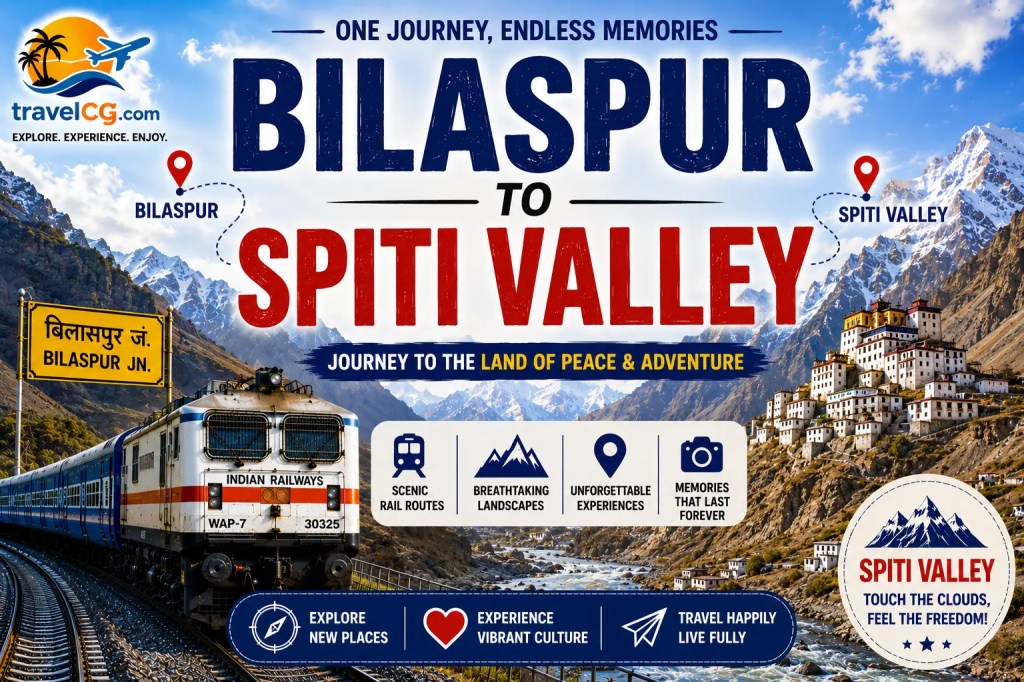
Introduction to Bilaspur to Spiti Valley
Overview
Spiti Valley, often called the “Middle Land”, is one of India’s most breathtaking cold desert destinations located in the northeastern part of Himachal Pradesh. Nestled between Tibet and India, Spiti is famous for its dramatic landscapes, ancient Buddhist monasteries, crystal-clear rivers, high-altitude villages, and thrilling mountain roads.
If you are planning a journey from Bilaspur (Chhattisgarh) to Spiti Valley, this comprehensive guide will help you understand everything from distance, routes, transportation, weather, itinerary, budget, accommodation, permits, safety tips, and the best places to visit.
Whether you’re a road trip enthusiast, biker, backpacker, photographer, or nature lover, Spiti Valley offers an unforgettable Himalayan adventure.
Distance from Bilaspur to Spiti Valley
Total Distance
The approximate distance from Bilaspur, Chhattisgarh, to Spiti Valley (Kaza) is around:
- By Road: 1,750–1,900 km (depending on the chosen route)
- By Train + Road: Approximately 1,600–1,700 km
- By Flight + Road: Approximately 1,450 km
Travel time generally ranges between 35 to 45 hours depending on weather, road conditions, and mode of transportation.
Where is Spiti Valley Located?
Geographic Location
Spiti Valley is situated in the Lahaul and Spiti district of Himachal Pradesh.
Important Facts
- State: Himachal Pradesh
- District: Lahaul and Spiti
- Elevation: Around 3,800 meters (12,500 feet)
- River: Spiti River
- Border: Close to Tibet (China)
Best Routes from Bilaspur to Spiti Valley
Route 1: Via Shimla (Recommended)
Bilaspur → Raipur → Nagpur → Jhansi → Delhi → Chandigarh → Shimla → Narkanda → Reckong Peo → Nako → Tabo → Dhankar → Kaza
Advantages
- Roads remain open longer.
- Easier acclimatization.
- Scenic mountain drive.
- Better fuel availability.
Approximate Distance:
1,850 km
Route 2: Via Manali
Bilaspur → Raipur → Nagpur → Delhi → Chandigarh → Manali → Atal Tunnel → Gramphu → Kunzum Pass → Kaza
Advantages
- Faster mountain route.
- Spectacular scenery.
Disadvantages
- Seasonal road closure.
- High-altitude ascent.
Approximate Distance:
1,760 km
Best Time to Visit Spiti Valley
Summer (May–June)
Temperature:
5°C to 20°C
Why Visit?
- Pleasant weather
- Clear roads
- Green valleys
- Best for sightseeing
Monsoon (July–August)
Temperature:
10°C to 22°C
Pros
- Beautiful scenery
- Less crowded
Cons
- Landslides near Shimla route
- Road delays
Autumn (September–October)
Temperature:
0°C to 15°C
Highlights
- Crystal-clear skies
- Excellent photography
- Comfortable weather
Winter (November–April)
Temperature:
-20°C to 5°C
Highlights
- Snow-covered villages
- Frozen landscapes
- Winter photography
Only experienced travelers should visit during winter.
How to Reach Spiti Valley from Bilaspur
By Train
Nearest major railway stations:
- Chandigarh
- Kalka
- Shimla (via toy train)
- Pathankot
From there, hire:
- Taxi
- Bus
- Self-drive vehicle
By Flight
Nearest Airports:
- Chandigarh Airport
- Bhuntar Airport (Kullu)
- Shimla Airport
Continue by road to Kaza.
By Bus
No direct bus operates from Bilaspur (CG) to Spiti.
Suggested journey:
Bilaspur → Delhi
Delhi → Shimla
Shimla → Reckong Peo
Reckong Peo → Kaza
By Car
A self-drive SUV is highly recommended.
Suitable vehicles include:
- Mahindra Scorpio
- Mahindra Thar
- Toyota Fortuner
- Maruti Jimny
- Tata Safari
By Bike
Popular motorcycles:
- Royal Enfield Himalayan
- Royal Enfield Classic 350
- KTM Adventure
- Hero Xpulse
Carry spare fuel and puncture repair kits.
Road Conditions
Highway Section
Bilaspur to Delhi
Excellent highways.
Mountain Roads
Shimla to Kaza
Road quality varies from excellent to rough.
Expect:
- Gravel roads
- Water crossings
- Narrow mountain roads
Fuel Availability
Fuel stations are available at:
- Shimla
- Reckong Peo
- Kaza
Always keep your tank full before leaving major towns.
Mobile Network
Working Networks:
- BSNL (Best)
- Jio (Limited)
- Airtel (Partial)
Internet speed is generally slow.
Accommodation Options
Budget Hotels
₹800–₹1,500 per night
Homestays
₹1,000–₹2,500 per night
A great way to experience local culture.
Luxury Hotels
₹3,500–₹8,000 per night
Available mainly in Kaza.
Food in Spiti Valley
Local Dishes
- Thukpa
- Momos
- Tingmo
- Butter Tea
- Thenthuk
- Tibetan Bread
Indian meals are available in major villages.
Top Tourist Attractions
Kaza
The administrative headquarters and the main tourist hub.
Key Monastery
One of the oldest Buddhist monasteries in India.
Highlights:
- Ancient murals
- Buddhist culture
- Mountain views
Kibber Village
Among the world’s highest motorable villages.
Activities:
- Snow Leopard sightings
- Trekking
- Photography
Langza Village
Known for:
- Giant Buddha Statue
- Fossils
- Stargazing
Hikkim
Home to the world’s highest post office.
Visitors can send postcards worldwide.
Komic Village
One of the world’s highest inhabited villages connected by road.
Dhankar Monastery
Perched dramatically on a cliff.
Offers spectacular valley views.
Tabo Monastery
Over 1,000 years old.
Known as the “Ajanta of the Himalayas.”
Chandratal Lake
A stunning crescent-shaped alpine lake.
Perfect for:
- Camping
- Photography
- Sunrise views
Kunzum Pass
Elevation:
Approximately 4,551 meters.
Offers panoramic Himalayan scenery.
Adventure Activities
Trekking
Popular treks include:
- Pin Parvati Pass
- Chandratal Trek
- Dhankar Lake Trek
Mountain Biking
One of India’s best high-altitude cycling destinations.
Camping
Popular camping locations:
- Chandratal
- Kaza
- Losar
Photography
Capture:
- Milky Way
- Snow mountains
- Monasteries
- Wildlife
- Rivers
Sample 7-Day Itinerary
Day 1
Bilaspur → Delhi
Day 2
Delhi → Shimla
Day 3
Shimla → Nako
Day 4
Nako → Tabo → Dhankar → Kaza
Day 5
Visit:
- Key Monastery
- Kibber
- Hikkim
- Komic
- Langza
Day 6
Chandratal Lake
Camp overnight.
Day 7
Return via Manali or Shimla.
Estimated Budget
Budget Traveler
₹18,000–₹25,000
Mid-Range Traveler
₹30,000–₹45,000
Luxury Trip
₹60,000+
Essential Packing List
Clothing
- Thermal wear
- Waterproof jacket
- Gloves
- Woolen cap
- Trekking shoes
- Extra socks
Essentials
- Sunglasses
- Sunscreen (SPF 50+)
- Lip balm
- Power bank
- Flashlight
- Water bottle
- Personal medicines
- First-aid kit
Health and Altitude Tips
Acclimatization
Spend at least one day in Kaza before visiting higher villages.
Stay Hydrated
Drink plenty of water.
Avoid Alcohol Initially
Alcohol may worsen altitude sickness.
Eat Light Meals
Heavy meals may cause discomfort at high altitude.
Recognize AMS Symptoms
Watch for:
- Headache
- Nausea
- Dizziness
- Shortness of breath
Seek medical help immediately if symptoms become severe.
Responsible Tourism
Protect Nature
- Do not litter.
- Carry reusable water bottles.
- Avoid single-use plastics.
- Respect local customs and monasteries.
- Do not disturb wildlife.
Photography Tips
Best Time
- Sunrise
- Sunset
- Blue Hour
- Night for Milky Way photography
Recommended Equipment
- DSLR or mirrorless camera
- Wide-angle lens
- Tripod
- ND filters
- Extra batteries (cold weather drains batteries quickly)
Frequently Asked Questions (FAQs)
Is Spiti Valley safe for families?
Yes, Spiti Valley is generally safe for families, provided you travel during the recommended season and take proper precautions for high altitude.
Can beginners drive to Spiti Valley?
Yes, but mountain driving experience is highly recommended. If you are not confident, hire an experienced local driver.
Is a permit required?
Indian citizens generally do not require a permit for most areas of Spiti Valley. However, some border regions may have restrictions, and foreign nationals may need permits for certain routes.
Which is the better route—Shimla or Manali?
The Shimla route is recommended for first-time visitors because the gradual increase in altitude helps reduce the risk of altitude sickness. Many travelers return via the Manali route to enjoy a complete circuit.
How many days are ideal?
A 7–10 day trip within Himachal Pradesh (excluding travel from Bilaspur, Chhattisgarh) is ideal to explore the valley comfortably.
Conclusion
A journey from Bilaspur to Spiti Valley is much more than a road trip—it’s an expedition through changing landscapes, ancient monasteries, rugged Himalayan terrain, and vibrant local culture. From the historic Tabo Monastery and the iconic Key Monastery to the serene beauty of Chandratal Lake and the remote villages of Hikkim, Komic, and Langza, every stop offers a unique experience.
With proper planning, suitable clothing, careful acclimatization, and respect for the fragile mountain environment, your adventure to Spiti Valley can become one of the most memorable travel experiences in India. Whether you’re seeking adventure, spirituality, photography, or simply peace amidst nature, Spiti Valley promises an unforgettable Himalayan escape.
Other Places To Visit from Bilaspur

Something went wrong. Please refresh the page and/or try again.
 Travel CG
Leave a comment