
Introduction
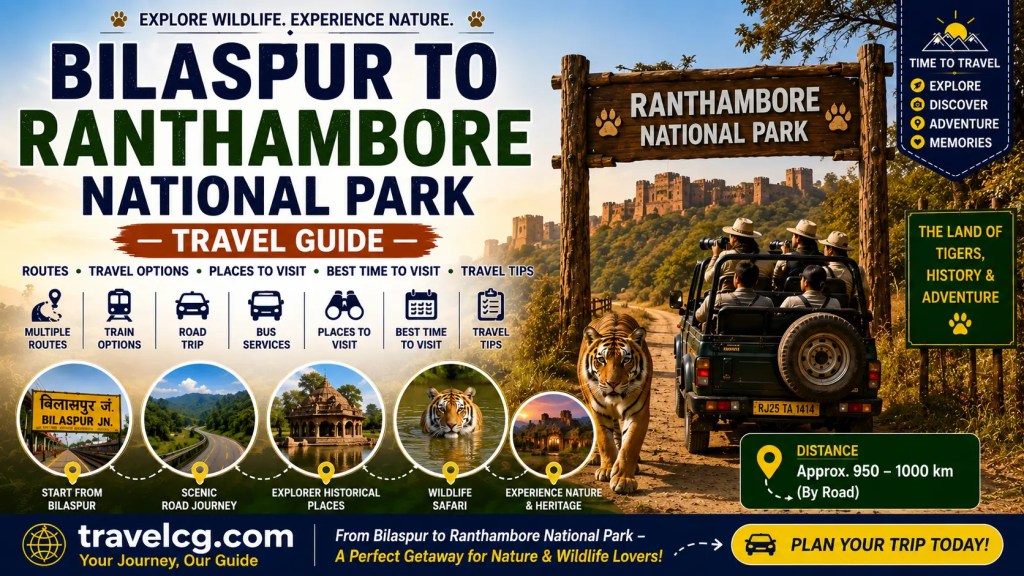
Planning a trip from Bilaspur, Chhattisgarh, to Ranthambore National Park? This wildlife destination is one of India’s most famous tiger reserves and offers an unforgettable experience for nature lovers, wildlife photographers, birdwatchers, and adventure seekers. Located in the Sawai Madhopur district of Rajasthan, Ranthambore National Park is renowned for its healthy population of Royal Bengal Tigers, historic fort, picturesque lakes, and diverse wildlife.
Whether you are planning a family vacation, a solo wildlife adventure, or a photography expedition, this guide covers everything you need to know—from travel routes and transportation options to safari booking, accommodation, estimated expenses, and travel tips.
Why Visit Ranthambore National Park?
Ranthambore National Park is among India’s top wildlife destinations because it offers one of the highest chances of spotting a tiger in its natural habitat. Unlike dense forests where visibility is limited, Ranthambore features open grasslands, rocky hills, ancient ruins, and lakes, making wildlife sightings more frequent.
Major attractions include:
- Royal Bengal Tigers
- Ranthambore Fort
- Padam Talao
- Rajbagh Ruins
- Malik Talao
- Jogi Mahal (viewpoint)
- Crocodiles
- Leopards
- Sloth Bears
- Deer species
- Hundreds of bird species
Bilaspur to Ranthambore National Park Distance
The approximate distance between Bilaspur and Ranthambore National Park is:
- By Road: Approximately 1,100–1,200 km
- By Train: Around 1,050 km (depending on route)
- By Flight + Road: Around 850–900 km by air and approximately 15 km by road from Sawai Madhopur
Travel duration depends on your chosen mode of transportation.
How to Reach Ranthambore National Park from Bilaspur
By Train
The most convenient and budget-friendly option is travelling by train.
Nearest railway station:
- Sawai Madhopur Junction (SWM)
Several trains connect Bilaspur with Rajasthan either directly or through major railway junctions such as:
- Kota
- Jaipur
- Nagpur
- Bhopal
After reaching Sawai Madhopur Railway Station, the national park entrance is only about 10–15 km away.
Local transport available:
- Taxi
- Auto-rickshaw
- Hotel pickup service
Travel Time:
Approximately 18–24 hours depending on train availability.
By Flight
The nearest airport is:
- Jaipur International Airport
From Bilaspur, passengers usually travel via connecting flights through:
- Raipur
- Delhi
- Mumbai
After reaching Jaipur Airport, visitors can hire:
- Private taxi
- Bus
- Rental car
Distance from Jaipur Airport to Ranthambore:
Approximately 180 km
Road travel time:
Around 3.5 to 4 hours
By Road
Driving from Bilaspur is an excellent option for people who enjoy long road trips.
Popular route:
Bilaspur → Raipur → Nagpur → Betul → Bhopal → Kota → Sawai Madhopur → Ranthambore
Approximate travel time:
18–20 hours without long breaks.
Road conditions are generally good on national highways.
Best Time to Visit Ranthambore National Park
October to March
This is considered the best season.
Weather:
- Pleasant
- Cool mornings
- Comfortable safari conditions
Temperature:
10°C to 28°C
Ideal for:
- Families
- Wildlife enthusiasts
- Birdwatchers
- First-time visitors
April to June
Best for tiger sightings.
Temperature:
30°C to 45°C
Although hot, animals frequently gather near water bodies, increasing the chances of tiger sightings.
July to September
Monsoon season.
Some safari zones remain closed because of rainfall.
The surrounding landscape becomes lush and green.
Ranthambore Safari Experience
The safari is the main attraction of the national park.
Two safari timings are available every day:
Morning Safari
Usually starts around sunrise.
Advantages:
- Pleasant weather
- Active wildlife
- Excellent photography light
Evening Safari
Ideal for sunset photography and wildlife movement.
Many visitors report tiger sightings during evening safaris.
Safari Vehicle Options
Jeep Safari
- 6 passengers
- More flexible
- Better photography opportunities
- Premium experience
Canter Safari
- Around 20 passengers
- More economical
- Suitable for groups
Safari Zones
Ranthambore consists of multiple safari zones.
Popular zones include:
- Zone 1
- Zone 2
- Zone 3
- Zone 4
- Zone 5
- Zone 6
- Zone 7
- Zone 8
- Zone 9
- Zone 10
Each zone offers different landscapes and wildlife experiences.
Tiger movement changes regularly, so no zone guarantees sightings.
Wildlife You Can See
Ranthambore is home to numerous fascinating animals.
Mammals
- Royal Bengal Tiger
- Leopard
- Sloth Bear
- Striped Hyena
- Jackal
- Jungle Cat
- Indian Fox
- Nilgai
- Sambar Deer
- Chital
- Wild Boar
- Langur
Reptiles
- Mugger Crocodile
- Monitor Lizard
- Indian Python
- Cobra
- Various snakes
Birds
More than 300 bird species have been recorded.
Popular birds include:
- Indian Peafowl
- Crested Serpent Eagle
- Owl
- Kingfisher
- Painted Stork
- Herons
- Parakeets
- Eagles
- Vultures
Birdwatchers especially enjoy visiting during winter.
Famous Attractions Near Ranthambore
Ranthambore Fort
A UNESCO World Heritage Site situated inside the national park.
Highlights:
- Ancient temples
- Massive gates
- Historic architecture
- Panoramic views
Padam Talao
The largest lake inside the park.
Known for:
- Crocodiles
- Water birds
- Scenic photography
- Tiger sightings near the shoreline
Rajbagh Ruins
Ancient palace ruins surrounded by forest.
One of the most photographed locations inside the park.
Malik Talao
A peaceful lake famous for birdwatching and crocodiles.
Jogi Mahal
Located near Padam Talao.
Although entry inside is restricted, the surrounding area is one of the park’s most scenic viewpoints.
Accommodation Options
Visitors can choose from a wide range of accommodations.
Budget Hotels
Ideal for backpackers and budget travellers.
Facilities generally include:
- Clean rooms
- Restaurant
- Parking
- Wi-Fi
Mid-Range Resorts
Popular among families.
Usually provide:
- Swimming pool
- Safari booking assistance
- Restaurant
- Garden
- Cultural programs
Luxury Wildlife Resorts
Perfect for honeymoon couples and luxury travellers.
Features often include:
- Premium cottages
- Spa
- Nature walks
- Fine dining
- Guided safaris
Estimated Trip Budget from Bilaspur
Approximate expenses per person:
Train Travel:
₹800–₹2,500
Flight:
₹5,000–₹12,000
Hotel:
₹1,000–₹10,000 per night
Safari:
₹1,000–₹3,500 depending on vehicle and category
Food:
₹500–₹1,500 per day
Local Transport:
₹500–₹2,000
Overall estimated budget:
- Budget Trip: ₹8,000–₹15,000
- Comfortable Trip: ₹18,000–₹30,000
- Luxury Trip: ₹35,000+
Food Options
Sawai Madhopur offers plenty of delicious Rajasthani cuisine.
Must-try dishes include:
- Dal Baati Churma
- Gatte Ki Sabzi
- Laal Maas
- Ker Sangri
- Bajra Roti
- Kachori
- Jalebi
- Rabri
Many hotels also serve North Indian, South Indian, Chinese, and Continental cuisine.
Essential Packing List
Carry the following items:
- Government ID
- Camera
- Binoculars
- Comfortable clothing
- Hat or cap
- Sunglasses
- Sunscreen
- Water bottle
- Power bank
- Trekking shoes
- Light jacket (winter)
- Personal medicines
Avoid wearing bright-colored clothes during safari.
Travel Tips
Book Safari Early
Safari permits often sell out quickly, especially during weekends and holidays.
Arrive Before Time
Reach the safari gate at least 30 minutes before departure.
Follow Forest Rules
Never feed animals or make loud noises.
Maintain silence during the safari.
Carry Cash
Although digital payments are widely accepted, keeping some cash is useful for local transportation and small shops.
Respect Wildlife
Never ask the driver to chase or disturb animals for photographs.
Wildlife observation should always be ethical.
Suggested 3-Day Itinerary
Day 1
- Travel from Bilaspur to Sawai Madhopur
- Hotel check-in
- Local market visit
- Relax for the evening
Day 2
Morning:
- Jeep Safari
Afternoon:
- Lunch
- Visit Ranthambore Fort
Evening:
- Explore local handicraft shops
- Traditional Rajasthani dinner
Day 3
- Morning birdwatching
- Visit nearby lakes
- Check out from hotel
- Return journey to Bilaspur
Photography Tips
Wildlife photographers should consider:
- Use a telephoto lens if possible.
- Keep your camera ready throughout the safari.
- Morning safaris provide softer natural lighting.
- Avoid flash photography.
- Capture landscapes along with wildlife for a complete travel story.
Frequently Asked Questions (FAQs)
Is Ranthambore worth visiting from Bilaspur?
Yes. Ranthambore is one of India’s finest wildlife destinations and offers an excellent opportunity to see Royal Bengal Tigers in the wild.
Which is the nearest railway station?
Sawai Madhopur Junction is the nearest railway station, located about 10–15 km from the park.
Which is the nearest airport?
Jaipur International Airport is the closest major airport.
How many days are enough?
A 2–3 day trip is ideal for enjoying multiple safaris and nearby attractions.
What are the chances of seeing a tiger?
While sightings are never guaranteed, Ranthambore is considered one of the best places in India to spot tigers due to its open terrain and healthy tiger population.
Is the park suitable for children?
Yes. Families with children frequently visit, but children should remain quiet during safaris to avoid disturbing wildlife.
Can I book safari tickets online?
Yes. It is recommended to reserve safari permits in advance, particularly during weekends, holidays, and the peak tourist season.
Conclusion
A journey from Bilaspur to Ranthambore National Park is an exciting blend of adventure, wildlife, history, and natural beauty. From thrilling tiger safaris and ancient fort exploration to serene lakes and rich biodiversity, Ranthambore offers experiences that appeal to travelers of all ages. With proper planning, advance safari bookings, and a well-organized itinerary, you can enjoy a memorable and rewarding wildlife holiday. Whether you are a first-time visitor or an experienced nature enthusiast, Ranthambore National Park promises an unforgettable escape into one of India’s most iconic wilderness landscapes.
Other Places To Visit from Bilaspur










Something went wrong. Please refresh the page and/or try again.


Leave a Reply