
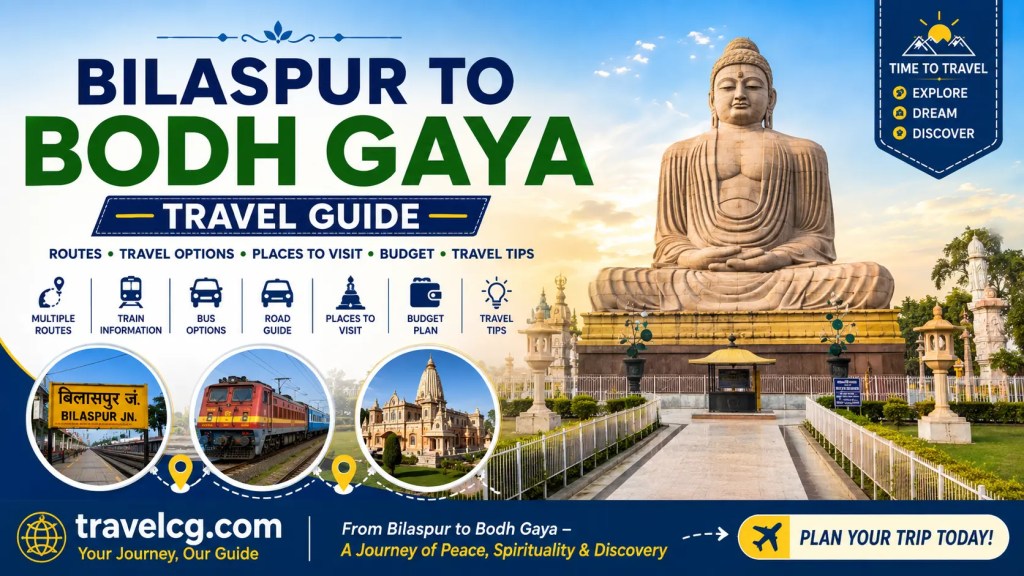
Introduction
Bodh Gaya is one of the holiest pilgrimage destinations in the world for Buddhists. Located in the Gaya district of Bihar, this sacred town is the place where Lord Gautama Buddha attained enlightenment under the Bodhi Tree over 2,500 years ago. Every year, millions of pilgrims, monks, researchers, and tourists from India, Sri Lanka, Thailand, Japan, Myanmar, Bhutan, Nepal, Tibet, Vietnam, and many other countries visit Bodh Gaya to experience its spiritual atmosphere.
If you are planning a trip from Bilaspur (Chhattisgarh) to Bodh Gaya, this detailed guide will help you understand every aspect of your journey, including transportation options, train routes, flight information, road travel, sightseeing, accommodation, local food, estimated budget, best time to visit, and useful travel tips.
Distance from Bilaspur to Bodh Gaya
The approximate distance depends on the mode of travel.
By Train
- Approximate Distance: 700–800 km
By Road
- Approximate Distance: 760–820 km
By Air
- Travel distance varies depending upon connecting flights.
Average travel time ranges between 11 and 16 hours.
Best Ways to Reach Bodh Gaya from Bilaspur
By Train (Most Economical)
The train is the preferred choice for most travelers.
You can travel from Bilaspur Junction to:
- Gaya Junction (GAYA)
- Dehri-on-Sone (DOS)
- Pt. Deen Dayal Upadhyay Junction (depending on train)
After reaching Gaya Junction, Bodh Gaya is only around 15 km away.
Available local transport includes:
- Auto-rickshaw
- Taxi
- Ola (limited availability)
- Shared tempo
Travel time from Gaya to Bodh Gaya is approximately 30–40 minutes.
Popular Train Options
Some commonly preferred trains include:
- Bilaspur–Patna Express
- South Bihar Express
- Durg–Patna Express
- Bilaspur–Rajendra Nagar trains
- Other trains passing through Gaya
Always check the latest schedule before booking.
By Flight
There are no direct flights from Bilaspur to Bodh Gaya.
Possible route:
Bilaspur → Raipur → Delhi/Kolkata → Gaya Airport
Alternative:
Bilaspur → Raipur → Patna Airport → Road to Bodh Gaya (approximately 110 km)
Although faster, this option is generally more expensive.
By Road
Many travelers enjoy road trips.
Possible route:
Bilaspur
↓
Ambikapur
↓
Garhwa
↓
Aurangabad (Bihar)
↓
Gaya
↓
Bodh Gaya
Road conditions are generally good, although some stretches may have ongoing construction.
Estimated driving time:
12–15 hours depending upon traffic.
About Bodh Gaya
Bodh Gaya is recognized as one of the four major Buddhist pilgrimage sites.
The town became famous because Prince Siddhartha meditated beneath the sacred Bodhi Tree and attained enlightenment, becoming Gautama Buddha.
Today, the town represents peace, meditation, spirituality, and global Buddhist heritage.
Mahabodhi Temple
The Mahabodhi Temple is the main attraction of Bodh Gaya.
Highlights include:
- UNESCO World Heritage Site
- More than 2,500 years of history
- Magnificent temple architecture
- Beautiful stone carvings
- Sacred meditation environment
- Evening illumination
Visitors from all over the world come here for meditation and prayers.
The Sacred Bodhi Tree
The Bodhi Tree is considered the most sacred place in Bodh Gaya.
According to Buddhist tradition:
- Buddha attained enlightenment here.
- The present tree is believed to be a descendant of the original Bodhi Tree.
- Pilgrims meditate beneath its shade.
- Monks chant prayers throughout the day.
Vajrasana (Diamond Throne)
Located near the Bodhi Tree.
This stone platform marks the exact location where Buddha is believed to have attained enlightenment.
It is among the holiest places in Buddhism.
Great Buddha Statue
One of the city’s most photographed attractions.
Features:
- Height: Around 80 feet
- Pink sandstone construction
- Peaceful sitting posture
- Beautiful gardens
- Excellent photography spot
International Monasteries
Bodh Gaya has monasteries built by several countries.
Some famous ones include:
Thai Monastery
Known for:
- Golden roof
- Beautiful architecture
- Peaceful surroundings
Japanese Temple
Famous for:
- Wooden architecture
- Buddha murals
- Meditation halls
Tibetan Monastery
Features include:
- Prayer wheels
- Tibetan paintings
- Colorful decorations
Bhutan Monastery
Known for:
- Traditional Bhutanese artwork
- Peaceful prayer halls
- Wooden carvings
Chinese Temple
Highlights:
- Large Buddha statue
- Chinese architecture
- Calm meditation atmosphere
Archaeological Museum
History lovers should visit the Archaeological Museum.
It displays:
- Ancient sculptures
- Buddhist relics
- Stone carvings
- Historical artifacts
Meditation Parks
Many meditation centers welcome visitors.
Popular activities:
- Silent meditation
- Mindfulness sessions
- Yoga
- Spiritual discussions
Sujata Stupa
Located across the Niranjana River.
According to tradition:
Sujata offered milk-rice to Siddhartha before enlightenment.
The site commemorates this important event.
Dungeshwari Cave Temple
Located around 12 km from Bodh Gaya.
This cave is believed to be where Buddha practiced severe austerities before choosing the Middle Path.
Best Time to Visit
October to March
The ideal season.
Temperature:
10°C–25°C
Perfect for:
- Temple visits
- Sightseeing
- Photography
- Meditation
April to June
Very hot.
Temperatures may exceed 40°C.
Travel is possible but less comfortable.
July to September
Monsoon season.
The greenery is beautiful, but rainfall may affect travel plans.
Major Festivals
Buddha Purnima
The biggest festival.
Thousands of monks gather.
Special prayers and cultural programs are organized.
International Buddhist Festivals
Many countries participate.
Visitors can experience:
- Traditional dances
- Prayer ceremonies
- Cultural exhibitions
Local Food
Bodh Gaya offers both Indian and international cuisine.
Popular dishes include:
- Litti Chokha
- Dal Rice
- Sattu Paratha
- Momos
- Noodles
- Tibetan Soup
- Thukpa
- South Indian food
- Continental food
Many restaurants also serve Thai, Japanese, and Chinese dishes.
Shopping
Popular items include:
- Buddha statues
- Prayer beads
- Tibetan handicrafts
- Singing bowls
- Incense sticks
- Meditation cushions
- Buddhist books
- Handmade souvenirs
Accommodation
Budget Hotels
- ₹600–₹1,200 per night
Mid-range Hotels
- ₹1,500–₹3,500
Luxury Hotels
- ₹4,000–₹8,000+
Many monasteries also provide economical accommodation for pilgrims.
Estimated Budget
Budget Trip
- Train Fare: ₹500–₹900
- Hotel: ₹700
- Food: ₹500
- Local Transport: ₹300
- Entry & Miscellaneous: ₹300
Approximate Total:
₹2,500–₹4,000
Comfortable Trip
Approximate Budget:
₹6,000–₹12,000
Luxury Trip
Budget:
₹15,000+
Suggested 3-Day Itinerary
Day 1
- Arrive at Gaya
- Check into hotel
- Visit Mahabodhi Temple
- Evening meditation
- Explore local market
Day 2
- Bodhi Tree
- Great Buddha Statue
- Thai Monastery
- Tibetan Monastery
- Japanese Temple
- Chinese Temple
- Archaeological Museum
Day 3
- Sujata Stupa
- Dungeshwari Cave Temple
- Shopping
- Return journey
Travel Tips
Before Departure
- Carry a valid ID proof.
- Book train or flight tickets in advance.
- Reserve hotels during the peak season.
During the Visit
- Wear modest and comfortable clothing.
- Remove footwear before entering temples.
- Maintain silence in meditation areas.
- Respect local customs and religious practices.
- Keep drinking water with you.
Photography
Photography is allowed in many outdoor areas, but always follow the rules inside temples and monasteries.
Why Visit Bodh Gaya?
Bodh Gaya is not just a religious destination; it is a place of peace, history, culture, and self-reflection. Whether you are a pilgrim, history enthusiast, photographer, or traveler seeking tranquility, this sacred town offers a memorable experience. Its world-famous Mahabodhi Temple, the revered Bodhi Tree, international monasteries, meditation centers, and rich Buddhist heritage make it one of India’s most significant spiritual destinations.
A journey from Bilaspur to Bodh Gaya combines comfortable travel, affordable accommodation, and the opportunity to explore one of the world’s most important centers of Buddhist philosophy and meditation. With proper planning, your visit can become both spiritually enriching and culturally rewarding.
Other Places To Visit from Bilaspur







Something went wrong. Please refresh the page and/or try again.


Leave a Reply