
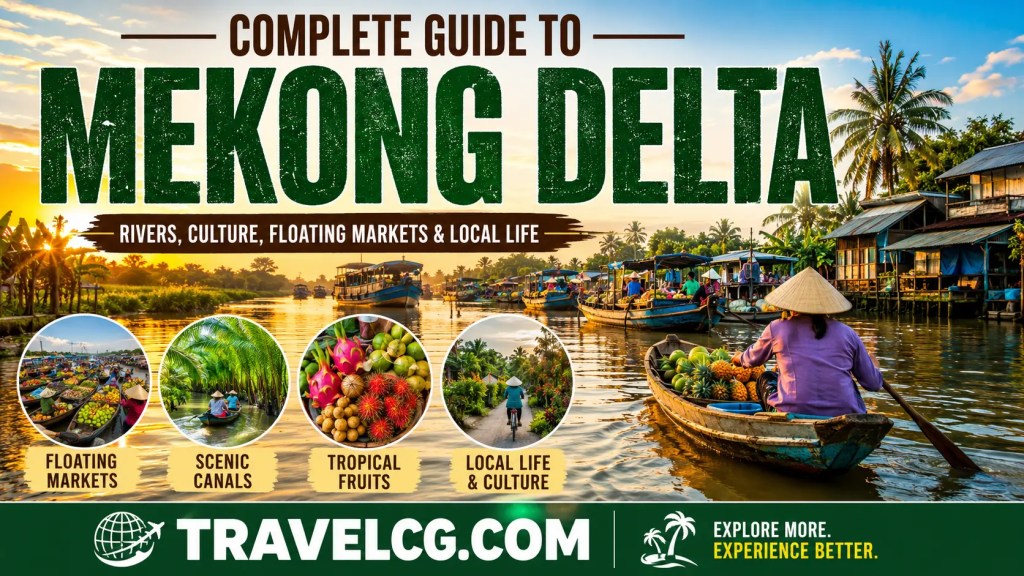
The Mekong Delta is one of the most fascinating regions in Vietnam, famous for its winding rivers, floating markets, lush green landscapes, coconut groves, traditional villages, rice fields, and unique river-based lifestyle. Located in southern Vietnam, the delta is where the mighty Mekong River divides into numerous branches before flowing into the South China Sea. Because of its fertile soil and abundant water, the region is one of Vietnam’s most important agricultural areas and is particularly famous for rice, tropical fruits, coconuts, and seafood.
For travelers, the Mekong Delta offers a completely different experience from Vietnam’s large cities such as Hanoi and Ho Chi Minh City. Instead of busy streets and skyscrapers, visitors encounter narrow waterways, wooden boats, colorful markets, quiet villages, fruit orchards, traditional houses, and local communities whose daily lives are closely connected with the river.
Where Is the Mekong Delta?
The Mekong Delta is located in the southern part of Vietnam, around the final section of the Mekong River system. The region covers a large area and consists of several provinces, with Can Tho serving as its most important urban and tourism center.
The delta extends toward the coast and contains an enormous network of rivers, canals, streams, and smaller waterways. These waterways have traditionally been used for transportation, fishing, agriculture, trade, and communication.
The Mekong itself is one of Asia’s great rivers. It flows through several countries before reaching Vietnam, where it spreads into a vast delta system. This geographic position has shaped the culture, economy, food, architecture, and lifestyle of southern Vietnam for centuries.
Why Is the Mekong Delta Famous?
The Mekong Delta is famous for its distinctive combination of nature and traditional life. The region provides visitors with an opportunity to experience rural Vietnam while traveling through waterways rather than conventional roads.
Some of its major attractions include:
- Floating markets
- Boat trips through narrow canals
- Tropical fruit orchards
- Coconut plantations
- Rice fields
- Traditional villages
- Local handicraft workshops
- Riverfront towns
- Vietnamese countryside cuisine
- Traditional music performances
- Wildlife and wetlands
- Buddhist temples and historic buildings
One of the most memorable aspects of the delta is the way the river influences everyday life. Boats are not simply tourist attractions; they have historically been an important means of transportation and commerce.
Can Tho – The Heart of the Mekong Delta
Can Tho is generally considered the gateway to the Mekong Delta and is one of the best places for first-time visitors. The city combines modern urban facilities with easy access to rivers, canals, villages, and agricultural areas.
The most famous attraction near Can Tho is Cai Rang Floating Market. Traditionally, traders gather on boats to sell fruits, vegetables, food, beverages, and other products. Boats loaded with colorful produce create a distinctive scene that represents the commercial culture of the delta.
Early morning is generally the best time to visit the floating market because trading activity begins before the day becomes hot.
A typical visit involves taking a boat along the river before entering the market area. Visitors can observe vendors selling products directly from their boats and may also purchase breakfast or fresh fruit.
Cai Rang Floating Market
Cai Rang is perhaps the most internationally recognized floating market in the Mekong Delta.
The market demonstrates how waterways have historically functioned as commercial highways. Instead of shops lining a street, sellers operate from boats positioned along the river.
One interesting feature is the use of tall poles on some boats to display samples of the products being sold. This allows buyers to identify what a boat is selling from a distance.
For photographers, sunrise at Cai Rang can be particularly attractive because of the combination of warm morning light, boats, reflections, river mist, and colorful tropical produce.
However, visitors should remember that the market is a working commercial environment. Respecting local people and avoiding intrusive photography is important.
Boat Tours in the Mekong Delta
A boat trip is one of the best ways to experience the delta.
Large tourist boats can provide comfortable transportation, while smaller boats are useful for exploring narrow canals. Many tours combine several activities, allowing travelers to experience both the waterways and countryside.
A typical boat excursion may include:
- Traveling along a major river.
- Visiting a floating market.
- Entering smaller canals.
- Exploring a fruit orchard.
- Visiting a local workshop.
- Eating traditional Vietnamese food.
- Drinking fresh coconut water or local tea.
- Returning to the main river by boat.
The scenery changes continuously, with houses, gardens, boats, bridges, coconut palms, and agricultural fields appearing along the waterways.
Coconut Groves and Ben Tre
Ben Tre is particularly associated with coconuts and is often described as one of the best destinations for experiencing the quieter side of the Mekong Delta.
Coconut palms are an important part of the local economy. Coconut products are used to make food, sweets, beverages, handicrafts, and other goods.
Visitors can explore small waterways surrounded by coconut trees, visit family-run workshops, and learn about traditional coconut processing.
Ben Tre is especially suitable for travelers who prefer peaceful landscapes and village experiences rather than large urban attractions.
Tropical Fruit Orchards
The fertile soil and warm climate of the Mekong Delta make the region ideal for growing tropical fruits.
Depending on the season, visitors may encounter fruits such as:
- Mangoes
- Rambutan
- Mangosteen
- Dragon fruit
- Pomelo
- Jackfruit
- Longan
- Durian
- Coconut
- Banana
Many tours include visits to fruit gardens where travelers can walk through orchards and taste freshly harvested produce.
The experience is more than simply eating fruit. It provides an opportunity to understand how agriculture supports communities throughout the delta.
Local Food of the Mekong Delta
Food is another major reason to visit the Mekong Delta. The region’s cuisine reflects its agricultural abundance and proximity to rivers and the sea.
Popular foods and ingredients include freshwater fish, prawns, crab, vegetables, rice, noodles, coconut, tropical fruits, and aromatic herbs.
Some dishes visitors may encounter include bánh xèo, Vietnamese savory pancakes often served with fresh herbs and vegetables, and various preparations of river fish.
Cá lóc, or snakehead fish, is another common ingredient in southern Vietnamese cuisine.
Rice and rice-based products are particularly important because the delta is one of Vietnam’s major rice-producing regions.
Travelers should also try fresh tropical fruit and locally produced coconut products when visiting rural areas.
Life Along the River
One of the most interesting things about the Mekong Delta is observing everyday life along the waterways.
Houses, gardens, shops, restaurants, markets, and farms can be found beside rivers and canals. Boats may serve as transportation, fishing platforms, commercial vehicles, or working spaces.
The river has therefore shaped not only the physical landscape but also the social and economic structure of local communities.
For visitors, this makes the Mekong Delta different from a conventional sightseeing destination. Much of its appeal comes from simply observing the rhythm of daily life.
Traditional Villages and Handicrafts
Several areas of the Mekong Delta are known for traditional handicrafts and small family-run businesses.
Visitors may see workshops producing coconut candy, rice paper, traditional sweets, woven products, pottery, and other goods.
These visits can provide insight into traditional skills passed from one generation to another.
When visiting such places, travelers should distinguish between genuine local workshops and highly commercialized tourist stops. Supporting small local businesses and purchasing directly from artisans can help local communities benefit from tourism.
Temples and Cultural Attractions
Although the Mekong Delta is primarily known for its waterways and countryside, the region also has numerous temples and religious sites.
The cultural environment reflects the diverse history of southern Vietnam. Vietnamese traditions coexist with Khmer cultural influences and other regional traditions.
Some areas contain distinctive Khmer temples featuring colorful architecture, elaborate decorations, and religious artwork.
These sites offer travelers a different perspective on the cultural diversity of the delta.
Tra Su Cajuput Forest
For travelers interested in nature, the Tra Su Cajuput Forest in An Giang Province is an important destination.
The wetland forest is known for its waterways, cajuput trees, birds, and peaceful natural environment. Visitors can explore the area by boat and travel through narrow channels surrounded by vegetation.
The landscape is particularly attractive for nature photography.
The forest also demonstrates the ecological importance of wetlands in the Mekong region, which provide habitat for many species while supporting the wider environmental system.
Chau Doc
Chau Doc is another important destination in the Mekong Delta, located near the Cambodian border.
The town is known for its cultural diversity, river scenery, floating communities, markets, temples, and nearby natural attractions.
One of the well-known nearby destinations is Sam Mountain, which has religious and cultural significance and provides views across the surrounding landscape.
Chau Doc can also be included in longer itineraries connecting southern Vietnam with Cambodia.
When Is the Best Time to Visit the Mekong Delta?
The Mekong Delta can be visited throughout much of the year, but weather and seasonal conditions influence the experience.
The dry season is generally popular with travelers because there is less rainfall and outdoor activities are easier to organize.
The rainy season can bring heavier showers, but it also contributes to the region’s lush greenery and waterways.
Fruit availability varies by season, so travelers interested in particular tropical fruits should check the local harvest period before planning their trip.
For floating markets, early morning is generally preferable regardless of the season because trading activity is strongest during the early hours.
How Many Days Do You Need?
The amount of time required depends on how deeply you want to explore the region.
A one-day trip from Ho Chi Minh City can provide a quick introduction to the delta, usually involving boat rides, villages, canals, and local food.
A two-day trip allows a more relaxed experience and may include Can Tho, a floating market, fruit orchards, and rural villages.
A three-day or longer trip is better for travelers who want to explore multiple areas such as Can Tho, Ben Tre, Chau Doc, and nature reserves.
For a genuine countryside experience, staying overnight in a local guesthouse or homestay can be much more rewarding than returning immediately to a large city.
How to Reach the Mekong Delta
Most international travelers first arrive in southern Vietnam through Ho Chi Minh City.
From Ho Chi Minh City, different parts of the delta can be reached by bus, private car, taxi, or organized tour.
Can Tho is one of the most convenient bases for exploring the region. Ben Tre is relatively accessible for travelers focusing on coconut groves and waterways.
Chau Doc is farther west and is more suitable for travelers planning a longer journey.
Because distances can be deceptive due to roads, bridges, traffic, and waterways, travelers should allow sufficient time rather than trying to visit too many places in one day.
Mekong Delta Homestay Experience
A homestay can make a Mekong Delta trip more memorable.
Instead of staying in a conventional hotel, travelers can spend the night in a rural house surrounded by gardens, fruit trees, or waterways.
Homestays may provide opportunities to:
- Eat home-cooked Vietnamese food
- Explore nearby villages
- Cycle through rural roads
- Learn about local agriculture
- Observe traditional lifestyles
- Enjoy peaceful evenings away from major cities
The experience varies significantly from one property to another, so travelers should check recent reviews and facilities before booking.
Cycling in the Mekong Delta
Cycling is another excellent way to explore rural areas.
Many countryside roads are relatively quiet compared with major urban streets, and cycling allows travelers to move slowly through villages, gardens, rice fields, and plantations.
A bicycle can also provide access to places that large tourist vehicles cannot easily reach.
Early morning and late afternoon are usually more comfortable for outdoor activities because midday temperatures can be high.
What to Expect from the Weather
The Mekong Delta has a tropical climate, meaning temperatures can be warm and humidity can be high.
Travelers should be prepared for:
- Strong sunlight
- High humidity
- Sudden rain showers
- Hot afternoons
- Mosquitoes in some rural areas
Light, breathable clothing is useful. Comfortable footwear is important for walking around villages and getting on and off boats.
Sun protection, drinking water, and insect protection can also make the trip more comfortable.
What to Pack
For a Mekong Delta trip, practical packing is more important than carrying heavy luggage.
Useful items include:
- Lightweight clothing
- Comfortable walking shoes
- Sandals
- Sun hat
- Sunglasses
- Sunscreen
- Insect repellent
- Reusable water bottle
- Rain jacket or compact umbrella
- Power bank
- Small day bag
- Waterproof protection for electronics
If you plan to take many boat trips, protecting your phone and camera from splashes is particularly useful.
Responsible Tourism in the Mekong Delta
The Mekong Delta is an environmentally sensitive region, and responsible tourism is important.
Travelers can help by avoiding unnecessary plastic waste, using refillable water bottles, respecting local communities, and not throwing anything into rivers or canals.
Wildlife should not be disturbed, and visitors should avoid purchasing products made from protected animals.
When visiting religious sites, dress respectfully and follow local customs.
Travelers can also contribute to local communities by purchasing authentic local products, eating at family-run establishments, and choosing locally operated tours when possible.
Environmental Challenges
The Mekong Delta faces several environmental challenges, including flooding, coastal erosion, saltwater intrusion, land subsidence, pollution, and the effects of climate change.
Because the region is low-lying, changes in sea level and river flow can have significant consequences.
Agriculture is also closely connected to water availability. Changes in rainfall patterns, upstream water management, and saltwater intrusion can affect farming and local livelihoods.
Tourism therefore needs to develop in a way that supports communities while protecting the region’s natural environment.
Is the Mekong Delta Worth Visiting?
Absolutely. The Mekong Delta is particularly worthwhile for travelers who enjoy nature, culture, photography, food, rural landscapes, and authentic local experiences.
It may not offer the monumental architecture or nightlife found in Vietnam’s major tourist cities, but its attraction lies in its slower rhythm.
A morning boat ride through a floating market, a bicycle journey through a village, lunch in a local home, a walk through a tropical orchard, or an evening beside a quiet canal can become some of the most memorable experiences of a Vietnam trip.
Best Experiences in the Mekong Delta
If you have limited time, prioritize experiences rather than trying to see every destination.
The most rewarding experiences generally include:
- Visiting Cai Rang Floating Market
- Taking a boat through narrow canals
- Exploring Ben Tre’s coconut groves
- Visiting a tropical fruit orchard
- Trying regional Vietnamese cuisine
- Staying in a countryside homestay
- Cycling through rural villages
- Exploring Chau Doc
- Visiting a wetland forest
- Watching sunrise over the river
- Learning about traditional handicrafts
- Meeting local residents
Final Thoughts
The Mekong Delta is one of Vietnam’s most distinctive travel regions. Its rivers, canals, floating markets, tropical orchards, rice fields, villages, temples, and traditional communities create an environment that cannot easily be experienced elsewhere.
The best way to explore the region is to slow down. Rather than treating the delta as a checklist of attractions, spend time on the water, walk through villages, taste local food, visit markets early in the morning, and observe how closely everyday life remains connected to the river.
Whether you choose a short day trip from Ho Chi Minh City or a multi-day journey through Can Tho, Ben Tre, Chau Doc, and the surrounding countryside, the Mekong Delta offers a fascinating combination of nature, culture, agriculture, food, and traditional Vietnamese life.
For travelers looking for a more relaxed and culturally immersive side of Vietnam, the Mekong Delta is a destination that deserves a place on the itinerary.


Leave a Reply