
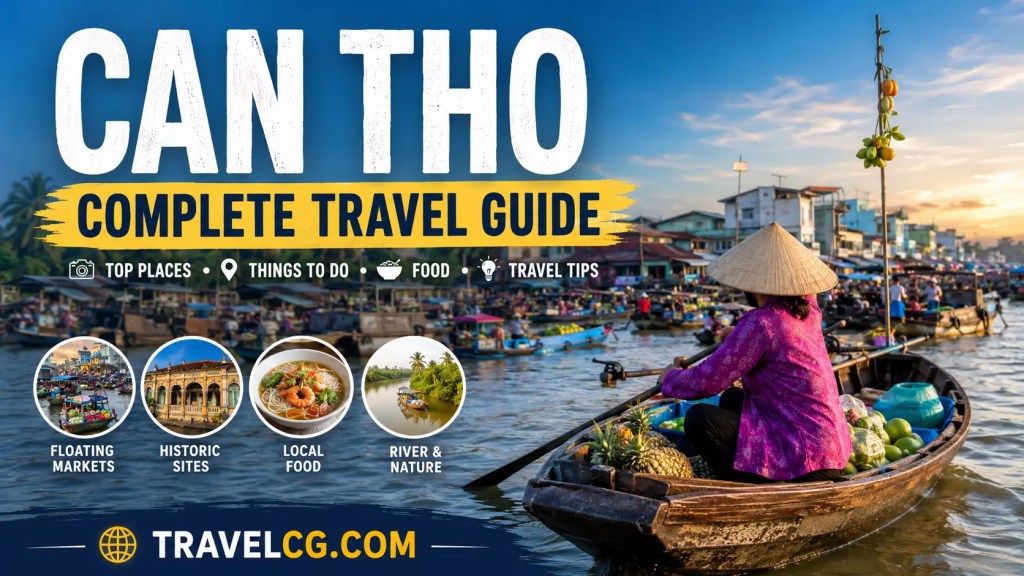
Can Tho is one of the most fascinating destinations in southern Vietnam and one of the best places to experience the authentic character of the Mekong Delta. Built around rivers, canals, floating markets, fruit orchards and traditional villages, Can Tho offers a very different experience from Vietnam’s major tourist cities such as Hanoi and Ho Chi Minh City.
Often described as a gateway to the Mekong Delta, Can Tho combines the energy of a modern Vietnamese city with the peaceful lifestyle of river communities. Early mornings begin with boats carrying fruits and vegetables, while narrow waterways connect villages, gardens and traditional craft communities. During the evening, the riverside becomes a pleasant place for walking, dining and enjoying the city lights.
The most famous attraction is Cai Rang Floating Market, where trading takes place directly on the river. However, there is much more to Can Tho than its floating market. Ancient houses, Buddhist temples, museums, fruit gardens, small islands, traditional food and rural experiences make the city an excellent destination for travelers who want to explore the culture of southern Vietnam.
Why Visit Can Tho?
Can Tho is particularly attractive for travelers who want to experience everyday Mekong Delta life rather than simply visit conventional tourist attractions. The city provides easy access to waterways, agricultural areas and traditional communities.
One of the city’s greatest attractions is its relationship with water. The Hau River and Can Tho River shape the landscape, economy and culture of the region. Boat journeys are therefore an essential part of the Can Tho experience.
The city is also known for its food. Fresh fruits, river fish, noodles, pancakes, hot pots and other southern Vietnamese specialties are widely available in local restaurants and markets.
Can Tho is also a convenient base for exploring other parts of the Mekong Delta. Vietnam’s official tourism information describes it as an ideal base for a first visit to the region.
Best Time to Visit Can Tho
Can Tho has a tropical climate and remains warm and humid throughout much of the year. The region generally experiences a dry season from December to April and a wetter period from May to November. Average temperatures are around 28°C.
December to April is a popular period for travelers who prefer relatively drier weather. This can be a comfortable time for sightseeing, walking around the city and taking boat trips.
June to August can be particularly interesting for fruit lovers because many tropical fruits are available in the region’s gardens during the fruit-ripening season.
September to November can bring flooding in parts of the Mekong Delta. Rather than making travel impossible, seasonal water can create a different landscape and provide interesting opportunities to observe life along the waterways.
December and January are also attractive for visitors interested in flowers and the atmosphere surrounding the Vietnamese Lunar New Year period.
For the most famous experience in Can Tho, however, the time of day is often more important than the month. Cai Rang Floating Market is best visited very early in the morning, generally around 5:00 to 8:00 a.m., when boat activity is at its busiest.
How to Reach Can Tho
Can Tho can be reached by air, road and bus, making it relatively convenient for travelers exploring southern Vietnam.
By Air
Can Tho International Airport provides an air connection for travelers coming from other parts of Vietnam. Flying can be particularly useful when time is limited.
From Ho Chi Minh City
Can Tho is approximately 165 kilometres from Ho Chi Minh City. Travelers can make the journey by bus, private car or motorbike. The road journey is one of the most common ways to reach the city from southern Vietnam.
A road trip from Ho Chi Minh City also allows travelers to combine Can Tho with other destinations in the Mekong Delta.
By Bus
Regular buses connect Can Tho with Ho Chi Minh City and other Vietnamese destinations. Bus travel is generally an affordable option and can be convenient for budget travelers.
Best Places to Visit in Can Tho
Can Tho has a mixture of river attractions, cultural landmarks, historical buildings and rural destinations.
Cai Rang Floating Market
Cai Rang Floating Market is the attraction most closely associated with Can Tho.
The market is located on the Cai Rang River, around 5 kilometres from the city centre. It is particularly lively in the early morning, when boats gather to buy and sell agricultural products, fruits, food and other goods. The official Can Tho tourism portal recommends approximately 5:00 to 8:00 a.m. as the busiest period.
One of the most interesting features is the traditional way merchants advertise their products. Instead of large shop signs, sellers can display goods on tall bamboo poles known locally as “Cây Bẹo.” A visitor can therefore often identify what a boat is selling simply by looking at the products displayed above it.
The best way to experience the market is by boat. Arriving early allows you to see the market at its most active and to observe local trading before the heat of the day becomes intense.
Do not think of Cai Rang simply as a tourist attraction. It is a living part of the Mekong Delta’s commercial and cultural tradition.
Ninh Kieu Wharf
Ninh Kieu Wharf is another important landmark and one of the most recognizable riverside areas in Can Tho.
Located along the Hau River, the wharf and surrounding park provide a pleasant place to walk, relax and enjoy views of the water. The area becomes particularly attractive in the evening when the city lights begin to illuminate the riverfront.
A river cruise or evening boat trip can be an excellent way to experience the area after spending the morning exploring the floating market.
Can Tho Pedestrian Bridge
The Can Tho Pedestrian Bridge is located near Ninh Kieu Wharf and provides another attractive viewpoint over the river.
The bridge is approximately 200 metres long and features decorative lighting. Its design includes lotus-inspired elements, making it particularly photogenic after sunset.
It is a good place for an evening walk and for photographs of the riverside.
Binh Thuy Ancient House
For travelers interested in history and architecture, Binh Thuy Ancient House is one of Can Tho’s most interesting attractions.
The house was built in 1870 by the Duong family and combines Eastern and Western architectural influences. Its design reflects the cultural interaction that shaped southern Vietnam during the period.
The house has been preserved with many traditional architectural and decorative elements. It was recognized as a National Architectural and Artistic Monument in 2009.
Its cultural value has also made it a filming location for several movies, including the famous French-Vietnamese film “The Lover.”
Con Son Islet
Con Son Islet is a wonderful choice for travelers who want to escape the urban environment and experience rural Mekong Delta life.
The small island is surrounded by the Hau River and is known for fruit gardens, waterways, fish farms and community-based tourism. Visitors can explore gardens, interact with local residents, learn traditional food preparation and observe fish farming.
Cycling or walking through the island can provide a slower and more intimate experience than visiting attractions in the city centre.
Can Tho Museum
Can Tho Museum offers an opportunity to understand the history and culture of the region.
The museum contains thousands of objects and historical exhibits relating to the development of Can Tho and the surrounding Mekong Delta. Displays cover local communities, agriculture, cultural traditions and the region’s historical development.
It is a useful stop for travelers who want cultural context before exploring the city’s rural attractions.
Bang Lang Stork Sanctuary
Nature lovers can visit Bang Lang Stork Sanctuary, located outside the central city area.
The sanctuary is known for its large bird population and provides an opportunity to observe birds in a natural environment. The tourism authority describes it as an important location for bird diversity and biodiversity conservation.
The experience is especially interesting for visitors who enjoy photography and wildlife.
Binh Thuy Temple
Binh Thuy Temple is another cultural attraction worth considering. The official Can Tho tourism portal lists it among the city’s important destinations.
The temple, historically known as Long Tuyen Communal House, provides insight into traditional religious and community life in southern Vietnam.
Hu Tieu Craft Village
Food lovers should consider visiting a traditional rice-noodle production area.
Hu Tieu is one of the famous noodle dishes associated with southern Vietnam, and traditional production sites provide an opportunity to see how noodles are prepared.
Some experiences also include tasting dishes made from the noodles. One unusual local specialty is hu tieu pizza, which transforms the traditional noodle ingredient into a crispy snack-style dish.
Things to Do in Can Tho
Take an Early Morning Boat Ride
A boat trip is arguably the best way to understand Can Tho.
Start early and travel along the river while the city is waking up. You can see fishing boats, cargo boats, floating houses, riverbanks and traders heading toward the market.
The changing light around sunrise also creates excellent opportunities for photography.
Explore the Floating Market
Do not simply visit Cai Rang Floating Market, take a few photographs and leave. Spend some time observing how the market functions.
Watch how boats approach each other, how goods are displayed and how vendors prepare food on the water. This provides a glimpse into a way of life that has developed around the Mekong’s waterways.
Visit Fruit Orchards
The fertile Mekong Delta is famous for agriculture and tropical fruits. Can Tho’s surrounding gardens allow visitors to see fruit cultivation and taste fresh produce.
Depending on the season, you may encounter different varieties of tropical fruit.
Explore the Islets
The small islands and islets around Can Tho are ideal for slow travel.
You can combine boat rides with cycling, walking, fruit tasting and visits to family-run businesses. Vietnam Tourism specifically recommends exploring Can Tho’s islets by bicycle or sampan and experiencing community-based tourism.
Enjoy Can Tho After Sunset
Can Tho has a different atmosphere at night.
Walk around Ninh Kieu Wharf, explore the pedestrian bridge, visit a night market and enjoy local food. The riverside is particularly pleasant after the heat of the afternoon has declined.
Can Tho Food Guide
Food is an important reason to visit Can Tho.
The Mekong Delta’s fertile environment provides abundant rice, vegetables, fruits, fish and other ingredients. Local cuisine therefore reflects the region’s agricultural and river-based lifestyle.
Hu Tieu
Hu Tieu is one of the most famous noodle dishes in southern Vietnam. It can be enjoyed as a breakfast or other meal and is particularly enjoyable when eaten at a local noodle shop.
Banh Xeo
Banh Xeo is a crispy Vietnamese pancake traditionally prepared with a savory filling. It is commonly served with fresh herbs and dipping sauce.
Grilled Snakehead Fish
Snakehead fish is a popular freshwater fish in the Mekong Delta. Grilled preparations offer a simple way to enjoy the fresh local produce of the region.
Hot Pot
Fish-based hot pots are another specialty associated with Mekong Delta cuisine. Sour and aromatic flavors are commonly used to complement freshwater fish and vegetables.
Fresh Tropical Fruits
Do not leave Can Tho without trying locally grown fruit.
Depending on the season, travelers can find mangoes, rambutans, durians, mangosteens and other tropical fruits in markets and orchards.
Can Tho Night Market
Can Tho’s night market is a good place to experience the city after dark.
Visitors can explore food stalls, local products and the lively atmosphere of the city. Vietnam Tourism also highlights Can Tho’s night market as a place to try typical local dishes.
A good evening can combine dinner at a local eatery with a walk along the riverfront.
Where to Stay in Can Tho
Can Tho offers accommodation ranging from hotels and guesthouses to homestays and resorts.
For first-time visitors, staying around the central riverside area can be convenient because Ninh Kieu Wharf, restaurants, markets and several attractions are relatively accessible from there.
Travelers who prefer a quieter experience can choose a homestay or accommodation near gardens and waterways. These properties can provide a more rural atmosphere and may be particularly suitable for travelers interested in local culture.
Budget travelers will find simple guesthouses and hotels, while couples and families can choose more comfortable riverside properties.
How Many Days Do You Need in Can Tho?
A 2-day trip is enough to experience the major highlights.
On the first day, explore the city centre, Ninh Kieu Wharf, the pedestrian bridge and local food markets.
On the second day, wake up before sunrise for Cai Rang Floating Market and then continue to a noodle-making village, fruit orchard or Con Son Islet.
If you have three days, you can slow down the itinerary and spend more time in the countryside.
A longer stay is ideal for travelers who want to use Can Tho as a base for exploring other Mekong Delta destinations.
Suggested 2-Day Can Tho Itinerary
Day 1
Begin your day with breakfast at a local restaurant.
Spend the morning exploring Can Tho’s central area and visiting Can Tho Museum or Binh Thuy Ancient House.
In the afternoon, explore the riverside area and relax at Ninh Kieu Wharf.
After sunset, walk across the pedestrian bridge and visit the night market.
Finish the day with a dinner featuring Mekong Delta specialties.
Day 2
Wake up around 4:30 or 5:00 a.m.
Take a boat to Cai Rang Floating Market and spend the early morning observing the floating market.
After the market, visit a traditional noodle-making site and enjoy a local breakfast.
Continue to a fruit orchard or Con Son Islet.
Return to the city in the afternoon and spend your evening relaxing beside the river.
Can Tho Travel Tips
Wake up early for Cai Rang. The floating market is most interesting during the early morning hours, particularly around 5:00–8:00 a.m.
Carry cash. Small restaurants, markets and local vendors may be easier to deal with using cash.
Wear comfortable clothing. Can Tho is warm and humid, so lightweight clothing is generally more comfortable.
Carry sun protection. Sunglasses, sunscreen and a hat can be useful during boat trips and outdoor sightseeing.
Bring mosquito repellent. Rural and riverside areas can have more mosquitoes than central urban areas.
Protect your electronics. If you are taking a boat, keep your phone and camera in a waterproof bag.
Respect local communities. Ask permission before taking close-up photographs of residents, vendors or private homes.
Do not rush. Can Tho is best experienced slowly. Sitting beside a canal, drinking Vietnamese coffee, cycling through a village or watching boats pass can be just as memorable as visiting a major attraction.
Is Can Tho Worth Visiting?
Absolutely.
Can Tho is one of the best places to experience the Mekong Delta’s combination of riverside culture, agriculture, food and traditional life. Its biggest attraction is not a single monument but the entire environment created by the river.
The floating markets provide a glimpse into commerce on the waterways. Fruit orchards demonstrate the agricultural wealth of the delta. Traditional houses and temples reveal the region’s history and culture, while local food introduces travelers to the distinctive flavors of southern Vietnam.
The official tourism portal currently highlights destinations such as Cai Rang Floating Market, Ninh Kieu Wharf, Binh Thuy Ancient House, Can Tho Museum, Binh Thuy Temple, Con Son community tourism and Bang Lang Stork Sanctuary among the city’s notable attractions.
For travelers visiting Vietnam for the first time, Can Tho can be an excellent introduction to the Mekong Delta. For returning travelers, it offers an opportunity to slow down and explore a side of Vietnam that is very different from the country’s major urban and beach destinations.
The key to enjoying Can Tho is simple: get on the water, wake up early, eat local food, explore the countryside and give yourself enough time to experience the slower rhythm of the Mekong Delta.
Frequently Asked Questions About Can Tho
What is Can Tho famous for?
Can Tho is best known for the Mekong Delta, Cai Rang Floating Market, riverside life, fruit orchards, traditional food and waterways.
Is Can Tho good for tourists?
Yes. Can Tho offers a combination of cultural attractions, food experiences, river tours, rural activities and comfortable accommodation.
What is the best attraction in Can Tho?
Cai Rang Floating Market is the city’s most famous attraction and one of the essential experiences for first-time visitors.
What time should I visit Cai Rang Floating Market?
Arrive early. The busiest period is generally around 5:00 to 8:00 a.m.
How long should I stay in Can Tho?
Two days is a good minimum for seeing the major attractions. Three days allows a more relaxed experience.
Can I visit Can Tho from Ho Chi Minh City?
Yes. Can Tho is approximately 165 kilometres from Ho Chi Minh City and can be reached by bus, car or motorbike.
What should I eat in Can Tho?
Try Hu Tieu, Banh Xeo, freshwater fish dishes, hot pot, grilled snakehead fish and seasonal tropical fruits.
Is Can Tho expensive?
Compared with many major international tourist destinations, Can Tho can be relatively budget-friendly. Costs depend on accommodation, transport, tours and dining choices.
What makes Can Tho different from Ho Chi Minh City?
Ho Chi Minh City is a huge urban centre, while Can Tho combines city life with rivers, canals, floating markets, orchards and rural communities. Can Tho provides a much stronger connection to traditional Mekong Delta life.
Final Thoughts
Can Tho is a destination for travelers who want to see Vietnam beyond its famous cities and beaches. The city’s identity is deeply connected to the Mekong River and the communities that have built their lives around its waterways.
From the first boats arriving at Cai Rang Floating Market before sunrise to the illuminated riverside of Ninh Kieu Wharf after sunset, Can Tho offers memorable experiences throughout the day.
Its ancient houses, temples, museums, fruit gardens, craft villages and islets add depth to the trip, while its food makes the experience even more rewarding.
If you are planning a journey through southern Vietnam, Can Tho deserves a place on your itinerary. Give yourself at least two days, wake up early for the floating market, spend time exploring the countryside and allow yourself to slow down. That is when the real charm of Can Tho—and the Mekong Delta—begins to appear.


Leave a Reply