
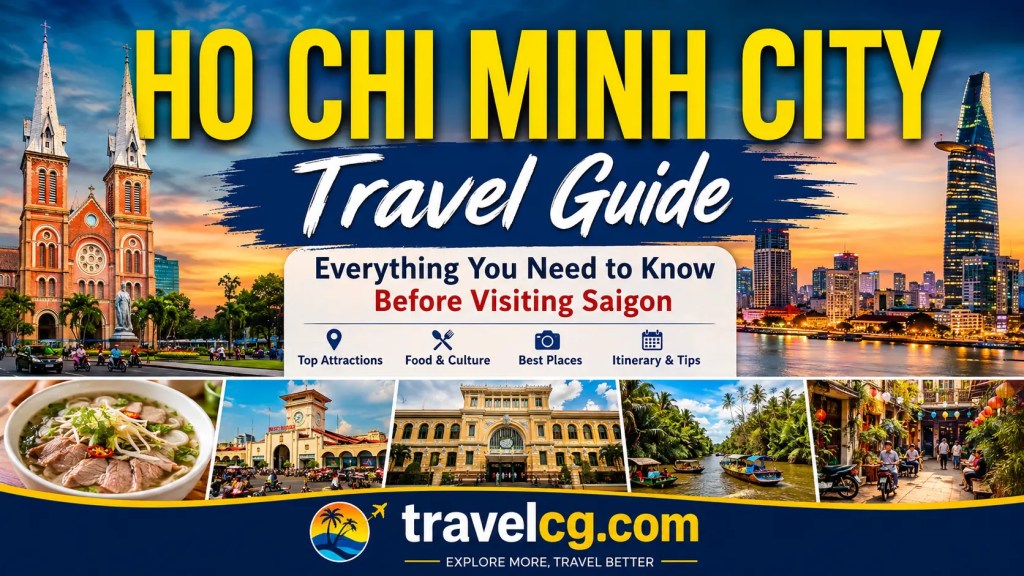
Ho Chi Minh City, formerly known as Saigon, is the largest and one of the most energetic cities in Vietnam. Located in the southern part of the country, this fascinating metropolis combines French colonial architecture, Vietnamese traditions, modern skyscrapers, historic landmarks, lively markets, colorful street life, and an extraordinary food culture. It is also the economic and commercial heart of Vietnam and an important gateway to southern destinations such as the Mekong Delta and the Cu Chi Tunnels.
For first-time visitors, Ho Chi Minh City can feel overwhelming because of its constant traffic, thousands of motorbikes, busy sidewalks, tropical heat, and fast-moving urban life. However, once you understand its neighborhoods and rhythm, the city becomes one of the most rewarding destinations in Southeast Asia.
Whether you are interested in history, architecture, shopping, nightlife, photography, food, culture, or day trips, Ho Chi Minh City offers something for almost every kind of traveler.
Where Is Ho Chi Minh City?
Ho Chi Minh City is situated in southern Vietnam near the Saigon River. It is the country’s major southern urban center and serves as a transportation hub for exploring southern Vietnam.
The city is commonly called Ho Chi Minh City or HCMC in English, while many locals and visitors continue to use the name Saigon. The name Saigon remains deeply connected with the city’s identity, especially when people talk about food, neighborhoods, cafés, culture, and everyday life.
The city is divided into numerous districts, but tourists generally spend most of their time in central areas such as District 1, District 3, District 5, District 4, and areas around Binh Thanh and Thao Dien.
Why Visit Ho Chi Minh City?
Ho Chi Minh City is very different from Vietnam’s capital, Hanoi. While Hanoi is known for its historic atmosphere, traditional architecture, and northern Vietnamese character, Ho Chi Minh City feels faster, more commercial, youthful, and cosmopolitan.
One of the city’s biggest attractions is its combination of old and new. Within a relatively short distance, you can see colonial buildings, historic museums, Buddhist and Taoist temples, modern shopping centers, luxury hotels, rooftop bars, street-food stalls, and enormous residential developments.
The city is particularly attractive to travelers who enjoy exploring independently. You can spend a morning visiting museums, an afternoon drinking Vietnamese coffee, an evening eating street food, and a late night exploring the city’s entertainment districts.
Best Time to Visit Ho Chi Minh City
Ho Chi Minh City has a tropical climate and remains warm throughout most of the year. Temperatures generally stay around the high twenties to low thirties Celsius, although conditions can feel hotter because of humidity.
The year can broadly be divided into a dry period and a rainy period.
The dry season generally runs from December to April. This period is usually considered the most comfortable for sightseeing because there is less rainfall and more sunshine. December and January can feel slightly more pleasant than the hottest months.
The rainy season generally extends from May to November. Rainfall often comes in the form of afternoon or evening showers rather than continuous rain throughout the entire day.
However, the rainy season should not automatically discourage you from visiting. Rain showers can be relatively short, and hotel prices and tourist crowds may sometimes be more manageable.
If comfortable sightseeing weather is your priority, December through April is generally the safest choice.
How Many Days Do You Need in Ho Chi Minh City?
A minimum of three full days is recommended for first-time visitors who want to experience the major attractions without rushing. Travelers who want to include day trips and explore different neighborhoods can comfortably spend four to five days or even longer.
A short visit can focus on the historic center, major museums, markets, food, and nightlife.
A longer stay allows you to add the Cu Chi Tunnels, Mekong Delta, Chinatown, local markets, parks, museums, cafés, shopping areas, and less-touristy neighborhoods.
Best Areas to Stay in Ho Chi Minh City
Choosing the right neighborhood can make a significant difference to your experience.
District 1
District 1 is the most convenient choice for many first-time visitors. Many major attractions, restaurants, cafés, shopping areas, hotels, and nightlife spots are located here.
It is particularly suitable if you want to walk to several famous landmarks and experience the central tourist atmosphere.
District 3
District 3 is close to District 1 but can provide a somewhat more local atmosphere. It has tree-lined streets, restaurants, cafés, historic buildings, and several interesting cultural attractions.
It can be an excellent choice for travelers who want central access without staying directly in the busiest tourist area.
District 5
District 5 is famous for Cholon, the city’s historic Chinatown. It is a great area for discovering Chinese-Vietnamese culture, traditional markets, temples, and local food.
Binh Thanh
Binh Thanh offers a mixture of local neighborhoods and modern developments. It can be convenient for travelers interested in modern accommodation and access to attractions around central Saigon.
Thao Dien
Thao Dien has become known for its international restaurants, cafés, boutique shops, modern apartments, and relaxed atmosphere. It is particularly popular with long-stay visitors and expatriates.
Top Tourist Attractions in Ho Chi Minh City
Ho Chi Minh City has a large number of attractions, but several landmarks should be at the top of a first-time visitor’s list.
War Remnants Museum
The War Remnants Museum is one of the city’s most important historical attractions. It presents exhibits related to the Vietnam War and its consequences.
The museum can be emotionally intense, so visitors should approach it with an open mind and allow enough time to absorb the historical material.
For anyone interested in understanding Vietnam’s modern history, this is an important stop.
Independence Palace
Independence Palace, also known as Reunification Palace, is another major historical landmark.
The building is associated with the political history of South Vietnam and the events surrounding the end of the Vietnam War. Visitors can explore its rooms, underground areas, meeting spaces, and historic architecture.
Its central location also makes it easy to combine with other attractions in District 1.
Notre-Dame Cathedral Basilica of Saigon
The cathedral is one of the best-known examples of French colonial architecture in Ho Chi Minh City.
Its location near other historic landmarks makes the surrounding area ideal for a walking tour. Visitors can combine it with the Central Post Office, Book Street, Independence Palace, and other attractions.
Saigon Central Post Office
The Central Post Office is one of the city’s most recognizable colonial buildings. Its architecture and interior make it an interesting stop for photographers and architecture lovers.
It is located close to Notre-Dame Cathedral, making it easy to visit both places during the same walk.
Ben Thanh Market
Ben Thanh Market is one of Ho Chi Minh City’s most famous markets and a popular destination for visitors looking for souvenirs, clothing, food, coffee, spices, and local products.
The market can be busy and crowded, but that is part of the experience. If you want to shop, comparing prices and politely negotiating can be useful.
Even if you are not interested in shopping, visiting the market provides an introduction to the city’s commercial culture.
Nguyen Hue Walking Street
Nguyen Hue Walking Street is one of the city’s most popular public spaces. It becomes particularly lively in the evening when locals and visitors gather to walk, socialize, take photographs, and enjoy the surrounding restaurants and cafés.
The street is surrounded by modern buildings and historic architecture, creating an interesting contrast.
Saigon Opera House
The Saigon Opera House is another impressive example of French colonial architecture. Its elegant exterior makes it a popular photography location, particularly for visitors exploring the central city.
Jade Emperor Pagoda
The Jade Emperor Pagoda offers a completely different atmosphere from the busy streets of central Ho Chi Minh City.
The temple is associated with traditional religious practices and features detailed statues, incense, decorations, and architectural elements. It is a worthwhile destination for travelers interested in Vietnamese culture and spirituality.
Explore Cholon and Chinatown
Cholon, located mainly in District 5, is one of the most culturally interesting parts of Ho Chi Minh City.
The area has a long Chinese-Vietnamese history and is known for traditional markets, temples, herbal medicine shops, food stalls, and distinctive architecture.
Binh Tay Market is one of the area’s major landmarks. Walking around Cholon can provide a different perspective on Ho Chi Minh City compared with the modern streets of District 1.
Travelers interested in food should also explore the local restaurants and small eateries in this area.
Experience Vietnamese Street Food
Food is one of the biggest reasons to visit Ho Chi Minh City.
The city has an enormous range of restaurants, food stalls, cafés, bakeries, markets, and informal sidewalk eateries.
Some dishes worth trying include pho, banh mi, com tam, goi cuon, banh xeo, hu tieu, and various Vietnamese noodle and rice dishes.
Banh Mi
Banh mi is one of Vietnam’s most famous foods. It combines a crisp baguette with fillings such as meat, pâté, vegetables, herbs, and sauces.
Ho Chi Minh City has countless variations, from simple street versions to more elaborate restaurant interpretations.
Com Tam
Com tam, or broken rice, is strongly associated with southern Vietnam. It is commonly served with grilled pork and other accompaniments.
It is an excellent choice for travelers who want a filling and affordable local meal.
Pho
Although pho is strongly associated with northern Vietnam, it is widely available in Ho Chi Minh City. Southern-style pho can differ from northern versions in terms of herbs, accompaniments, sweetness, and serving style.
Vietnamese Coffee
Coffee culture is an essential part of the Ho Chi Minh City experience.
Try traditional Vietnamese coffee with condensed milk, iced coffee, or other local variations. Cafés range from tiny street establishments to stylish modern coffee shops.
Shopping in Ho Chi Minh City
Ho Chi Minh City offers shopping experiences for almost every budget.
Ben Thanh Market is useful for souvenirs and traditional products. Modern shopping centers offer international brands, electronics, fashion, beauty products, and restaurants.
Local markets can be more interesting if you want to observe everyday Vietnamese life.
Popular souvenirs include Vietnamese coffee, tea, handicrafts, lacquerware, traditional textiles, spices, and locally produced snacks.
When shopping in traditional markets, prices may not always be fixed, so polite bargaining can be part of the experience.
Ho Chi Minh City Nightlife
The city does not become quiet after sunset.
Nguyen Hue Walking Street is popular for evening walks, while rooftop bars provide views over the city skyline.
Bui Vien Street is one of the most famous nightlife areas and is particularly popular among backpackers and younger travelers. It is energetic, noisy, crowded, and full of restaurants, bars, music venues, and late-night activity.
Travelers looking for a quieter evening can choose rooftop restaurants, sophisticated cocktail bars, cafés, or riverside dining instead.
Cu Chi Tunnels Day Trip
The Cu Chi Tunnels are one of the most famous excursions from Ho Chi Minh City.
Located northwest of the city, the tunnel system represents an important part of Vietnam’s wartime history. The underground network included areas used for movement, communication, shelter, storage, medical activities, and daily life.
There are two major visitor areas, Ben Dinh and Ben Duoc. Ben Dinh is generally more convenient for visitors coming from central Ho Chi Minh City, while Ben Duoc is farther away and is often considered a quieter experience.
A typical visit can include historical explanations, underground passages, demonstrations, exhibits, and information about life during the war.
People who dislike confined spaces should be cautious about entering the narrow tunnel sections.
Mekong Delta Day Trip
Another popular excursion from Ho Chi Minh City is the Mekong Delta.
The region is known for rivers, canals, tropical vegetation, villages, agriculture, markets, boats, and distinctive southern Vietnamese culture.
Many organized excursions visit areas around My Tho and Ben Tre. Depending on the tour, visitors may experience boat rides, local food, fruit gardens, small villages, traditional crafts, and river landscapes.
If you have enough time, spending more than one day in the Mekong Delta can provide a more relaxed experience than trying to see everything in a rushed day trip.
Transportation in Ho Chi Minh City
Transportation is one of the most important things to understand before visiting.
Tan Son Nhat International Airport is the city’s main airport and receives both international and domestic flights. Ho Chi Minh City can also be reached by train and long-distance bus from other parts of Vietnam.
Within the city, travelers can use taxis, ride-hailing services, buses, motorcycles, and walking.
Ride-hailing apps are particularly convenient for many tourists because they allow travelers to see the estimated fare before beginning the journey.
Walking is excellent in central areas, but crossing major roads can initially feel intimidating because of the large number of motorcycles.
When crossing a road, move steadily and predictably rather than suddenly changing direction.
Is Ho Chi Minh City Safe for Tourists?
Ho Chi Minh City is visited by large numbers of international travelers, but normal urban precautions are still important.
Keep your phone and wallet secure in crowded areas. Avoid displaying expensive belongings unnecessarily, particularly in very busy streets and markets.
Be particularly careful with bags and mobile phones near roads because passing motorcycles can create opportunities for snatch theft.
Use established transportation services and keep important documents secure.
As with any major tourist destination, basic awareness can significantly reduce problems.
What to Wear in Ho Chi Minh City
Because of the tropical climate, lightweight and breathable clothing is usually the most comfortable choice.
Comfortable walking shoes are important because exploring the city often involves considerable walking.
Carry an umbrella or lightweight rain protection during the wet season.
When visiting temples and religious sites, modest clothing is appropriate. Avoid excessively revealing clothes when entering religious or culturally sensitive places.
Sun protection is also important. Sunglasses, sunscreen, and a hat can make daytime sightseeing much more comfortable.
Money and Budget
Ho Chi Minh City can accommodate both budget travelers and luxury tourists.
Backpackers can find affordable accommodation, inexpensive local food, and low-cost transportation.
Mid-range travelers have a large selection of comfortable hotels and restaurants.
Luxury travelers can choose five-star hotels, fine-dining restaurants, rooftop venues, private tours, and premium transportation.
One of the best ways to control expenses is to eat where local residents eat. Street food and neighborhood restaurants can offer excellent meals without the prices associated with high-end tourist establishments.
Suggested 3-Day Ho Chi Minh City Itinerary
Day 1: Historic Ho Chi Minh City
Begin with the Independence Palace and War Remnants Museum.
Continue toward Notre-Dame Cathedral and the Central Post Office. Walk around the surrounding streets and enjoy Vietnamese coffee.
In the evening, explore Nguyen Hue Walking Street and have dinner at a local restaurant.
Day 2: Markets, Culture and Chinatown
Start at Ben Thanh Market and explore the surrounding streets.
Later, visit the Jade Emperor Pagoda or another cultural attraction.
Spend the afternoon exploring Cholon and Binh Tay Market.
In the evening, enjoy Vietnamese street food or explore the city’s rooftop dining scene.
Day 3: Choose a Day Trip
Dedicate the third day to either the Cu Chi Tunnels or the Mekong Delta.
Choose Cu Chi if you are especially interested in history and the Vietnam War.
Choose the Mekong Delta if you prefer rivers, countryside, agriculture, villages, and nature.
If you have four or five days, you can visit both without rushing the rest of your city experience.
Photography in Ho Chi Minh City
Ho Chi Minh City offers excellent opportunities for photography.
Colonial buildings provide architectural subjects, while markets and street food create opportunities for documenting everyday life.
The city’s skyline is particularly attractive around sunset and after dark.
Nguyen Hue Walking Street, historic District 1, Cholon, local markets, rooftop viewpoints, and riverside areas can all produce different photographic experiences.
Early morning can be especially interesting because the city is active but generally less crowded than during the middle of the day.
Useful Travel Tips
Start sightseeing early whenever possible. Morning temperatures are generally more comfortable, and popular attractions can become busy later in the day.
Carry drinking water because the tropical climate can make walking tiring.
Keep small amounts of Vietnamese currency available for local food, markets, and small purchases.
Learn a few basic Vietnamese words. Even simple greetings and thank-you phrases can make interactions more pleasant.
Do not try to see every attraction in one day. Ho Chi Minh City is best experienced by combining famous landmarks with ordinary streets, cafés, markets, and neighborhood restaurants.
Allow extra travel time because traffic can be unpredictable.
If you are planning a day trip, remember that road travel can take considerably longer than the distance on a map suggests.
Who Should Visit Ho Chi Minh City?
Ho Chi Minh City is ideal for travelers who enjoy history, food, photography, architecture, shopping, nightlife, culture, and urban exploration.
History lovers can explore museums, palaces, colonial landmarks, and the Cu Chi Tunnels.
Food lovers can spend days exploring Vietnamese cuisine.
Photographers will find endless subjects in markets, temples, architecture, streets, and modern skyscrapers.
Families can combine museums, parks, cultural attractions, shopping, and food experiences.
Backpackers will find affordable accommodation, transportation, restaurants, and nightlife.
Couples can enjoy cafés, rooftop dining, river views, evening walks, and cultural experiences.
Final Thoughts
Ho Chi Minh City is not a destination that reveals everything immediately. At first, the traffic, noise, heat, and enormous number of motorcycles can seem chaotic. But after spending some time here, that apparent chaos becomes part of the city’s personality.
The real charm of Ho Chi Minh City lies in its contrasts. Historic buildings stand beside modern skyscrapers. Traditional markets operate close to luxury shopping centers. Quiet temples exist only a short distance from crowded streets. Street vendors serve inexpensive meals while sophisticated restaurants create modern interpretations of Vietnamese cuisine.
For a first visit, three days can cover the major attractions, while four to five days allow you to experience the city at a more relaxed pace and add a day trip. The official tourism guidance similarly recommends around three days for the city itself and additional time if you want to explore destinations outside the urban center.
Ultimately, Ho Chi Minh City is more than a collection of tourist attractions. It is a living, constantly changing city where history, tradition, commerce, food, and modern Vietnamese life exist side by side. If you slow down enough to explore beyond the famous landmarks, drink a local coffee, wander through a neighborhood market, sample street food, and watch the city come alive in the evening, you will discover why Saigon remains one of Southeast Asia’s most memorable urban destinations.


Leave a Reply