
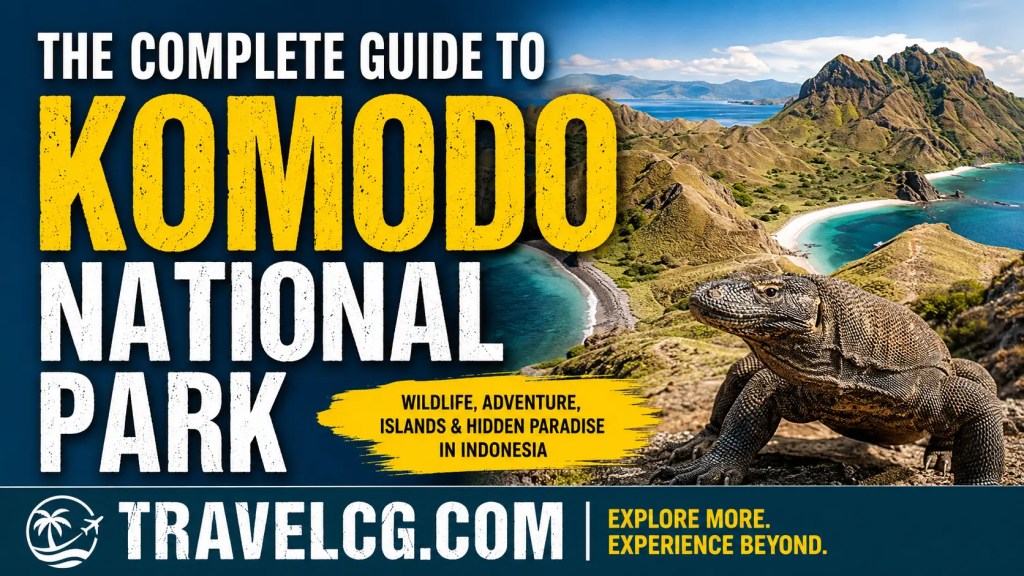
Komodo National Park is one of the world’s most extraordinary natural destinations. Located in Indonesia between the islands of Sumbawa and Flores, this UNESCO World Heritage Site is famous for being the only place on Earth where you can see the legendary Komodo dragon in its natural habitat. However, the park is much more than just giant lizards. It is home to breathtaking islands, pink beaches, crystal-clear waters, colorful coral reefs, diverse marine life, scenic hiking trails, and unforgettable sunset viewpoints.
Whether you are an adventure traveler, wildlife enthusiast, scuba diver, photographer, or someone looking for a once-in-a-lifetime experience, Komodo National Park offers something truly unique. This guide covers everything you need to know before planning your visit.
Introduction to Komodo National Park
Komodo National Park was established in 1980 to protect the endangered Komodo dragon. Today, it covers approximately 1,733 square kilometers, including both land and marine ecosystems. The park consists of more than 25 islands, with Komodo Island, Rinca Island, and Padar Island being the most popular.
The marine area surrounding these islands is part of the Coral Triangle, one of the richest marine biodiversity regions in the world. Visitors can experience both spectacular wildlife encounters on land and world-class snorkeling and diving underwater.
Why is Komodo National Park Famous?
Komodo National Park is internationally recognized for several reasons:
- Home of the world’s largest living lizard—the Komodo dragon.
- UNESCO World Heritage Site.
- Exceptional coral reefs with hundreds of fish species.
- Pink-colored beaches created by red coral fragments.
- Stunning viewpoints overlooking turquoise bays.
- Excellent snorkeling and scuba diving.
- Rich biodiversity on land and underwater.
- Dramatic volcanic landscapes and rugged hills.
History of Komodo National Park
For centuries, local communities coexisted with Komodo dragons. The outside world became aware of these giant reptiles in the early 20th century after Dutch explorers documented their existence.
Recognizing the importance of conserving the species, Indonesia established Komodo National Park in 1980. In 1991, UNESCO declared it a World Heritage Site because of its outstanding natural value.
Today, conservation efforts focus not only on protecting Komodo dragons but also on preserving the park’s marine ecosystem and supporting sustainable tourism.
Best Time to Visit
Komodo National Park can be visited throughout the year, but weather conditions vary.
April to June
This is one of the best seasons because:
- Green landscapes after the rainy season.
- Pleasant temperatures.
- Calm sea conditions.
- Excellent photography opportunities.
July to August
Peak tourist season offers:
- Sunny weather.
- Great visibility for diving.
- Comfortable hiking conditions.
However, expect larger crowds and higher prices.
September to November
Many travelers consider this an excellent time because:
- Fewer tourists.
- Warm weather.
- Clear waters for snorkeling.
- Beautiful sunsets.
December to March
This is the rainy season. Some boat trips may be affected by weather conditions, although travel remains possible.
How to Reach Komodo National Park
The nearest gateway is Labuan Bajo on Flores Island.
Most international travelers first fly to Bali or Jakarta and then take a domestic flight to Labuan Bajo.
From Labuan Bajo Harbor, visitors can join:
- Day trips
- Speedboat tours
- Liveaboard cruises
- Private charter boats
Boat rides to the park generally take between one and three hours depending on the destination.
Major Islands Inside the Park
Komodo Island
This is the largest island where visitors can observe Komodo dragons in their natural environment.
Highlights include:
- Guided dragon trekking
- Scenic hills
- Wildlife viewing
- Beautiful coastal landscapes
Rinca Island
Rinca Island also has a large Komodo dragon population.
Advantages include:
- Easier hiking trails
- Excellent wildlife sightings
- Less crowded than Komodo Island
- Beautiful viewpoints
Padar Island
Padar Island is famous for its iconic panoramic viewpoint.
A short but steep hike rewards visitors with one of Indonesia’s most photographed landscapes, featuring three bays with different-colored beaches.
The Legendary Komodo Dragon
The Komodo dragon is the world’s largest living lizard.
Interesting facts include:
- Length up to 3 meters.
- Weight over 70 kilograms.
- Carnivorous predator.
- Excellent sense of smell.
- Can detect prey from several kilometers away.
- Powerful bite.
- Surprisingly fast despite their size.
Although they appear slow, Komodo dragons can run quickly for short distances.
Visitors must always stay with trained park rangers.
Wildlife Beyond Komodo Dragons
The park supports an impressive variety of wildlife.
Mammals include:
- Wild boar
- Timor deer
- Water buffalo
- Long-tailed macaques
Birds include:
- Sea eagles
- Cockatoos
- Kingfishers
- Herons
- Megapodes
Reptiles include:
- Snakes
- Geckos
- Sea turtles
Marine life includes:
- Manta rays
- Reef sharks
- Dolphins
- Whales (seasonally)
- Dugongs
- Sea turtles
- Octopus
- Giant clams
Marine Biodiversity
Komodo National Park is among the world’s finest diving destinations.
The underwater ecosystem includes:
- More than 1,000 fish species.
- Hundreds of coral species.
- Numerous sponge varieties.
- Colorful nudibranchs.
- Reef sharks.
- Eagle rays.
- Manta rays.
- Sea turtles.
Strong ocean currents bring nutrient-rich water, creating an incredibly healthy marine ecosystem.
Best Snorkeling Spots
Popular snorkeling locations include:
Pink Beach
Known for its unique pink-colored sand and crystal-clear water.
Ideal for:
- Swimming
- Snorkeling
- Relaxing
- Photography
Taka Makassar
A beautiful white sandbank surrounded by turquoise water.
Visitors often spot:
- Manta rays
- Tropical fish
- Coral gardens
Kanawa Island
Perfect for beginners due to calm waters and healthy coral reefs.
Best Diving Sites
Experienced divers love Komodo for its incredible biodiversity.
Popular dive sites include:
- Batu Bolong
- Castle Rock
- Crystal Rock
- Manta Point
- Tatawa Besar
These locations offer opportunities to encounter:
- Reef sharks
- Giant trevallies
- Napoleon wrasse
- Barracudas
- Manta rays
- Sea turtles
Hiking Adventures
Several islands provide rewarding hiking experiences.
Popular hikes include:
Padar Island Viewpoint
This short trek is famous for:
- Sunrise views
- Sunset photography
- Panoramic island scenery
Komodo Island Trek
Available in different lengths:
- Short walk
- Medium trek
- Long trek
Park rangers explain the island’s wildlife, ecology, and conservation efforts during the hike.
Pink Beach
Pink Beach is one of only a few naturally pink beaches in the world.
The unusual color comes from tiny fragments of red coral mixed with white sand.
Activities include:
- Swimming
- Snorkeling
- Beach photography
- Sunbathing
Photography Opportunities
Photographers will find endless inspiration.
Best subjects include:
- Komodo dragons
- Padar Island viewpoint
- Pink Beach
- Coral reefs
- Manta rays
- Traditional boats
- Sunrise
- Sunset
- Starry night skies
Drone use may require special permission.
Local Communities
Small fishing communities live on several islands surrounding the park.
Many residents depend on:
- Fishing
- Tourism
- Boat operations
- Handicrafts
- Hospitality services
Responsible tourism helps support local livelihoods while encouraging conservation.
Safety Tips
Always follow park regulations.
Important guidelines include:
- Never approach Komodo dragons alone.
- Stay with licensed guides.
- Do not feed wildlife.
- Carry sufficient drinking water.
- Wear comfortable hiking shoes.
- Apply sunscreen regularly.
- Bring insect repellent.
- Follow all ranger instructions.
- Stay on designated trails.
- Respect marine life while snorkeling or diving.
What to Pack
Essential items include:
- Passport
- Sunglasses
- Sun hat
- Sunscreen
- Swimwear
- Hiking shoes
- Lightweight clothing
- Waterproof bag
- Camera
- Power bank
- Reusable water bottle
- Snorkeling gear (optional)
- Motion sickness medicine for boat trips
Responsible Tourism
Help preserve the park by:
- Avoiding single-use plastics.
- Not touching coral reefs.
- Maintaining distance from wildlife.
- Taking all trash back.
- Supporting local businesses.
- Following park rules.
- Respecting local customs.
Small actions contribute significantly to protecting this unique ecosystem.
Sample One-Day Itinerary
A typical day trip may include:
- Early morning departure from Labuan Bajo.
- Sunrise hike on Padar Island.
- Visit to Pink Beach.
- Snorkeling at Taka Makassar.
- Manta ray spotting at Manta Point.
- Guided trek on Komodo or Rinca Island.
- Sunset cruise back to Labuan Bajo.
Budget Overview
Your travel expenses depend on your style of travel.
Budget travelers can join shared day tours.
Mid-range visitors often choose speedboat excursions with lunch included.
Luxury travelers usually prefer multi-day liveaboard cruises featuring premium cabins, gourmet meals, diving facilities, and access to remote islands.
Additional costs may include:
- National park entrance fees
- Ranger fees
- Camera permits (where applicable)
- Diving equipment rental
- Personal expenses
- Souvenirs
Final Thoughts
Komodo National Park is one of the most spectacular destinations in Southeast Asia, combining rare wildlife, dramatic volcanic islands, pristine beaches, and some of the world’s richest marine ecosystems. From standing just meters away from a mighty Komodo dragon to hiking the iconic viewpoints of Padar Island or swimming alongside graceful manta rays, every experience here is unforgettable.
Whether you visit for a single day or embark on a multi-day island-hopping adventure, Komodo National Park offers memories that last a lifetime. With responsible tourism and careful conservation, this remarkable natural treasure continues to inspire travelers while protecting one of the planet’s most extraordinary ecosystems for future generations.



















Leave a Reply