
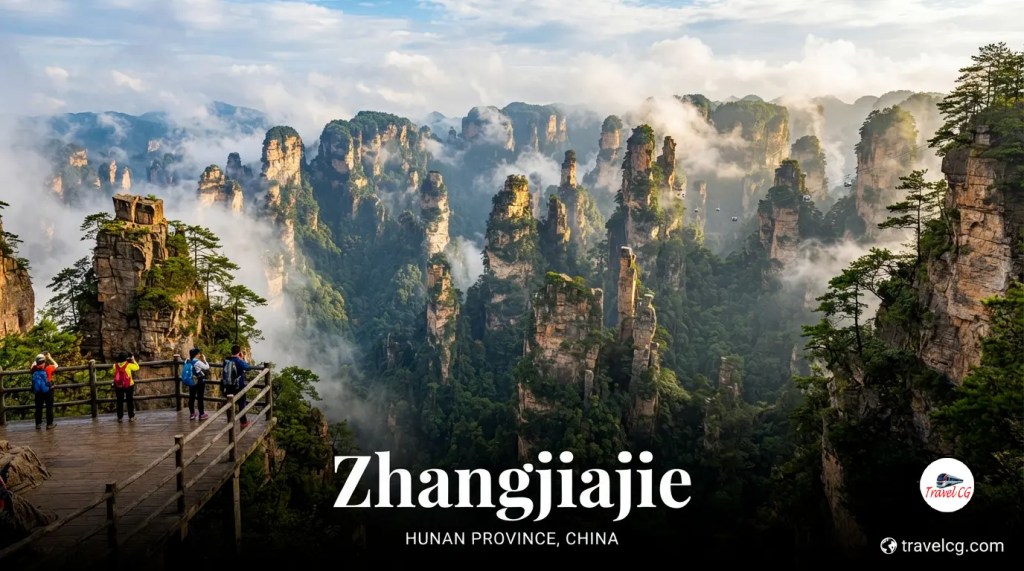
Zhangjiajie is one of the most spectacular natural destinations in China, famous for its towering sandstone pillars, mist-covered mountains, deep valleys, forests, caves, glass bridges, and dramatic landscapes. Located in Hunan Province in central-southern China, Zhangjiajie attracts travelers who want to experience some of the country’s most unusual and breathtaking scenery.
The destination became especially famous internationally because the landscape of Zhangjiajie National Forest Park is often associated with the floating mountains shown in the movie Avatar. Although the movie’s fictional world is not a direct representation of Zhangjiajie, the resemblance helped introduce the area’s distinctive quartz-sandstone formations to travelers around the world.
A trip to Zhangjiajie is not simply about visiting one viewpoint. The region contains several major attractions spread across a large area, including Zhangjiajie National Forest Park, Tianzi Mountain, Yuanjiajie, Yangjiajie, Tianmen Mountain, the Zhangjiajie Grand Canyon, and several scenic valleys and caves. Because of this, planning your itinerary in advance can make a major difference.
Where Is Zhangjiajie?
Zhangjiajie is in Hunan Province, China. The city serves as the main gateway to several important scenic areas in the surrounding mountains.
The most famous attraction is Zhangjiajie National Forest Park, which forms part of the larger Wulingyuan Scenic Area. Wulingyuan is recognized for its exceptional natural landscape of thousands of sandstone and quartzite peaks, ravines, streams, waterfalls, caves, and dense vegetation.
Zhangjiajie itself is a city, while many of the major attractions are located outside the urban center. This means travelers should distinguish between staying in Zhangjiajie city and staying near Wulingyuan.
For sightseeing, Wulingyuan is often more convenient because it provides easier access to Zhangjiajie National Forest Park and several of the area’s major scenic zones.
Why Is Zhangjiajie Famous?
Zhangjiajie is primarily famous for its tall, narrow rock pillars rising dramatically from forested valleys.
These formations were shaped over millions of years through geological processes, including erosion and weathering. The result is a landscape that looks very different from traditional mountain destinations.
The scenery can change significantly depending on weather conditions. On a clear day, the pillars and valleys can appear sharp and enormous. On misty or rainy days, clouds and fog can surround the peaks, creating an almost surreal atmosphere.
Apart from the natural scenery, Zhangjiajie is also known for:
- Zhangjiajie National Forest Park
- Yuanjiajie
- Tianzi Mountain
- Yangjiajie
- Tianmen Mountain
- Tianmen Cave
- The famous Tianmen Mountain road
- Zhangjiajie Grand Canyon
- Glass bridge experiences
- Cable cars and mountain elevators
- Hiking trails
- Scenic mountain roads
- Traditional local food and Hunan cuisine
Best Time to Visit Zhangjiajie
Zhangjiajie can be visited throughout much of the year, but the experience varies considerably by season.
Spring
Spring is a beautiful period to visit because the forests become greener and temperatures are generally comfortable. Rain and mist are common, which can actually enhance the atmosphere of the mountains.
March to May can be a good period for travelers who prefer pleasant temperatures and natural scenery.
Summer
Summer is warm and can be humid, particularly in lower areas. Rainfall can also be frequent.
The advantage is that the vegetation is lush and green. Waterfalls and streams can be particularly attractive after rainfall.
However, summer is also a popular travel period, so major attractions may become crowded.
Autumn
September to November is often considered one of the most attractive periods for scenery and outdoor activities. Temperatures are generally more comfortable than in the hottest months, while forests can take on different colors later in the season.
Clear days can provide excellent visibility from the mountain viewpoints.
Winter
Winter is quieter than the main tourist seasons. Temperatures can be cold at higher elevations, but occasional snow or frost can transform the landscape.
Travelers visiting in winter should prepare for cold mountain conditions and possible changes to transportation or attraction operations due to weather.
How Many Days Do You Need in Zhangjiajie?
For a first visit, around 4 to 5 days is a practical amount of time.
A shorter trip of 2 to 3 days can cover the highlights, but it may feel rushed.
A longer trip of 5 to 7 days allows you to explore at a slower pace and include additional hiking routes, scenic areas, and cultural experiences.
A possible itinerary could look like this:
Day 1: Arrival and explore Wulingyuan
Day 2: Zhangjiajie National Forest Park and Yuanjiajie
Day 3: Tianzi Mountain and Yangjiajie
Day 4: Tianmen Mountain and Tianmen Cave
Day 5: Zhangjiajie Grand Canyon or additional hiking and local exploration
The exact order should depend on weather, attraction operating conditions, and where you stay.
Zhangjiajie National Forest Park
Zhangjiajie National Forest Park is the main reason many international travelers visit the region.
The park contains an enormous collection of vertical sandstone pillars surrounded by dense vegetation. Walking through the park can make the mountains appear even more dramatic because the viewpoints change constantly.
Some sections can be explored through hiking trails, while others are connected by shuttle buses, cable cars, elevators, or other forms of scenic transportation.
Because the park is large, trying to see everything in one day is generally not practical.
Comfortable walking shoes are essential because you can spend several hours walking, climbing stairs, and moving between viewpoints.
Yuanjiajie
Yuanjiajie is one of the most famous scenic areas within the Zhangjiajie region.
It is known for dramatic vertical rock formations and panoramic viewpoints. The area became particularly popular because of its resemblance to the otherworldly mountain scenery associated with Avatar.
One of the most famous formations in the area is often associated with the “Avatar mountains” nickname.
Yuanjiajie can become very crowded during peak periods, especially around popular viewpoints. Visiting early in the day can make the experience more comfortable.
Tianzi Mountain
Tianzi Mountain offers some of the most impressive panoramic views in the region.
From the viewpoints, visitors can see numerous sandstone peaks stretching into the distance. Mist and clouds often move between the mountains, making the landscape look dramatically different from one hour to another.
Tianzi Mountain is particularly attractive for photographers because changing weather can produce completely different compositions.
A cable car is available in the area, making it possible to experience the mountain scenery without relying entirely on long hikes.
Yangjiajie
Yangjiajie is another scenic section of the Zhangjiajie area and is often associated with more adventurous hiking.
The landscape includes steep mountains, cliffs, forests, and unusual rock formations.
Compared with some of the most famous tourist viewpoints, certain sections of Yangjiajie can feel more rugged and less straightforward.
Travelers interested in hiking should consider including Yangjiajie in their itinerary.
Tianmen Mountain
Tianmen Mountain is one of Zhangjiajie’s most famous attractions, but it is separate from Zhangjiajie National Forest Park.
The mountain is known for its spectacular views, cable car journey, cliffside walkways, and the enormous natural opening known as Tianmen Cave.
The cable car ride itself is an attraction. As it climbs toward the mountain, passengers can see the city, valleys, winding roads, and steep mountain terrain below.
Tianmen Mountain is often one of the most memorable experiences for first-time visitors.
Tianmen Cave
Tianmen Cave is a massive natural opening in the mountain.
The cave can be reached through a steep staircase containing hundreds of steps. The climb can be physically demanding, particularly for travelers who are not accustomed to extended stair climbing.
The scale of the opening becomes especially impressive when viewed from the surrounding mountain landscape.
Weather conditions can affect visibility, so a cloudy day may provide a very different experience from a clear one.
Zhangjiajie Grand Canyon and Glass Bridge
Another major attraction in the region is Zhangjiajie Grand Canyon.
The area is known for dramatic cliffs, forested landscapes, walking paths, and the famous glass bridge.
The glass bridge is suspended high above the canyon and offers views directly downward through transparent sections.
For people uncomfortable with heights, the experience can be intimidating. For others, it is one of the most exciting activities in Zhangjiajie.
The Grand Canyon generally requires separate planning from Zhangjiajie National Forest Park because it is a different attraction.
How to Get to Zhangjiajie
Zhangjiajie can be reached by air and rail.
Zhangjiajie Hehua International Airport is the main airport serving the area. Domestic flights connect the region with several major Chinese cities, although flight availability can vary by season.
High-speed and conventional rail services also connect Zhangjiajie with other parts of China.
Travelers arriving from major cities should check the specific train or flight schedule for their travel dates because routes and frequencies can change.
Once you arrive, local buses, taxis, ride-hailing services, private transfers, and tour transportation can be used depending on your itinerary.
Where to Stay in Zhangjiajie
Choosing the right area to stay is important.
Wulingyuan
Wulingyuan is usually convenient for travelers whose main purpose is exploring Zhangjiajie National Forest Park.
It has hotels, guesthouses, restaurants, shops, and transportation options.
Staying here can reduce the amount of time spent traveling to the national park each morning.
Zhangjiajie City
Zhangjiajie city is useful for travelers arriving by train or plane and for those planning to visit Tianmen Mountain.
The city has a wider selection of hotels and restaurants.
However, if your main focus is several days inside Wulingyuan, staying in the city may involve additional daily travel.
What to Eat in Zhangjiajie
Zhangjiajie is part of Hunan Province, which is famous for spicy and strongly flavored food.
Some local dishes and ingredients you may encounter include:
- Spicy grilled fish
- Hunan-style stir-fried dishes
- Smoked meats
- Rice noodles
- Tofu dishes
- Pickled vegetables
- Local mushrooms
- Spicy chicken
- Fresh mountain vegetables
- Various rice-based dishes
Hunan cuisine is traditionally known for bold flavors and chili. If you do not eat spicy food, learn a few useful Chinese phrases for requesting less spice.
Vegetarian travelers should also clearly communicate their dietary requirements because meat, meat stock, or animal-based ingredients can appear in dishes that may initially look vegetarian.
What to Pack for Zhangjiajie
Packing correctly is important because you may spend long periods outdoors.
Recommended items include:
- Comfortable walking shoes
- Lightweight backpack
- Rain jacket or compact umbrella
- Reusable water bottle
- Comfortable clothing
- Warm layers during colder months
- Sun protection
- Hat or cap
- Sunglasses
- Portable phone charger
- Basic medicines
- Snacks
- Identification documents
- Offline maps or downloaded travel information
Good footwear is particularly important because many routes involve stairs and uneven surfaces.
Is Zhangjiajie Suitable for Families?
Yes, Zhangjiajie can be visited by families, but the itinerary should be adjusted according to the age and mobility of children.
Cable cars, scenic buses, elevators, and other transportation options can reduce the amount of walking required in some areas.
However, parents should remember that mountain attractions involve stairs, steep sections, crowds, and long walking distances.
Families with young children should avoid creating an overly ambitious itinerary.
Is Zhangjiajie Suitable for Elderly Travelers?
It can be, provided the itinerary is planned carefully.
Not every scenic area requires intense hiking, and transportation systems can make some attractions accessible.
However, travelers with mobility limitations should check the walking and stair requirements of individual attractions before visiting.
A slower itinerary with fewer attractions per day is usually more comfortable.
Photography Tips for Zhangjiajie
Zhangjiajie’s landscape is ideal for photography.
Early morning can be particularly atmospheric because mist often surrounds the mountains.
After rainfall, the scenery can appear especially dramatic, although wet paths require extra caution.
A wide-angle lens is useful for capturing the scale of the landscape, while a telephoto lens can isolate individual peaks in the distance.
Do not spend the entire trip looking through a camera or phone. Some of Zhangjiajie’s most impressive moments come from simply standing at a viewpoint and watching clouds move through the mountains.
Important Travel Tips
There are several things travelers should keep in mind.
First, Zhangjiajie is much larger than it may appear on a map. Attractions that seem close together may require significant travel time.
Second, weather can change quickly in the mountains. A clear morning can become cloudy or rainy later in the day.
Third, popular attractions can become extremely busy during Chinese public holidays and peak vacation periods.
Fourth, comfortable footwear matters more than fashionable footwear.
Fifth, do not underestimate the amount of walking involved. Even when cable cars and buses are available, you may still walk several kilometers during a sightseeing day.
Finally, keep some flexibility in your itinerary. If a mountain is covered in clouds on one day, changing the order of attractions may give you a better experience later.
Zhangjiajie Travel Budget
The total cost depends heavily on your accommodation, transportation choices, food preferences, and whether you travel independently or with a tour.
A budget traveler can reduce costs by choosing guesthouses, local restaurants, public transportation, and a carefully planned itinerary.
Mid-range travelers can choose comfortable hotels, taxis or private transfers when convenient, and a combination of local and tourist-oriented restaurants.
Luxury travelers can choose higher-end hotels, private transportation, premium rooms, and customized tours.
The largest expenses are typically accommodation, transportation between attractions, attraction tickets, and meals.
It is wise to keep some extra budget available because mountain destinations can involve additional transportation costs.
How to Plan the Perfect Zhangjiajie Trip
The best approach is to divide your trip according to geographic areas rather than trying to visit attractions randomly.
Spend one or two days exploring Zhangjiajie National Forest Park and its major scenic areas.
Reserve another day for Tianmen Mountain.
If you have additional time, visit Zhangjiajie Grand Canyon or spend another day hiking and exploring less crowded areas.
Check the weather before each sightseeing day and keep your schedule flexible.
Most importantly, give yourself enough time. Zhangjiajie is not a destination that needs to be rushed.
Final Thoughts
Zhangjiajie is one of China’s most distinctive natural destinations. Its combination of towering sandstone pillars, deep valleys, forests, mist, cliffs, caves, cable cars, hiking routes, and dramatic viewpoints creates an experience unlike a typical city-based China trip.
For first-time visitors, the main priorities are usually Zhangjiajie National Forest Park, Yuanjiajie, Tianzi Mountain, and Tianmen Mountain. Travelers with more time can add Yangjiajie, Zhangjiajie Grand Canyon, the glass bridge, and additional hiking routes.
A trip environments, Zhangjiajie offers plenty to explore. The combination of spectacular geology and mountain scenery makes it a destination that can easily of four to five days provides a good balance between seeing the major attractions and having enough time to enjoy the scenery without constantly rushing from one place to another.
Whether you are interested in photography, hiking, dramatic landscapes, adventure activities, or simply experiencing one of China’s most unusual natural environments, Zhangjiajie offers plenty to explore. The combination of spectacular geology and mountain scenery makes it a destination that can easily become one of the most memorable parts of a trip to China.




Leave a Reply