
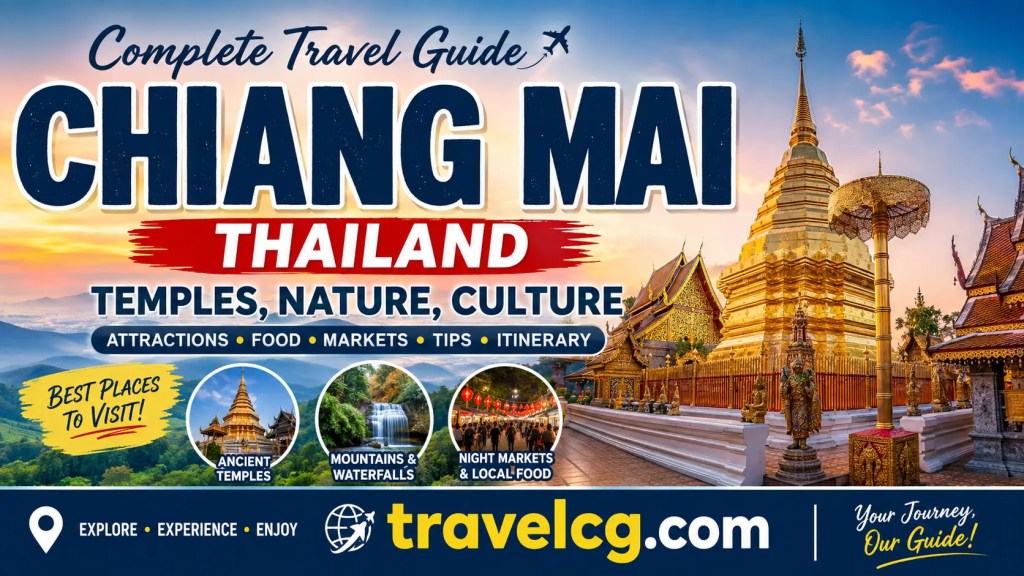
Chiang Mai is one of the most popular destinations in northern Thailand and is known for its ancient temples, mountain landscapes, traditional Lanna culture, night markets, cafés, delicious food, elephant experiences, and relaxed atmosphere. Unlike the busy beach destinations of southern Thailand, Chiang Mai offers a combination of history, nature, spirituality, adventure, and local culture.
Whether you are planning a short weekend trip, a family holiday, a honeymoon, a backpacking journey, or a longer stay in Thailand, Chiang Mai can be an excellent choice.
Where Is Chiang Mai?
Chiang Mai is located in northern Thailand, surrounded by mountains and forests. It is the largest city in northern Thailand and serves as an important cultural, economic, and tourism center of the region.
The historic heart of the city is the Old City, which is surrounded by remnants of an ancient moat and defensive walls. Outside the Old City, visitors can explore modern neighborhoods, markets, riverside areas, cafés, shopping streets, and mountain destinations.
Why Visit Chiang Mai?
Chiang Mai attracts travelers for many different reasons.
The city is particularly famous for:
- Historic Buddhist temples
- Lanna culture and architecture
- Mountain scenery
- Traditional Thai food
- Night markets
- Coffee shops and cafés
- Hiking and nature
- Local handicrafts
- Cultural festivals
- Elephant-related experiences
- Relaxed city life
- Affordable accommodation compared with many major tourist destinations
- Easy access to northern Thailand
Chiang Mai is also an excellent base for exploring nearby mountains, villages, waterfalls, national parks, and cultural attractions.
Best Time to Visit Chiang Mai
The best overall time to visit Chiang Mai is generally from November to February, when the weather is cooler and more comfortable for sightseeing.
November to February
This is generally considered the most pleasant period.
You can expect:
- Cooler mornings and evenings
- Comfortable daytime temperatures
- Good conditions for sightseeing
- Pleasant mountain trips
- Outdoor activities
- Festivals and cultural events
Accommodation can become more expensive during popular periods, so advance planning is useful.
March to May
These months are hotter.
Temperatures can become quite high, particularly during the afternoon. Travelers who are comfortable with heat can still enjoy Chiang Mai, but outdoor sightseeing may be more tiring.
The period can also experience seasonal haze and air-quality problems, especially around the burning season.
June to October
This is the rainy season.
Rain can occur frequently, but it does not necessarily rain continuously throughout the day. The countryside becomes greener, waterfalls can be impressive, and accommodation may be more affordable.
If you do not mind occasional rain, this season can provide a quieter Chiang Mai experience.
Chiang Mai Weather
Chiang Mai has a tropical climate with a noticeable cool season, hot season, and rainy season.
Approximate conditions are:
- Cool season: November to February
- Hot season: March to May
- Rainy season: June to October
Mountain areas can be considerably cooler than the city, especially early in the morning and during winter nights.
How to Reach Chiang Mai
Chiang Mai is well connected with other parts of Thailand.
By Air
Chiang Mai International Airport is the main airport serving the city.
Flights connect Chiang Mai with Bangkok and several other Thai and international destinations.
Flying is usually the fastest option for travelers coming from Bangkok or distant parts of Thailand.
By Train
Chiang Mai is connected with Bangkok by railway.
The train journey is much longer than flying, but overnight trains can be an interesting travel experience.
Sleeper trains are particularly popular among travelers who want to combine transportation with the experience of traveling through Thailand.
By Bus
Long-distance buses connect Chiang Mai with Bangkok and other northern and central Thai destinations.
Bus travel can be useful for budget travelers, although journey times are considerably longer than flying.
Getting Around Chiang Mai
Chiang Mai is relatively easy to explore.
Walking
Walking is ideal inside the Old City, especially around temple areas, cafés, markets, and smaller streets.
Songthaew
Songthaews are shared pickup trucks commonly used as local transportation.
They can be an inexpensive way to travel around the city, although fares and routes may vary.
Tuk-Tuk
Tuk-tuks are useful for short journeys and provide a traditional Thai transportation experience.
Agree on the price before starting the journey.
Motorbike
Motorbikes are popular among experienced travelers and provide flexibility for exploring areas outside the city.
However, only ride if you are legally permitted, properly licensed, experienced, and comfortable with local traffic conditions.
Ride-Hailing and Taxis
Ride-hailing services and taxis can be convenient for travelers who prefer fixed or app-based transportation.
Best Places to Visit in Chiang Mai
Chiang Mai has a large variety of attractions.
Wat Phra That Doi Suthep
Wat Phra That Doi Suthep is one of Chiang Mai’s most famous landmarks.
The temple sits on Doi Suthep mountain and is particularly important in northern Thai Buddhism.
Visitors can enjoy:
- Golden temple architecture
- Religious artwork
- Mountain views
- City views
- Peaceful surroundings
- Traditional Buddhist atmosphere
The temple is especially beautiful around sunrise and sunset, although conditions can vary.
Chiang Mai Old City
The Old City is the historical heart of Chiang Mai.
It is an excellent place to explore on foot and contains numerous temples, traditional buildings, cafés, restaurants, markets, and small streets.
Some of the city’s most important temples are located within or close to the Old City.
Wat Chedi Luang
Wat Chedi Luang is famous for its enormous ancient chedi.
The structure has experienced damage over the centuries, but its scale remains impressive.
The temple complex provides an excellent introduction to Chiang Mai’s historical and religious heritage.
Wat Phra Singh
Wat Phra Singh is one of the most important temples in the Old City.
It is known for traditional Lanna architecture, beautiful details, and its religious significance.
The temple is especially interesting for travelers interested in Thai history, architecture, and Buddhism.
Wat Chiang Man
Wat Chiang Man is considered the oldest temple in Chiang Mai.
It is associated with the founding history of the city and contains important religious images and traditional architectural features.
Wat Suan Dok
Wat Suan Dok is another significant temple located west of the Old City.
Its large open grounds and distinctive white burial structures make it visually different from many other temples.
It can be a peaceful place to explore away from some of the busier tourist areas.
Doi Inthanon National Park
Doi Inthanon National Park is one of the most popular day trips from Chiang Mai.
It is home to Doi Inthanon, Thailand’s highest mountain.
The area offers:
- Mountain scenery
- Waterfalls
- Forest trails
- Viewpoints
- Cool temperatures
- Pagodas
- Birdwatching opportunities
- Nature experiences
Early mornings can be particularly cold compared with Chiang Mai city.
Twin Pagodas
The Twin Pagodas near Doi Inthanon are among the most recognizable attractions in the area.
They are surrounded by landscaped gardens and mountain scenery.
The location is particularly attractive for photography.
Wachirathan Waterfall
Wachirathan Waterfall is one of the most impressive waterfalls in Doi Inthanon National Park.
During the rainy season, the waterfall can be especially powerful.
Mae Sa Valley
Mae Sa Valley is located north of Chiang Mai and offers opportunities to experience nature and countryside landscapes.
The area contains attractions such as gardens, farms, waterfalls, and outdoor activities.
Mae Kampong Village
Mae Kampong is a mountain village surrounded by forests.
It is known for its traditional atmosphere, greenery, homestays, cafés, and mountain environment.
It is a good choice for travelers who want to experience a quieter side of northern Thailand.
Chiang Mai Night Bazaar
The Night Bazaar is one of Chiang Mai’s most popular shopping areas.
Visitors can find:
- Handicrafts
- Clothing
- Souvenirs
- Artwork
- Accessories
- Local products
- Street food
It is particularly lively in the evening.
Sunday Walking Street
The Sunday Walking Street is one of Chiang Mai’s most famous markets.
The area becomes lively with vendors selling food, handicrafts, clothing, artwork, and souvenirs.
Walking through the market is a good way to experience the city’s evening atmosphere.
Saturday Walking Street
The Saturday market provides another excellent opportunity to experience local shopping and street food.
It is particularly useful for travelers staying near the southern side of the Old City.
Warorot Market
Warorot Market is a traditional market where visitors can experience a more local shopping environment.
You can find:
- Snacks
- Dried food
- Fresh products
- Spices
- Clothing
- Local specialties
- Souvenirs
It is a great place to explore northern Thai food culture.
Chiang Mai Gate Market
The Chiang Mai Gate area becomes particularly interesting in the evening, when food vendors and local market stalls become active.
It is an excellent area for travelers interested in affordable street food.
Elephant Experiences in Chiang Mai
Elephant tourism is one of the most popular activities in northern Thailand.
However, travelers should choose ethical elephant experiences carefully.
A responsible elephant sanctuary should prioritize animal welfare rather than performances, forced interaction, riding, or unnatural activities.
Before booking, look for information about:
- Animal welfare standards
- No forced performances
- No riding
- Appropriate veterinary care
- Natural environments
- Responsible visitor interaction
- Transparent operating practices
The goal should be observing and supporting elephants responsibly rather than treating them as entertainment.
Chiang Mai Food Guide
Food is one of the major attractions of Chiang Mai.
Northern Thai cuisine is different from many dishes commonly associated with central or southern Thailand.
Khao Soi
Khao Soi is probably the most famous dish associated with Chiang Mai.
It is a rich curry noodle dish typically served with egg noodles and a variety of accompaniments.
It is a must-try food for first-time visitors.
Sai Ua
Sai Ua is a northern Thai sausage traditionally flavored with herbs and spices.
It is commonly enjoyed with vegetables, chili-based dips, or other local accompaniments.
Nam Prik Ong
Nam Prik Ong is a northern Thai chili and tomato-based dip commonly eaten with vegetables and other accompaniments.
Nam Prik Noom
Nam Prik Noom is another popular northern Thai chili dip.
It is commonly served with vegetables and crispy pork or other local foods.
Mango Sticky Rice
Mango sticky rice is a popular Thai dessert made with sticky rice, mango, and sweet coconut-based sauce.
It is widely available in Chiang Mai.
Street Food
Chiang Mai’s markets offer a wide range of affordable street food.
You can find:
- Noodles
- Grilled meats
- Sausages
- Fried snacks
- Rice dishes
- Desserts
- Fresh fruit
- Smoothies
- Northern Thai specialties
Chiang Mai Café Culture
Chiang Mai has a strong café culture.
The city is particularly popular among travelers who enjoy:
- Specialty coffee
- Quiet cafés
- Mountain cafés
- Creative interiors
- Local desserts
- Work-friendly spaces
- Garden cafés
The neighborhoods outside the Old City often have numerous modern cafés.
Shopping in Chiang Mai
Chiang Mai is well known for traditional handicrafts.
Popular purchases include:
- Handmade textiles
- Thai ceramics
- Wood crafts
- Artwork
- Silver products
- Local snacks
- Traditional clothing
- Handmade accessories
- Home décor
Markets are generally better places to experience local products than conventional shopping malls.
Chiang Mai Festivals
Chiang Mai hosts several important cultural celebrations.
Yi Peng
Yi Peng is associated with lantern traditions in northern Thailand.
The sight of illuminated lanterns is one of the most famous images associated with Chiang Mai.
However, festival arrangements, rules, locations, and participation requirements can change from year to year.
Loy Krathong
Loy Krathong is a major Thai festival involving decorated floating offerings.
In Chiang Mai, it often coincides with Yi Peng celebrations, creating a particularly spectacular atmosphere.
Songkran
Songkran is the traditional Thai New Year festival.
Chiang Mai is famous for its energetic water celebrations, especially around the Old City.
Travelers should expect crowded streets and water activities during the main celebrations.
Things to Do in Chiang Mai
Apart from visiting temples, there are many activities to enjoy.
Explore the Old City
Spend several hours walking through the Old City and discovering temples, cafés, markets, and local streets.
Visit a Cooking Class
Thai cooking classes are popular among international travelers.
You can learn how to prepare dishes such as curry, stir-fried dishes, soups, and northern Thai specialties.
Explore Local Markets
Markets provide an excellent opportunity to experience everyday life and try local food.
Visit Mountain Areas
Travel outside the city to explore waterfalls, forests, villages, and mountain viewpoints.
Enjoy a Thai Massage
Traditional Thai massage is an important part of Thai culture and is widely available in Chiang Mai.
Watch the Sunset
Mountain viewpoints and elevated locations around Chiang Mai can provide beautiful sunset experiences.
Explore Local Cafés
Spend an afternoon discovering independent cafés and coffee shops, especially around neighborhoods outside the busiest tourist areas.
Best Areas to Stay in Chiang Mai
Choosing the right neighborhood depends on your travel style.
Old City
Best for:
- First-time visitors
- Temple sightseeing
- Walking
- History
- Markets
- Budget accommodation
Nimman
Nimman is a modern and lively neighborhood.
It is particularly popular with:
- Young travelers
- Digital workers
- Café lovers
- Long-stay visitors
- Nightlife seekers
Riverside
The riverside area offers a more relaxed atmosphere and has restaurants, hotels, and scenic locations.
Night Bazaar Area
This area is convenient for travelers who want easy access to evening markets and shopping.
How Many Days Are Enough for Chiang Mai?
2 Days
Two days are enough for a quick introduction.
You can explore:
Day 1:
- Old City
- Wat Chedi Luang
- Wat Phra Singh
- Local markets
- Evening food
Day 2:
- Doi Suthep
- Café or cultural experience
- Night market
3 Days
Three days provide a more comfortable experience.
You can add:
- Cooking class
- More temples
- Local markets
- Massage
- Café exploration
4–5 Days
Four to five days allow you to combine the city with a countryside or mountain excursion.
Possible additions include:
- Doi Inthanon
- Mae Kampong
- Mae Sa Valley
- Ethical elephant experience
- Additional markets
7 Days or More
A week is ideal for travelers who prefer slow travel.
You can combine Chiang Mai with nearby northern destinations and spend more time exploring local neighborhoods.
Suggested 3-Day Chiang Mai Itinerary
Day 1: Old Chiang Mai
Start with the Old City.
Visit:
- Wat Chedi Luang
- Wat Phra Singh
- Wat Chiang Man
- Local cafés
- Old City streets
In the evening, enjoy local food and explore a night market.
Day 2: Doi Suthep and Modern Chiang Mai
Start the day with a visit to Doi Suthep.
Return to the city and explore Nimman.
Spend the afternoon visiting cafés and shops.
Enjoy dinner at a local restaurant or market.
Day 3: Nature and Local Culture
Choose one major experience.
Options include:
- Doi Inthanon
- Mae Kampong
- Ethical elephant experience
- Cooking class
- Countryside exploration
Finish your trip with an evening market visit.
Suggested 5-Day Chiang Mai Itinerary
Day 1
Old City and historic temples.
Day 2
Doi Suthep and Nimman.
Day 3
Doi Inthanon National Park.
Day 4
Mae Kampong or an ethical elephant experience.
Day 5
Markets, cafés, shopping, massage, and relaxed exploration.
Chiang Mai for Families
Chiang Mai can be an excellent family destination.
Families can enjoy:
- Temples
- Nature
- Waterfalls
- Markets
- Cooking classes
- Cultural activities
- Ethical animal experiences
- Parks
- Easy day trips
Families should avoid overly packed itineraries, especially during hot weather.
Chiang Mai for Couples
Couples can enjoy:
- Romantic cafés
- Mountain viewpoints
- Temple visits
- Spa and massage experiences
- Riverside dining
- Sunset experiences
- Countryside trips
- Boutique accommodation
Chiang Mai is particularly suitable for couples who prefer culture and nature rather than beach resorts.
Chiang Mai for Solo Travelers
Chiang Mai is popular among solo travelers because there are many hostels, cafés, markets, group activities, cooking classes, tours, and social spaces.
The city can also be a convenient base for exploring northern Thailand.
Chiang Mai for Budget Travelers
Chiang Mai can be relatively affordable compared with some major international tourist destinations.
Budget travelers can save money by:
- Staying in hostels or guesthouses
- Eating at local markets
- Using local transportation
- Walking within the Old City
- Choosing free or low-cost temples
- Booking activities carefully
- Avoiding unnecessary private transfers
Approximate Daily Budget
Your actual budget depends heavily on accommodation and activities.
Budget Traveler
A basic daily budget may cover:
- Hostel accommodation
- Local meals
- Public or shared transportation
- Low-cost attractions
Mid-Range Traveler
A mid-range budget can include:
- Comfortable hotel
- Restaurants
- Local transportation
- Several paid activities
Luxury Traveler
Luxury travelers can choose:
- High-end resorts
- Private transportation
- Fine dining
- Premium spa treatments
- Private tours
Prices vary significantly by season and demand, so travelers should check current rates before booking.
What to Pack for Chiang Mai
Your packing list should depend on the season.
Important items include:
- Comfortable walking shoes
- Lightweight clothing
- Sun protection
- Hat
- Sunglasses
- Reusable water bottle
- Small backpack
- Rain protection during the rainy season
- Light jacket for mountain areas
- Insect repellent
- Basic medicines
- Power adapter if required
When visiting temples, dress respectfully.
Clothing that covers the shoulders and knees is appropriate for many religious sites.
Temple Etiquette
When visiting Buddhist temples:
- Dress modestly
- Remove shoes when required
- Speak quietly
- Follow signs and local instructions
- Do not disturb worshippers
- Avoid inappropriate poses for photographs
- Respect religious objects
- Ask before photographing people during religious activities
Chiang Mai Travel Safety
Chiang Mai is generally a popular tourist destination, but normal travel precautions are still important.
Keep valuables secure and be cautious in crowded markets.
When renting a motorbike, understand the legal requirements and insurance implications before riding.
During the burning season, travelers sensitive to air pollution should monitor air-quality conditions and consider adjusting outdoor activities if conditions become unhealthy.
During rainy periods, roads and mountain trails can become slippery.
Common Mistakes to Avoid
Trying to See Everything
Chiang Mai rewards slower travel. Trying to visit too many attractions every day can make the trip exhausting.
Ignoring the Weather
Mountain temperatures and city temperatures can differ considerably.
Choosing an Unethical Elephant Experience
Do proper research before booking animal-related activities.
Forgetting Temple Dress Codes
Always carry clothing that allows you to cover shoulders and knees when necessary.
Spending the Entire Trip in Tourist Areas
Markets and tourist attractions are useful, but exploring local neighborhoods can provide a deeper understanding of Chiang Mai.
Not Checking Seasonal Air Quality
The burning season can create poor air quality in northern Thailand.
Is Chiang Mai Expensive?
Chiang Mai can be relatively affordable, particularly for food, local transportation, and accommodation.
However, luxury hotels, private tours, international restaurants, premium cafés, and organized excursions can significantly increase the daily cost.
The city works well for both budget travelers and luxury travelers because there is a wide range of accommodation and activities.
Is Chiang Mai Worth Visiting?
Yes. Chiang Mai is particularly worthwhile for travelers who enjoy culture, temples, mountains, food, markets, cafés, and a slower travel experience.
It offers something very different from Thailand’s beach destinations.
The biggest advantage of Chiang Mai is the combination of culture + nature + food + affordability + relaxed atmosphere.
Best Experiences in Chiang Mai at a Glance
For a first-time visitor, prioritize:
- Explore Chiang Mai Old City
- Visit Wat Phra That Doi Suthep
- See Wat Chedi Luang
- Try Khao Soi
- Explore a night market
- Visit Doi Inthanon
- Explore a mountain village
- Experience northern Thai culture
- Enjoy local cafés
- Choose an ethical elephant experience
- Take a Thai cooking class
- Shop for local handicrafts
Final Chiang Mai Travel Tips
Plan your trip according to the season rather than simply choosing dates based on availability.
Stay in the Old City if history and temples are your priority. Choose Nimman if you prefer modern cafés, restaurants, shopping, and a youthful atmosphere. Consider the riverside area if you want a more relaxed environment.
Spend enough time outside the city to experience northern Thailand’s mountains and villages.
Try local northern Thai dishes rather than eating only familiar international food.
Respect Buddhist customs when visiting temples and research animal-welfare practices before booking elephant activities.
Most importantly, do not rush Chiang Mai. The city’s appeal is not limited to famous attractions. Its temples, food, markets, cafés, mountain roads, local communities, and relaxed lifestyle are what make it one of Thailand’s most memorable destinations.
Related Other Places (Thailand Travel Guide)



















Leave a Reply