
In India, Diwali is not just a festival — it’s an emotion, a symbol of victory of light over darkness and good over evil. It reminds us that truth, devotion, and patience always lead to triumph.
But have you ever wondered where Diwali truly began?
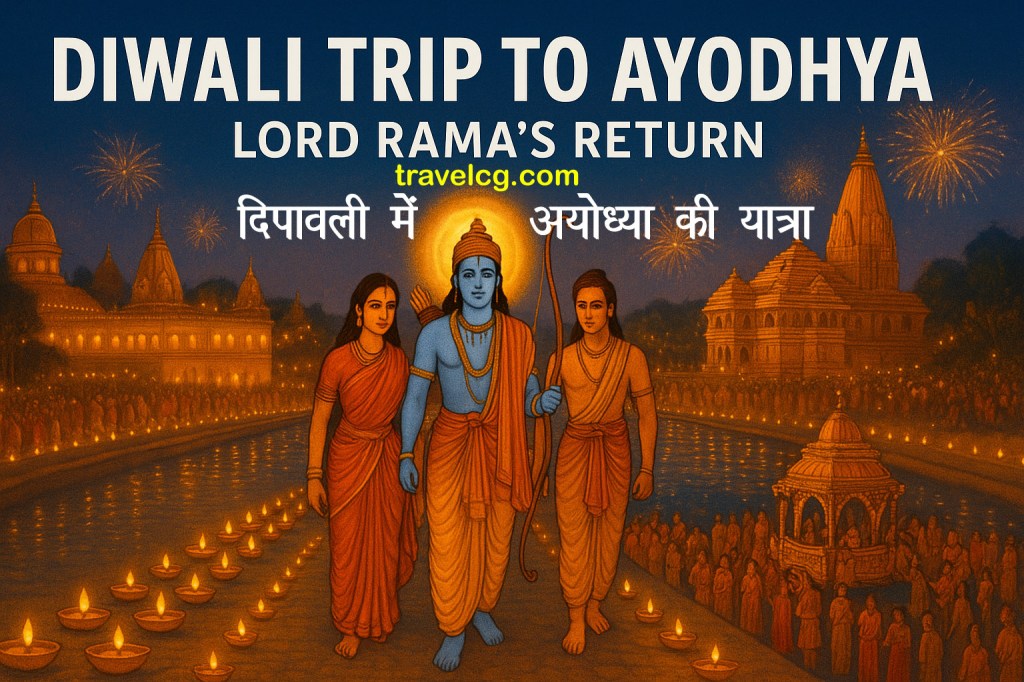
The roots of this grand festival lie in Ayodhya, the sacred birthplace of Lord Rama — where he returned after 14 years of exile and was welcomed with millions of lamps.
🌿 The Story of Lord Rama’s Exile and Return to Ayodhya
According to the epic Ramayana, Lord Rama was sent to exile for 14 years due to a promise made by his father, King Dasharatha, to Queen Kaikeyi.
During his exile, Rama fought the demon king Ravana, rescued Sita, and upheld dharma — righteousness and truth.
When Rama, Sita, and Lakshmana finally returned to Ayodhya, the city burst into joy.
The people lit earthen lamps (diyas) in every street, home, and palace to celebrate the return of their beloved king.
That night, Ayodhya shone brighter than the stars, and this celebration came to be known as Deepavali — “the festival of lights.”
🌺 The Real Reason Behind Celebrating Diwali
The true meaning of Diwali is far beyond fireworks or sweets.
It symbolizes the return of hope, light, and truth.
When Lord Rama returned, Ayodhya’s citizens illuminated the city with lamps to welcome him — signifying the victory of truth over evil.
Diwali teaches us that even after the darkest of nights, light will always return — and that patience, virtue, and righteousness are never in vain.
🏮 How Diwali Was Celebrated in Ancient Ayodhya
As described in the Ramayana, Ayodhya witnessed an unforgettable night of joy and illumination:
- Every house, street, and temple was decorated with lamps and flowers.
- People sang devotional songs and danced in happiness.
- Women drew beautiful rangolis at their doorsteps.
- The entire kingdom resonated with the chants of “Jai Shri Ram!”
It wasn’t just a king’s homecoming — it was the return of dharma (righteousness), the triumph of good, and the beginning of eternal light.
🪔 Modern-Day Diwali in Ayodhya
Even today, when Ayodhya celebrates Deepotsav, it feels like the pages of Ramayana come alive again.
- Over 22 lakh lamps light up the Saryu riverfront (Ram ki Paidi).
- The entire city glows in golden light and devotion.
- Cultural programs, bhajans, and Ramlila performances fill the air with spirituality.
- The streets echo with the name of Lord Rama.
In 2024, Ayodhya set a Guinness World Record by lighting more than 2.2 million diyas — creating an ocean of light that could be seen from the sky.
🙏 Why Visiting Ayodhya During Diwali Is Special
A trip to Ayodhya during Diwali is a once-in-a-lifetime spiritual experience. Here’s why:
- Spiritual Vibration: The atmosphere of devotion, music, and faith fills your heart with peace.
- Ram Janmabhoomi Temple: Witness the divine beauty of the newly built Shri Ram Temple during its grand Diwali celebrations.
- Cultural Heritage: Experience the living culture of ancient India through art, dance, and traditional rituals.
- Saryu Aarti & Deepdan: The sight of thousands of lamps floating on the Saryu River is deeply soul-stirring.
- Eternal Memory: Being part of Ayodhya’s Diwali leaves you with lifelong spiritual memories.
🏰 Major Temples and Attractions in Ayodhya
1. Shri Ram Janmabhoomi Temple
The sacred birthplace of Lord Rama.
The grand temple now stands gloriously at the site, attracting millions of devotees.
During Diwali, the temple is adorned with flowers, lights, and spiritual energy.
2. Hanuman Garhi
One of the most famous temples in Ayodhya, dedicated to Lord Hanuman.
It is believed that visiting Hanuman Garhi before any other temple brings blessings and protection.
3. Kanak Bhawan
This golden temple was gifted to Sita by Queen Kaikeyi.
Inside, the idols of Rama and Sita look divine and beautifully decorated with jewels.
4. Ram ki Paidi (Ghats of Saryu)
The iconic riverfront where millions of diyas are lit every Diwali night.
The reflection of lamps on the water makes it a magical sight.
5. Nageshwarnath Temple
Said to be built by Lord Kush, son of Lord Rama. It is one of the oldest temples in Ayodhya.
6. Treta ke Thakur Temple
Located near the ghats, it is believed that Lord Rama performed the Ashwamedha Yagna here.
🚗 How to Reach Ayodhya (Travel Guide)
✈️ By Air:
- Maryada Purushottam Shri Ram International Airport, Ayodhya is now operational.
- You can also reach via Lucknow (140 km), Varanasi (200 km), or Gorakhpur (150 km) airports.
🚆 By Train:
- Ayodhya Dham Junction is well connected to Delhi, Mumbai, Kolkata, Lucknow, and Varanasi.
🚌 By Road:
- From Lucknow, Ayodhya is just a 2.5-hour drive via NH27.
- Regular UP Roadways and private buses operate from major nearby cities.
🏨 Accommodation in Ayodhya
Ayodhya offers all types of stays — from spiritual dharamshalas to luxury hotels.
🔸 Budget Hotels:
- Hotel Ramprastha
- Hotel Krishnarpan
- Ramayana Residency
🔸 Luxury Stays:
- The Ramayana Ayodhya (5-star)
- Sarayu Residency
- Ram Kuti Heritage Stay
🔸 Dharamshalas for Pilgrims:
- Tulsi Dham Dharamshala
- Hanuman Garhi Trust Lodges
- Ram Mandir Bhakt Niwas
You can easily book rooms online through MakeMyTrip, Yatra, IRCTC, or OYO.
🕯️ Experiences to Enjoy During Diwali in Ayodhya
🌅 Saryu Aarti
Evening aarti at the riverfront is one of the most divine experiences. The chants, lamps, and bells create an ethereal atmosphere.
🪔 Deepdan Ceremony
Participate in lighting a diya and releasing it into the river. It symbolizes offering your prayers and gratitude to the divine.
🎭 Ramlila and Cultural Events
Witness live performances depicting the life of Lord Rama. Traditional dance, music, and fireworks make the city come alive.
🍛 Local Food to Try
Don’t miss Ayodhya’s traditional sweets and snacks:
- Kachori & Jalebi
- Laddoo & Gujiya
- Petha & Puri-Sabzi
🌼 Travel Tips for Ayodhya During Diwali
- Book early: Hotels and flights fill up fast during Deepotsav.
- Dress comfortably: Light woolens or traditional wear is ideal.
- Respect the culture: Avoid loud behavior or littering near temples.
- Arrive early: For Saryu Aarti and Deepdan, reach by 5 PM to find a good spot.
- Be mindful of crowds: Carry minimal valuables and stay alert in large gatherings.
- Carry ID proof: Mandatory at several temple and event entry points.
🌠 Conclusion
Ayodhya on Diwali is not just a destination — it’s an experience of faith, history, and divine light.
Standing on the banks of the Saryu River, watching millions of diyas glow under the night sky, you realize that this is where light truly conquers darkness.
If you wish to celebrate Diwali not just with lights but with meaning — Ayodhya is the place to be.
It is where you reconnect with your roots, your culture, and your inner peace.
 Travel CG
Leave a comment